

Designing for SEO success in 2026 involves integrating search engine optimization directly into the design process of a website. This approach is crucial for web developers, marketers, and business owners who aim to enhance their website’s performance and visibility in an increasingly competitive digital landscape. Understanding “How to Design for SEO Success” means recognizing that SEO is not just about content and keywords but also about how a site is structured and presented to users and search engines alike. The primary intent for readers is to gain in-depth knowledge about SEO design to improve site performance and ranking.
Last updated: April 2026
What Are the Core Principles of Designing for SEO Success?
The core principles of designing for SEO success revolve around creating a website that is both search engine and user-friendly. This involves ensuring fast loading times, mobile responsiveness, secure connections (HTTPS), and a clear site architecture.
SEO design is essential because it integrates with user experience (UX), creating websites that are not only optimized for search engines but also intuitive for users. A successful SEO design implementation can be seen in websites that maintain a balance between aesthetic appeal and functional navigation, like Apple’s and Amazon’s sites, which blend sleek design with robust search capabilities. However, balancing aesthetic design with SEO needs can be challenging as overly prioritizing one aspect can detract from the other.
A common misconception is that SEO design is purely technical, ignoring the human element of UX. In reality, SEO design must cater to both algorithms and human visitors, ensuring that the site is easy to navigate while still meeting search engine requirements.
Tip: Always use clean, semantic HTML to improve both SEO and accessibility.
How Does SEO Design Impact User Experience?
SEO design significantly impacts user experience by improving site navigation, accessibility, and overall usability. A well-designed SEO structure ensures that users can find information quickly and easily, which enhances their interaction with the site.

An SEO-focused design enhances site navigation by structuring content logically and intuitively, which benefits both users and search engine crawlers. For example, using breadcrumb navigation can help users keep track of their location within a site, improving usability. However, conflicts can arise when design elements meant to enhance UX, such as heavy graphics, lead to slower load times, which can negatively impact SEO.
Some UX-focused designs fail in SEO because they prioritize aesthetics over functionality, resulting in sites that look good but are difficult to navigate or slow to load. This highlights the importance of balancing UX and SEO objectives to create a site that performs well in search results while providing a positive user experience.
Tip: Ensure your site is mobile-friendly to enhance both UX and SEO.
What Are the Steps to Create an SEO-Friendly Website in 2026?
Creating an SEO-friendly website in 2026 involves several key steps: conducting keyword research, ensuring mobile-first design, optimizing page speed, and structuring content logically.
Transform your site with eDesignerz
Ensure your website excels in search rankings with our expert web design and SEO services that turn visitors into customers.
Mobile-first design is crucial in 2026, as more users access the web via smartphones than ever before. This means that websites must be responsive and offer a seamless experience across devices. tools like google‘s Mobile-Friendly Test can help designers evaluate and improve their site’s mobile performance. Balancing speed and functionality is another essential aspect of SEO design. While features like high-resolution images can enhance user experience, they may also slow down page load times, negatively impacting SEO.
Edge cases in SEO design often arise in niche industries where standard practices may not apply. For instance, a site dedicated to high-resolution art may need to find innovative ways to balance image quality with speed. This requires creative solutions that adhere to SEO best practices without compromising the site’s core purpose.
Tip: Use a content delivery network (CDN) to improve site load times globally.
What Common Mistakes Should Be Avoided in SEO Design?
Common mistakes in SEO design include using outdated practices like keyword stuffing, neglecting mobile optimization, and failing to prioritize site speed.
These mistakes hinder SEO success as they can lead to penalties from search engines or poor user experiences. For example, keyword stuffing can make content unreadable and unengaging, driving users away. Real-world examples of design failures often involve sites that ignore the importance of responsive design, leading to poor mobile performance and lower search rankings.
Short-term SEO strategies, like aggressive link-building without regard for quality, can backfire in the long term by attracting penalties from search engines. Designers often overlook the importance of regular SEO audits, missing opportunities to identify and correct these mistakes before they impact site performance.
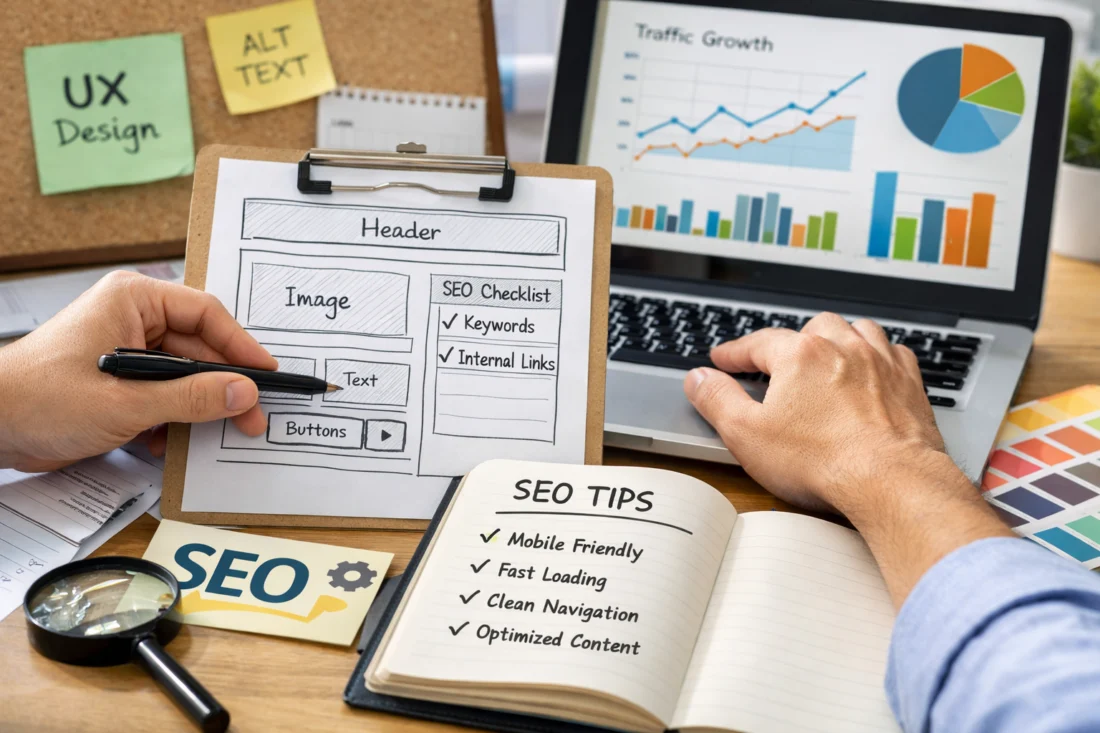
Tip: Regularly audit your site for broken links and outdated content to maintain SEO health.
How to Choose Between Different SEO Design Strategies?
Choosing between different SEO design strategies requires an understanding of your site’s goals, audience, and industry. Strategies can vary significantly, from content-focused approaches to technical SEO enhancements.
When selecting a strategy, consider criteria like your target audience’s preferences, the competition in your industry, and the current state of your site. For instance, an e-commerce site might prioritize technical SEO to improve load times and product visibility, while a blog might focus on content optimization. Each strategy has its pros and cons, such as the potential cost of technical optimizations versus the time investment required for content creation.
Advanced insights into strategy adaptation are crucial in 2026, especially as AI and machine learning continue to evolve. These technologies can offer predictive insights into user behavior, allowing for more personalized and effective SEO strategies.
Tip: Regularly review competitor strategies to identify new opportunities and threats.
What Are the Best Tools for SEO Design in 2026?
Some of the best tools for SEO design in 2026 include Google’s Search Console, SEMrush, and Screaming Frog. These tools offer features that help identify SEO issues, analyze competitors, and track keyword performance.
Each tool offers unique benefits. For example, Google’s Search Console provides insights into your site’s visibility on search engines, while SEMrush offers comprehensive keyword research and competitive analysis. Screaming Frog helps identify technical SEO issues like broken links and duplicate content. However, the cost of these tools can vary, and businesses must balance their budgets with their SEO needs.
Emerging tools and technologies, such as AI-driven platforms, are becoming increasingly important. These tools offer advanced analytics and predictive capabilities, allowing businesses to stay ahead of trends and make data-driven decisions.
Tip: Invest in SEO tools that integrate with your existing platforms for seamless workflow management.
How Can Advanced SEO Design Techniques Enhance Site Performance?
Advanced SEO design techniques, such as schema markup and lazy loading, can significantly enhance site performance by improving search visibility and user experience.
These techniques positively impact site speed and ranking by ensuring that search engines can easily understand and index your content. For example, schema markup helps provide additional context to search engines, which can result in enhanced search results like rich snippets. However, the complexity of implementing these techniques can be a barrier for some businesses, requiring specialized knowledge and resources.
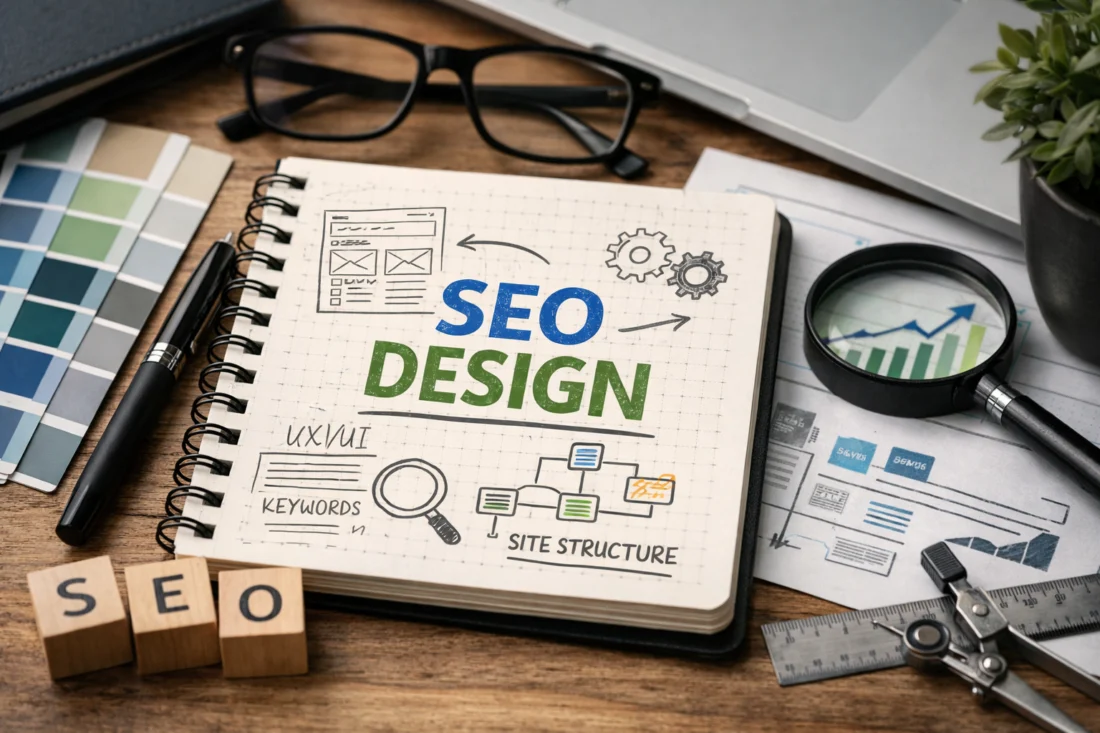
Future trends in advanced SEO design include the integration of AI and machine learning to personalize user experiences and optimize content delivery. These technologies offer exciting possibilities for enhancing site performance but require ongoing investment and expertise to implement effectively.
Transform your website into an SEO powerhouse with expert design and development.
Maximize your site's performance and visibility with our tailored web design and SEO services. We ensure your site is not only beautiful but also optimized for search engines.
Request a Free ConsultationTip: Regularly update and test advanced techniques to ensure continued SEO benefits.
What Role Does Content Play in SEO Design?
Content plays a vital role in SEO design by influencing how search engines interpret and rank your website. Well-structured content can significantly enhance your site’s SEO performance.
The structure of content affects SEO by determining how easily search engines can crawl and index your site. For example, using clear headings and subheadings helps search engines understand the hierarchy and relevance of your content. Balancing content richness with design simplicity is crucial, as overly complex designs can distract from the content itself. To enhance your blog’s visibility, explore how to design for SEO success effectively.
Content design strategies in 2026 need to consider emerging technologies like voice search. Optimizing for voice search involves using natural language and concise answers to common questions, enhancing both usability and SEO.
Tip: Use descriptive and concise meta tags to improve click-through rates from search results.
How to Measure the Success of Your SEO Design?
Measuring the success of your SEO design involves tracking key metrics such as organic traffic, bounce rate, and conversion rate. These metrics provide insights into optimizing your site for international SEO success and how well your site is performing in search engines.
Tools like Google Analytics and Ahrefs can help track these metrics and provide insights into areas for improvement. Setting up dashboards for continuous monitoring allows for real-time tracking of SEO performance, enabling quick adjustments to strategies as needed. Balancing quantitative metrics with qualitative insights is essential, as numbers alone may not capture the full picture of user experience.
Common misconceptions about SEO metrics include over-reliance on rankings as the sole measure of success. While rankings are important, they should be considered alongside other factors like user engagement and conversion rates.
Tip: Regularly review your site’s analytics to identify trends and optimize your SEO strategy.

What Are the Future Trends in SEO Design?
Future trends in SEO design include the rise of AI and machine learning, the growing importance of voice search, and the need for more personalized user experiences.
These trends will shape the digital landscape by driving the need for more sophisticated and adaptive SEO strategies. Preparing your site for future SEO challenges involves staying informed about technological advancements and adapting your strategies accordingly. However, it’s important to maintain core SEO principles, even as trends evolve, to ensure long-term success.
The impact of AI and machine learning on SEO design is profound, offering new opportunities for personalization and efficiency. These technologies can help predict user behavior and tailor content to meet individual needs, enhancing both UX and SEO.
Tip: Stay updated with industry news to anticipate and adapt to emerging SEO trends.
What is SEO design?
SEO design refers to the process of creating websites that are optimized for search engines while ensuring a positive user experience. It involves technical and content-related strategies to improve search visibility and site performance.
How does SEO design differ from traditional web design?
SEO design focuses on optimizing a website for search engines, prioritizing factors like load speed, mobile-friendliness, and keyword optimization. Traditional web design may prioritize aesthetics and user experience without specific regard for search engine optimization.
What are the benefits of SEO design for businesses?
SEO design can enhance a business’s online presence, increase organic traffic, and improve conversion rates. It helps ensure that a website is accessible to both search engines and users, leading to better rankings and user engagement.
How often should I update my SEO design?
Regular updates to SEO design are recommended, typically in response to changes in search engine algorithms, user behavior trends, or technological advancements. Regular audits can help identify when updates are necessary.
What are some SEO design best practices for 2026?
Best practices include prioritizing mobile-first design, optimizing for voice search, and focusing on site speed and security. These practices help ensure that a website remains competitive in search rankings and user experience.
Can SEO design improve my site’s search engine ranking?
Yes, SEO design can significantly enhance a site’s search engine ranking by ensuring that the site meets search engine criteria for relevance, speed, and user experience. A well-optimized site is more likely to rank higher in search results.
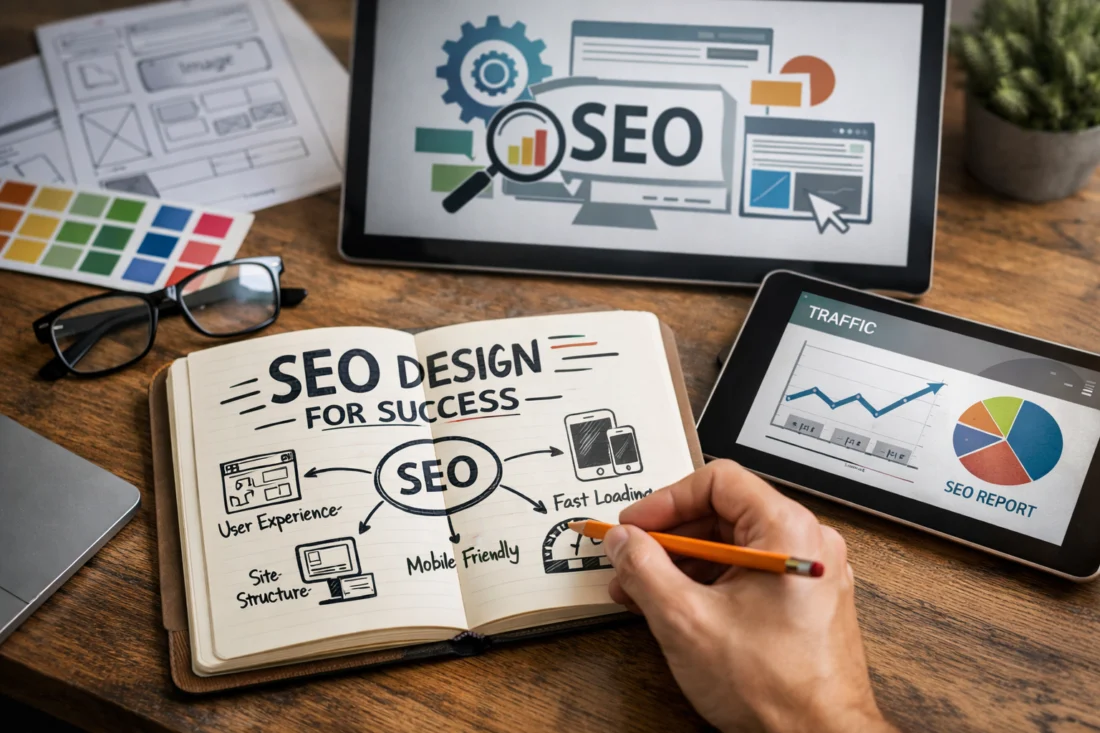
What are some SEO design trends to avoid?
Avoid trends that focus on short-term gains, such as black-hat SEO tactics like keyword stuffing or aggressive link schemes, as these can result in penalties from search engines. Instead, focus on sustainable, ethical SEO practices.
How does mobile-first design influence SEO?
Mobile-first design is crucial for SEO as search engines prioritize mobile-friendly sites. A responsive design ensures that a site performs well on all devices, improving user experience and search rankings.
What role does site speed play in SEO design?
Site speed is a critical factor in SEO design, as faster-loading sites provide better user experiences and are favored by search engines. Optimizing site speed can lead to higher rankings and reduced bounce rates.
How can I test the effectiveness of my SEO design?
Testing the effectiveness of SEO design can be done using tools like Google Analytics and Google Search Console. These tools provide insights into site performance, user behavior, and search visibility, allowing for informed optimization decisions.
In conclusion, designing for SEO success in 2026 requires a comprehensive understanding of both technical and user-focused strategies. By continuously learning and adapting to new trends, businesses can enhance their website’s performance and achieve long-term success in search engine rankings. Implementing the strategies discussed and regularly monitoring performance will help ensure that your site remains competitive and effective in the ever-evolving digital landscape.
Transform Your Site for Better SEO Results!
Our expert team crafts modern, mobile-friendly websites that not only look great but also rank higher in search engines. Let's enhance your online presence together!
Request a Free Consultation