
If you’re trying to understand GEO in a strategy context, think of it as making geographic intent discoverable. Understanding GEO helps you align content and experiences with how people find services and information through location-aware journeys like maps, directories, and assistants. This guide explains what GEO strategies are, how they differ from SEO and local search, and how to plan and measure results in 2026. You will also get a practical decision path for choosing GEO tactics based on audience intent, business model, and data readiness.
Contents
- 1 GEO strategies focus on geographic intent, not just “location presence”
- 2 Core GEO signals include entity data quality, place relevance, and context interactions
- 3 Build a GEO strategy by mapping goals to place-led journeys
- 4 GEO complements SEO and local search when geography spans multiple discovery surfaces
- 5 Avoid GEO pitfalls like generic location pages and inconsistent place governance
- 6 Choose GEO options based on your capacity: content-first, data-first, or experience-alignment paths
- 7 Measure GEO results using place-attributed metrics and outcome quality, not vanity rankings
- 8 Handle complex GEO scenarios for multi-location brands, service zones, and overlapping place coverage
- 9 Frequently asked questions about Understanding GEO: A Comprehensive Guide to GEO Strategies
- 9.1 What does “GEO” mean in a digital marketing strategy context?
- 9.2 How is understanding GEO different from local SEO?
- 9.3 What are the first GEO steps I should take if I’m starting in 2026?
- 9.4 What kinds of businesses benefit most from GEO strategies?
- 9.5 How do I measure GEO results without relying only on rankings?
- 9.6 Can GEO work for national brands that don’t target a specific city?
- 9.7 What’s the best way to avoid creating thin or spammy location pages?
- 9.8 How long does it typically take to see GEO improvements?
- 9.9 What should I do when multiple locations share similar names or addresses?
- 9.10 How do I handle GEO strategy when I expand into a new region?
GEO strategies focus on geographic intent, not just “location presence”
GEO is a planning approach for geographic and location-and-context discovery. It covers more than showing up in local results. Instead, it aims to make your content understandable to systems that interpret where a user is, what they want there, and what they should do next.
This matters because users rarely take a straight path from “keyword” to “purchase.” Many journeys start with a place context. They then move into comparisons, planning, and validation. As a result, your strategy must support the full discovery flow, not only one search surface.
In practice, GEO works by coordinating three things. First, you ensure entity and place data is consistent. Second, you design content that reflects place-specific needs and proof. Third, you shape interaction signals by matching the user’s location-led intent once they land on your pages.
It is also important to know what GEO is not. It is not simply local SEO with a new label. Local SEO is often the tactical core for listings and proximity-centric results. GEO is the broader strategy layer that keeps geographic context aligned across discovery surfaces.
Here’s a helpful scenario. Imagine a regional service brand that answers calls from multiple nearby towns. Local search may show strong rankings in one city. Yet, users researching their exact town still find mismatches in content and proof. GEO closes that gap by mapping your place context to the way people actually search and decide.
A common misconception is that GEO is only about “being in the right place.” However, geographic relevance and geographic targeting can diverge. Your brand might earn demand in many regions, but your strategy may aim only at one. GEO helps you align both so the right audiences meet the right place-specific experience.
Core GEO signals include entity data quality, place relevance, and context interactions
GEO signals are the inputs that determine whether a system can confidently connect your content to a place and an intent. You can design these signals on purpose. You also need governance to keep them accurate over time.
Start with entity and location data quality. This includes the consistency of naming, address or region fields, service areas, and other place attributes. When your information conflicts across channels, matching breaks. Meanwhile, clean data helps discovery systems interpret your entities correctly and reduce misattribution.
Next, focus on content relevance to place. Place relevance is more than adding a city name. It means covering the real questions people ask for that area, and showing proof that fits that setting. For example, region-specific FAQs, local service coverage, and distinct internal links that guide research can support better geographic matching.
Then, consider interaction and context signals. Systems learn from how users behave after they arrive. Dwell quality, repeat behavior, and return-to-intent can suggest that a page fits the user’s place-led needs.
Governance is part of core signals, not an afterthought. Decide who owns the place data. Set update workflows when locations change. Also, build a process to prevent conflicting location details across the site, listings, and internal systems.
An edge case is ambiguous locations. Some brands share similar names. Others serve overlapping areas without fixed addresses. In these situations, you need disambiguation through clear entity attributes and unambiguous place coverage language. If you do not, users may land on the wrong variant for their intent.
Build a GEO strategy by mapping goals to place-led journeys
A GEO strategy starts with goals and ends with measurable place-led outcomes. You build it by connecting business intent to what users do when geography matters. This is different from a pure content plan or a pure data audit.
First, map your audience and journey. Identify the moments when location affects the decision. Common patterns include service discovery, “near me” behavior, regional comparisons, and itinerary or planning-style research. Then, translate those needs into place intents you can design for.
Next, select tactic bundles that match your situation. Some businesses need place-specific content variants. Others need entity readiness to ensure their locations are interpreted reliably. Many need both, especially when they operate in multiple regions with different proof needs.
Then, execute across data, content, and exposure. Data work improves how your entities and places are understood. Content work improves how your pages satisfy place-led research and validation. Exposure work ensures the right variants are discoverable when users express geographic intent.
Tradeoffs are real. If you have strong data but weak content, you may match the place but still fail conversion. If your content is strong but your place data is messy, matching can break before users ever arrive. The best path depends on your constraints in 2026, including production capacity and data stewardship maturity.
To avoid location spam, build place specificity around unique value. A good region page should add different proof, different coverage details, or different intent coverage. If every place page looks like a template, it may attract the wrong expectation and underperform.
You can also use an execution checklist conceptually. Begin with high-impact fixes, like cleaning the core location and entity attributes. Then, ship place-relevant content that targets the clearest place intents. Finally, expand into experience and navigation changes once you see which journeys convert.
GEO complements SEO and local search when geography spans multiple discovery surfaces
SEO focuses on broad relevance and authority. Local search often emphasizes proximity and listings-centric relevance. GEO integrates geographic context across the places where users begin and refine their decisions.
To choose the right mix, first understand what your business depends on. If your demand is tied to where services are delivered, GEO should lead part of the strategy. This is especially true for brands expanding into new regions. It also matters when people compare options by service coverage, not just topical expertise.
However, GEO is not always the primary driver. If your offering is largely location-independent, and users rarely make decisions based on place, heavy GEO investment may not pay off. In that case, SEO and standard content planning may cover most needs. GEO can still play a supporting role when you show service coverage or regional reliability.
Coordination reduces waste. Align your content calendar with data stewardship work. Ensure consistent naming across channels and internal systems. Also, coordinate how teams label places so the same entity is referenced everywhere.
A deeper nuance is that ranking locally does not guarantee GEO outcomes. You can rank in a nearby city but still lose place-led conversions. This happens when place-context content and structured context do not match the user’s expectations for their specific region.
So, focus on the join. When your visibility and your place relevance line up, you get stronger qualified traffic. When they do not, you may see visits with weak conversion patterns, even if rankings look healthy.
Avoid GEO pitfalls like generic location pages and inconsistent place governance
Many GEO efforts fail due to process problems, not because the idea is wrong. The most common failures involve governance gaps, thin place differentiation, and vanity measurement. You can prevent these issues with a clearer operating model.
First, do not treat GEO as a one-time “settings” task. Geographic intent changes with business operations. It changes with new offerings, closures, and shifting service zones. Therefore, you need recurring reviews and an update workflow.
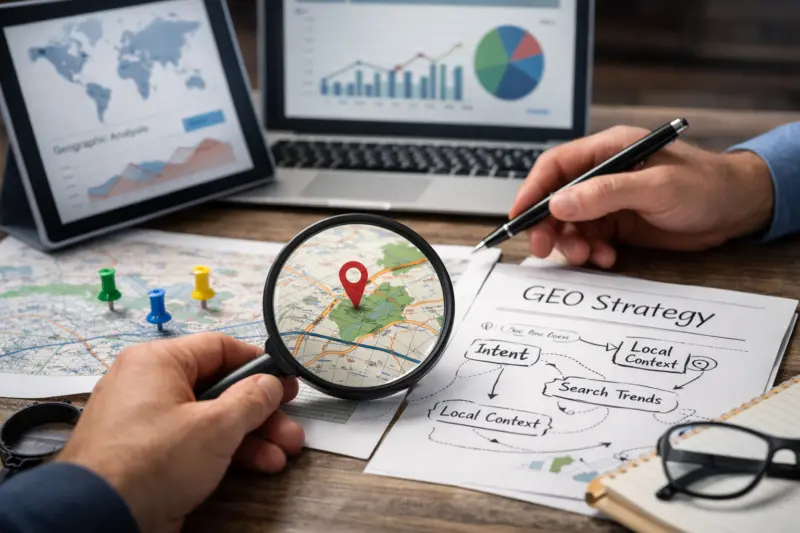
Second, keep naming, address formatting, and region signals consistent. Conflicts across the site, listings, and internal datasets can confuse place matching. As a result, users may see mismatched details after they click through. That mismatch hurts both trust and conversion.
Third, avoid publishing generic location pages. Thin pages usually repeat the same text with only a city swap. Instead, include real local proof and intent coverage. For example, add region-specific service availability, constraints, and proof elements that support the decision.
Fourth, measure the quality of place-led journeys. If you only track rankings, you might miss the real problem. Weak engagement on location pages can signal mismatch even while rankings seem stable.
Finally, watch out for overlapping jurisdiction content. Users may search with one region term, but your content might map to another. Metropolitan area, county, and service-zone phrasing often conflict. If your strategy ignores this, users can land on pages that feel “almost right,” but not right enough.
A common mistake is to over-correct by creating too many pages at the wrong granularity. If every neighborhood becomes its own page, authority can dilute. The goal is to match place intent with practical coverage depth.
Choose GEO options based on your capacity: content-first, data-first, or experience-alignment paths
You have multiple realistic approaches to GEO. The best choice depends on your data readiness and your content production capacity. It also depends on how your users discover and validate services in your category.
One option is a place-specific content strategy. You create destination or service guides, location landing experiences, and place-aware FAQs. This can work well when you already have strong entity data and you need better match for place-led research. The tradeoff is that content production is resource-heavy and requires strong editorial quality.
A second option is structured location and entity readiness. , you focus on consistent place attributes and entity mapping so discovery systems can interpret your locations confidently. This path is often faster when data is the bottleneck. However, it may not be enough if users still land on pages that do not answer their place-specific questions.
A third option is map-and-directory discovery alignment. This approach emphasizes consistent place presence across listing-style surfaces and ensures that context-rich place information is accurate. It often improves visibility quickly when listings and directory data have been inconsistent. The limitation is that directory exposure alone does not guarantee better place-led conversion if on-site content is generic.
A fourth option is experience design for geographic intent. You adjust navigation, internal linking structure, and on-page flows so users can quickly confirm service fit for their place. This works best when you have enough place variants to guide users. The tradeoff is that it requires careful design and measurement to avoid confusion.
Use a lightweight fit assessment. Ask which place intents dominate in your category. Then review whether your entity data is reliable. Finally, check whether you can produce unique proof for each place you target. If data accuracy is poor, content-first may disappoint. You might write great pages, but the matching signals may still fail.
A hybrid strategy is common. Start with the fastest path that improves place-context matching. Then deepen with content and experience alignment once you see which intents convert.
Measure GEO results using place-attributed metrics and outcome quality, not vanity rankings
To measure GEO, connect what you control to what outcomes change. A useful framework links inputs to outputs to outcomes. You then segment by place context and intent to see what really works.
Begin with input quality. Track data completeness and consistency for each location or region variant. Identify conflicts in naming and address fields. Also, review whether entity attributes are consistently mapped across your core systems.
Next, measure outputs related to place-context matching. Look at visibility patterns that can be tied to specific place-led landing experiences. Also review engagement quality for those pages, such as how quickly users reach key actions and whether they explore relevant next steps.
Then, measure outcomes by region and intent. Track conversions that matter to your business, not just clicks. Also segment performance by the place variant that served the user. This helps you see whether GEO improvements truly align with decision-making moments.
Attribution can be tricky in geographic journeys. A user may discover you in one place context, then research in another, then convert later. Therefore, consider downstream behavior like repeat visits and assisted conversions. Also, remember that content and data refresh cycles can create delayed lift.
Testing helps, but guardrails matter. You can test messaging, proof emphasis, and calls to action for a region page. However, core identity and place facts should not change without governance. Otherwise, you risk introducing new inconsistency into your GEO signals.
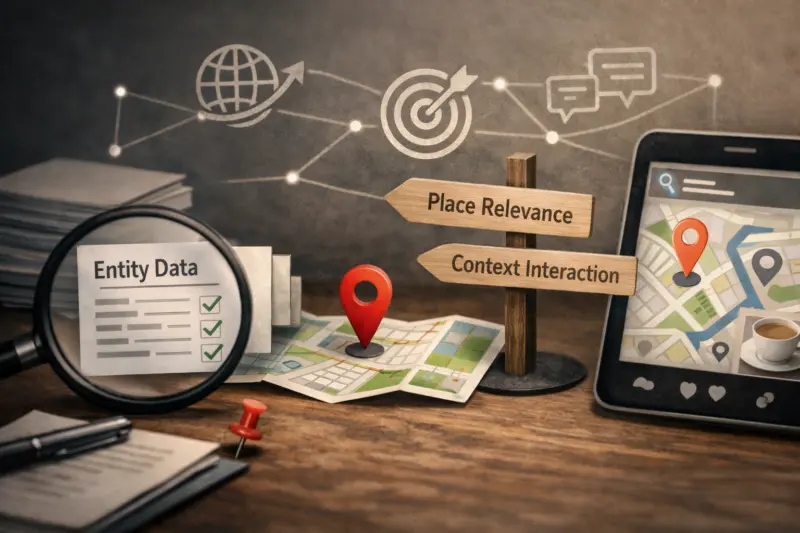
A deeper nuance is data segmentation pitfalls. If you track tiny samples for each city, results can look noisy. You may need to roll up performance thoughtfully while still preserving meaningful intent differences. The goal is reliable insight, not misleading averages.
Handle complex GEO scenarios for multi-location brands, service zones, and overlapping place coverage
Complex organizations face additional GEO constraints. Complexity can come from franchises, corporate-managed locations, or brands operating under different umbrellas. It can also come from seasonal service zones and shifting coverage rules.
First, decide on place granularity. City, neighborhood, county, and service-zone content each serve a purpose. More granularity can improve match. However, too much detail can dilute authority and create thin pages. Choose granularity based on where user intent naturally lands and how you can provide unique proof.
Second, plan for conflict resolution. Rebrands, mergers, and location closures require careful retirement of outdated place signals. You need processes that prevent stale details from persisting. Also, ensure that updates flow to all discovery surfaces where your entities appear.
Third, manage governance when multiple teams touch place data. Franchises and local operators may submit updates in different formats. Therefore, create a controlled data intake process with clear validation rules and naming standards. This protects GEO consistency even when operations decentralize.
A common edge case is overlapping places with similar names. This can happen when venues share branding themes or when the same service term is used across multiple regions. You must disambiguate with precise entity attributes and clear service coverage descriptions.
The hero pages problem is another failure mode. Many sites have only one generic page per topic. GEO requires multiple contextual variants to match place-led research behavior. Without those variants, users may land on the right topic but the wrong place, which harms conversion alignment.
As a result, your planning should treat place variants as part of your information architecture. Then refresh and retire responsibly to keep GEO signals accurate in 2026 and beyond.
Frequently asked questions about Understanding GEO: A Comprehensive Guide to GEO Strategies
What does “GEO” mean in a digital marketing strategy context?
GEO means designing for location-and-context discoverability. It helps systems connect your content with the places and situations where people seek solutions. Unlike basic location mentions, GEO focuses on consistent place signals, relevant place proof, and matched user journeys.
How is understanding GEO different from local SEO?
Local SEO often targets proximity and listing visibility through location-centric tactics. GEO is broader and treats geographic context as an integrated strategy across discovery surfaces. It includes data consistency and place-aware content design, not only listings.
What are the first GEO steps I should take if I’m starting in 2026?
Start with an audit of your location and entity data, then map place intents to your audience journey. After that, build foundational place-aware content that matches the clearest intents. Finally, set up measurement by place variant so you can learn what improves outcomes.
What kinds of businesses benefit most from GEO strategies?
Multi-location businesses, service-area providers, and organizations where decisions depend on where service is delivered benefit most. Region-driven planning and comparison use cases also perform well with GEO. The key is that your audience uses place context to evaluate fit.
How do I measure GEO results without relying only on rankings?
Measure the quality of place-led journeys using engagement and conversion outcomes by region. Also track input quality like data completeness and consistency across your places. Because attribution can span multiple touchpoints, review downstream behavior, not only immediate clicks.
Can GEO work for national brands that don’t target a specific city?
Yes, GEO can still matter when geographic context affects service zones, delivery coverage, or regional audience needs. You can create place-aware variations for regions you serve. Even then, keep the focus on genuine place relevance, not filler location text.
What’s the best way to avoid creating thin or spammy location pages?
Write location pages that add unique value, such as distinct proof, specific coverage details, and intent-matched FAQs. Ensure each page targets a real place-led research need. Also, keep governance so place facts stay accurate as operations change.
How long does it typically take to see GEO improvements?
Timelines vary based on data fixes, content production, and how quickly discovery systems refresh signals. If you start with data consistency problems, improvements can appear after validation and reindexing cycles. If you need many new place variants, expect learning to take longer due to content ramp-up.
Disambiguate entities by using consistent naming and clearly defined place attributes. Make sure each location has accurate fields for region, service area, and other identifiers. Also, prevent misattribution by validating updates across all channels where your brand appears.
How do I handle GEO strategy when I expand into a new region?
Run a pre-launch readiness step that checks entity data readiness and place attribute mapping. Then build content variants that match the place intents you expect in the region. Finally, set early measurement checkpoints so you can adjust proof emphasis and conversion flows quickly.
GEO is a comprehensive strategy for making geographic intent discoverable through coordinated data, content, and experience decisions. The decision path is goal first: map place-led intents, select a tactic bundle that fits your capacity, then execute with governance. From there, measure outcomes by region and intent quality, not vanity rankings.
To avoid common pitfalls, protect place consistency, resist generic location page templates, and focus on qualified place-led journeys. Understanding GEO is only valuable when it changes what users experience during their place-aware discovery flow. The practical starting move is an audit plus a place-intent map, then a hybrid approach based on your strongest near-term constraint.
Start with an audit and a place-intent map, then choose a hybrid approach aligned to your capabilities. If you want a next step for planning in 2026, consider a GEO readiness assessment focused on data integrity, place content coverage, and measurement by geography. After you stabilize the basics, you can deepen the work with more detailed entity governance and location-aware content planning for your category.
Updated September 2026