

local SEO Optimization helps a business show up in nearby organic results, the map pack, and Google Maps so ready-to-buy customers can find it quickly. In practice, it is the process of improving local search visibility for the searches that lead to calls, direction requests, bookings, and in-store visits, which is why it is one of the strongest drivers of local customer acquisition. Done well, it can improve local business rankings without relying on broad, expensive national competition.
This guide explains how Local SEO Optimization works in 2026, what actually influences ranking outcomes, and how to prioritize the fixes that move the needle first. You will see both the foundational signals and the advanced factors that matter when competition is high, locations are multiple, or the business operates as a service-area model. For readers who want a practical, complete process rather than a basic checklist, this article covers the full system from Google Business Profile setup to reputation, links, content, and measurement.
What local SEO Optimization Actually Means in 2026
Local SEO Optimization is the practice of increasing visibility for searches that have local intent, especially when the user wants a nearby business, service, or location. It is not just about “being on Google Maps.” It includes local organic rankings, the map pack, and Google Maps visibility, and those placements can behave differently depending on the query, the searcher’s location, and the device they use.
Local organic results are the standard blue-link listings that appear below or alongside map features. The map pack is the three-business snapshot that often appears near the top of local searches. Google Maps visibility refers to how a business appears inside the Maps interface itself, where users often compare routes, ratings, hours, and photos before taking action. A business may perform well in one of these areas and still underperform in another, which is why a complete strategy matters.
The businesses that benefit most include storefronts, service-area businesses, hybrid businesses, and multi-location brands. A plumber serving a metro area needs geographic coverage and trust signals. A retail store depends on foot traffic and proximity. A franchise needs consistent local governance across locations. The deeper truth is that local SEO is a system of proximity, relevance, and prominence signals, not a single tactic. Search engines use these signals to decide which nearby businesses should be discovered first by high-intent searchers who are ready to visit, book, or call.
For that reason, local SEO should be seen as a strategy for enhancing visibility and driving conversions, rather than merely a means to secure a spot in a directory. This approach aligns naturally with mobile search optimization and location-based content, as well as a strategic use of internal links that helps Google understand the relationships between your service pages and local pages.
How to Build a local SEO Optimization Strategy That Improves Rankings
The best local SEO Optimization strategy starts with a baseline audit, then fixes the highest-impact issues in the right order. First, document current rankings, Google Business Profile status, website pages, citation consistency, reviews, and the main competitors that show up for your target terms. That baseline tells you whether the problem is profile relevance, weak on-page support, trust gaps, or simply stronger competitors.
Prioritize the fixes that most directly affect discovery and trust. In most cases, that means cleaning up the business profile, improving location and service page relevance, and strengthening review and citation signals before chasing advanced tactics. Many businesses waste time publishing more content when the real issue is a weak profile category choice, missing service details, or inconsistent address data. The order matters because search engines need clear, credible signals before they reward additional effort.
Your strategy also needs to match the business model. A single-location storefront usually needs strong proximity coverage, locally useful pages, and reputation management. A service-area business often needs more emphasis on service pages, city coverage, and proof of service reach. A multi-location company needs governance, unique location pages, and controls that prevent duplication or cannibalization. This is where many guides oversimplify: they recommend every tactic at once, even though some tactics have more leverage at different stages of maturity.
Practically, the best planning model is to build around current pain points rather than abstract best practices. If the profile is incomplete, start there. If the website does not clearly support local intent, fix the pages next. If trust is thin, focus on reviews and review trust signals. If the business already ranks but fails to convert, then the issue may be messaging, photos, offers, or call handling rather than pure ranking power.
Google Business Profile: The Core Local Visibility Signal
Google Business Profile is one of the strongest local visibility assets because it directly influences how your business appears in Maps and the map pack. The fields that matter most include the business name, primary category, secondary categories, services, description, hours, attributes, and photos. Each field helps Google understand who you are, what you do, and when you are relevant.
LOCAL SEO OPTIMIZATION
Transform your local search presence with expert SEO strategies tailored for your business. Capture more local customers with a website that ranks higher on Google Maps and drives growth.
Category selection is especially important. The primary category often has a bigger influence than many business owners realize because it shapes the search themes Google associates with the profile. A business that chooses a broad or slightly wrong category can dilute relevance, while a precise category can materially improve matching. Services, attributes, and descriptions then add context, but they do not replace category relevance. Photos, updates, posts, and Q&A support engagement and trust, which can help convert views into actions even when ranking position is similar.
Profile hygiene matters too. Name stuffing, misleading categories, virtual office setups, and inconsistent details create suspension risk or weaken trust. Google expects consistency between the profile and the real-world business. That is one reason why many profile problems are not ranking problems alone; they are integrity problems. A clean profile is also easier to support with local website pages and citations, especially for brands trying to improve local search visibility across multiple channels.
Think of the profile as the first filter, not the entire strategy. If the profile is strong but the website is vague, the business may still underperform. If the profile is weak, the rest of the effort has a much harder time producing results. The businesses that win usually treat profile management as an ongoing discipline, not a one-time setup task.
On-Page Local SEO Signals That Help Google Understand Your Relevance
On-page local signals tell search engines what a page is about and where it applies. The strongest pages usually include a clear local intent in the title tag, H1, introduction, internal links, NAP placement, and content that reflects the actual service area or location. When done well, these pages support both discovery and conversions because they help users understand that the business is relevant to their area.
Location pages and service pages should not be generic templates with city names swapped in. A strong page explains the local service context, the neighborhoods or landmarks served, common customer needs in that area, and why the business is a good fit. Homepage messaging can reinforce the primary location or service region, but the homepage should not try to do everything. The best strategy is usually a clear homepage plus focused service and location pages that reinforce each other through an internal linking structure.
Thin city pages are a common failure point. If a business publishes dozens of pages that say almost the same thing, the pages rarely help and can sometimes confuse indexing or dilute relevance. In many cases, one strong location page is better than several weak ones. That is especially true when a business serves a limited set of locations and can create truly unique content for each page. The goal is not to mention every city; it is to provide useful local context that improves on-page relevance signals.
This is where content strategy and search optimization overlap. Strong pages are not just keyword-optimized; they are also helpful. They explain service details, pricing expectations, scheduling, service-area boundaries, and local proof points. That kind of specificity supports rankings and conversions at the same time.
What to Look For in Local Ranking Factors: Relevance, Distance, and Prominence
Google’s local results are driven by three core factors: relevance, distance, and prominence. Relevance is how well a business matches the query. Distance is how close the business is to the searcher or to the location implied by the search. Prominence is how well-known and trusted the business appears based on reviews, links, citations, and broader web signals.
You can influence relevance directly by improving your Google Business Profile, service pages, categories, and local content. You can influence prominence indirectly through reviews, local links, brand mentions, and consistent citations. Distance is the hardest factor because you cannot move the searcher, and you cannot always move the business. That is why proximity can create frustrating results: a strong business may still lose to a closer competitor in some map views.
Search behavior changes the outcome too. Mobile users often see more location-sensitive results, while desktop users may see a broader map area or slightly different ordering. Searcher location can shift rankings from one zip code to the next, which is why rank tracking often looks inconsistent. A business may rank well at one spot on a map and worse just a few miles away. That inconsistency is not necessarily a problem; it reflects how local search is designed.
The common mistake is to treat local ranking as a single position. In reality, it is a set of visibility zones influenced by device, geography, and intent. A smart strategy uses that reality instead of fighting it. That is also why local SEO measurement should focus on outcomes, not just screenshots of the map pack.
| Factor | What it Means | How Much You Can Influence It |
|---|---|---|
| Relevance | Match between query, profile, and website content | High |
| Distance | Proximity between searcher and business/location | Low |
| Prominence | Trust, authority, reviews, and local reputation | Medium to High |
Citations, NAP Consistency, and Local Authority Signals
Citations are online mentions of a business’s name, address, and phone number, often abbreviated as NAP. They still matter because they help confirm that the business is real, stable, and located where it says it is. Consistency across directories, aggregators, and local profiles strengthens trust and reduces ambiguity.
The most valuable citation sources are usually major directories, industry-specific directories, chambers of commerce, local business associations, and platforms that are relevant to your niche. Low-value, outdated, or duplicated directories often add little value and can create cleanup work later. A strong citation profile is less about volume and more about reliability, relevance, and consistency. Businesses that operate from multiple locations should also make sure each location page reinforces the exact NAP used for that branch.
Citation cleanup is most important when there are conflicting records. If Google sees different phone numbers, addresses, or business names across the web, it can create confusion about which entity is authoritative. That is especially risky for relocations, rebrands, mergers, and businesses that changed suites or unit numbers. The point is not to chase every directory as a ranking hack; the point is to remove uncertainty and reinforce local authority signals.
In practice, citation strategy works best as part of a broader trust system. It supports profile accuracy, improves user confidence, and helps search engines connect the dots between your website, profile, and external mentions. For businesses trying to grow local business rankings in a competitive market, consistency often beats sheer submission count.
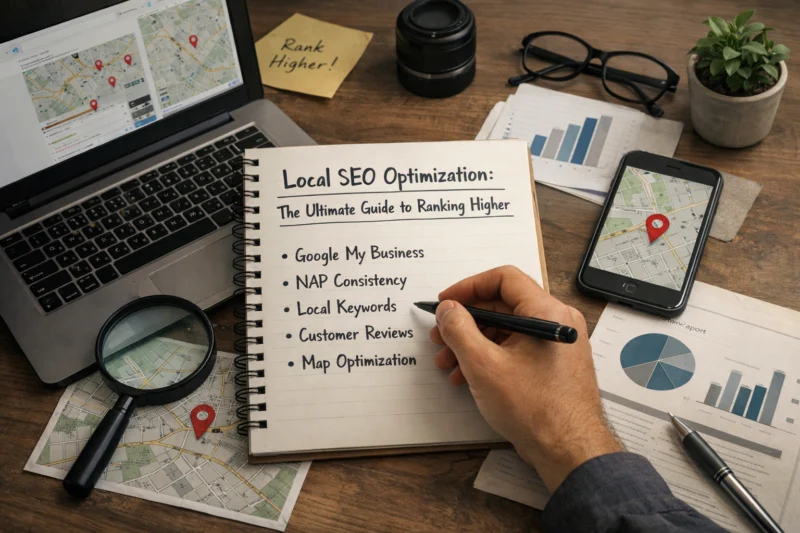
Reviews and Reputation Management for Better Local Search Performance
Reviews influence local performance because they shape trust, conversion rates, and the prominence signals that search engines can observe. A business with strong ratings, recent feedback, and thoughtful responses usually looks more credible than a competitor with stale or sparse reviews. Reviews also help customers choose between similar nearby options, which is why they affect both ranking support and revenue outcomes.
Quantity matters, but not as much as many people think. Recency, rating patterns, review diversity, and response behavior often matter more than a simple total. A steady flow of authentic reviews is more helpful than a burst followed by silence. Different industries also behave differently: a restaurant, dentist, and home services company may all need reviews, but the pace and detail expectations can vary widely.
Ethical review collection is the only sustainable approach. Ask customers at the right moment, make the process simple, and avoid incentives that violate platform policies. Respond to both positive and negative feedback in a professional tone, because responses are visible proof of how the business handles service issues. The goal is not to game reviews; it is to build review trust signals that support long-term credibility.
Negative reviews are not fatal, but unresolved patterns can be. Fake review risks, aggressive solicitation, and inconsistent review timing can all create trust problems. Many guides miss this nuance: review velocity matters more in some industries than others, and the best strategy is usually steady, legitimate collection tied to real customer experience rather than a one-time campaign.
Local Link Building and Community Signals That Strengthen Prominence
Local link building supports prominence by showing that a business is connected to its community and relevant ecosystem. The most useful links are usually locally relevant and contextually credible, such as those from chambers of commerce, neighborhood organizations, nonprofits, event pages, local media, trade associations, and supplier or partner websites. These links help Google see that the business exists within a real local network.
Not every useful link is powerful in the same way. Some links help rankings directly by strengthening authority. Others mainly help brand visibility, referral traffic, and trust. Both can matter, but they serve different purposes. A local sponsorship link from a respected community event may not pass massive authority, yet it can still improve legitimacy and awareness. Likewise, a link from a highly credible local publication may send a stronger trust signal than a generic directory listing.
This is where authority building tactics and backlink authority signals overlap with public relations and community involvement. Sponsoring a charity event, contributing expert commentary to local news, partnering with a nearby organization, or joining a business group can create real-world relationships that often lead to links. The strongest campaigns usually feel like community participation first and SEO second.
The common mistake is to buy or chase links without local relevance. Search engines are better at evaluating context than they used to be, and links that look artificial can underperform or create risk. A smaller number of credible local links is often more valuable than a larger number of weak, unrelated ones.
BOOST YOUR BUSINESS LOCALLY
Transform your online presence with our expert local SEO strategies. We ensure your business appears at the top of Google Maps and local search results to attract ready-to-buy customers.
Common Local SEO Optimization Mistakes That Hold Sites Back
One of the most common mistakes is stuffing keywords into business names or page titles in ways that create spam signals. That may produce a short-lived bump, but it can also trigger trust issues, profile edits, or suspension risk. Search engines and users both respond better to accurate, natural business information than to forced keyword repetition.
Another major problem is duplicated location content. When multiple pages use nearly identical copy with only the city name changed, the pages rarely add value and can become hard to differentiate. This affects both indexing and conversion. A user landing on such a page usually cannot tell whether the business truly serves that area or just copied a template. That undermines the very relevance the page was supposed to create.
Neglecting profile upkeep, review responses, or NAP consistency across the web also weakens performance over time. Local SEO is not a one-time project; it is maintenance. Businesses that stop updating hours, ignore questions, or let outdated citations linger often lose momentum. Over-optimization can be just as damaging as neglect because it creates poor trust signals instead of stronger ones.
The deeper issue is that many businesses treat local SEO like a trick rather than an operational system. Search engines reward accuracy, usefulness, and consistency. Anything that conflicts with those goals eventually becomes a liability.
Advanced Local SEO Considerations Most Guides Miss
Multi-location businesses face issues that single-location companies rarely encounter. Duplicate listings, location cannibalization, uneven performance, and inconsistent local governance can all make rankings unstable. One strong location can also overshadow another if pages, profiles, or local signals overlap too much. The solution is usually clearer ownership of each location’s content, profile, reviews, and links.
Service-area businesses have their own edge cases. They may not display a public storefront, and their coverage area can be broader than a normal radius. In those cases, the profile setup, service wording, and city-level support content become especially important. A business can still compete without a public address, but it must be careful to follow platform rules and provide enough proof of service area relevance.
Seasonality, relocations, and mergers also affect local visibility. A business that moves may temporarily lose historical signals. A seasonal business may see demand spike and then fade, which can make performance look inconsistent. A merger can create duplicate profiles or conflicting web signals that need careful cleanup. What most guides get wrong is assuming rankings are the same thing as outcomes. Sometimes rankings improve, but calls and visits do not, because the offer, hours, landing page, or phone answering process is the real bottleneck.
That is why advanced local strategy looks at the whole path from discovery to conversion. Strong rankings help, but they must connect to a usable offer, a clear website, and a conversion process that fits how local customers actually decide.
| Scenario | Main Risk | Best Response |
|---|---|---|
| Multi-location brand | Cannibalization and duplicate signals | Unique location governance and page differentiation |
| Service-area business | Weak geographic clarity | Service-focused pages and compliant profile setup |
| Relocated business | Loss of historical trust signals | Update citations, profile, and location pages consistently |
Comparing Local SEO Optimization Approaches: DIY, In-House, or Agency Support
Do-it-yourself local SEO works best for owners who have time, a single location, and a willingness to learn the basics well. It is usually the cheapest option and gives full control, but it can be slow and easy to misprioritize. DIY is strongest when the business is in a less competitive market and the owner can maintain the profile, content, and reviews consistently.
In-house ownership fits businesses that already have a marketing team or operational structure that can support local execution. The advantage is internal knowledge: the team understands the locations, customers, and brand standards. The tradeoff is that local SEO can become one more responsibility among many, which sometimes leads to inconsistent updates or incomplete implementation. In-house works best when the team can connect local SEO to broader content, web, and customer experience processes.
Agency or specialist support is most useful when competition is high, the business has multiple locations, or there are technical and governance issues that require deep experience. The downside is cost and the need to coordinate closely to preserve brand accuracy. A hybrid model often works best: the business keeps strategy and customer knowledge in-house while outsourcing technical implementation, audits, or specialized support. That approach is especially effective when a company needs fast progress without losing control of messaging.
The right choice depends less on theory and more on execution capacity. If the business cannot maintain consistency, even the best strategy will fade. If it can maintain discipline, a smaller but well-run program can outperform a larger, disorganized one.
How to Measure Whether Local SEO Optimization Is Working
The best way to measure Local SEO Optimization is to combine visibility metrics with conversion metrics. Useful KPIs include map views, calls, direction requests, profile clicks, organic traffic, rankings, and actual conversions such as forms, bookings, or store visits. Rankings matter, but they do not tell the full story because a strong rank can still produce weak results if the offer, page, or profile is not compelling.
Google Search Console helps you understand query demand and page performance. Google Business Profile insights show interactions such as calls, direction requests, and website clicks. Analytics can reveal whether local landing pages are driving engagement and conversion. Call tracking can help, but it must be implemented carefully so it does not create NAP inconsistency or replace the real business number in a way that confuses citations.
Seasonality and brand demand can distort the data. A busy period may make SEO look better than it is, while a slow season may hide progress. Paid traffic can also overlap with local organic behavior, especially if people see an ad and then later click the organic result or Maps listing. To judge the campaign accurately, compare trend lines over time, not isolated days. That is also why the best measurement plans connect local rankings to business outcomes, not just reporting dashboards.
When the numbers do improve, look for quality of improvement as well as volume. More views without more calls may indicate a conversion issue. More calls without more closes may indicate lead handling issues. Local SEO is a discovery engine, but the rest of the customer journey still matters.
Frequently Asked Questions About Local SEO Optimization
How long does Local SEO Optimization take to work?
Most businesses see early movement in a few weeks after fixing profile issues, page relevance, or citations, but meaningful competitive gains often take several months. The timeline depends on competition, how much cleanup is required, and whether the business already has strong local trust signals.
What is the most important factor in local rankings?
There is no single factor that guarantees results. Google’s local system is built around relevance, distance, and prominence, so the strongest businesses usually support all three rather than relying on one shortcut.
How do I improve Google Maps rankings for my business?
Start with a complete Google Business Profile, then strengthen category relevance, reviews, photos, and supporting website pages. You cannot control proximity, but you can improve the signals that tell Google you are a strong match for the search.
Does my business need a physical address for local SEO?
Storefront businesses usually benefit from a visible address, while service-area businesses can still compete without one if the setup follows platform rules. The key is to represent the real operating model accurately and avoid misleading location information.
How many reviews do I need to rank locally?
There is no fixed number. A smaller number of recent, detailed, authentic reviews can outperform a larger number that is old, uneven, or poorly managed.
Should I create separate pages for each city I serve?
Only if each page offers unique value, local proof, and a real reason to exist. Thin pages with swapped city names usually underperform and can create duplication problems.
What are the best citations for local SEO?
The best citations are usually major directories, industry-specific listings, and respected local organizations that match your market. Consistency matters more than raw volume, especially when NAP data has changed over time.
Why is my business not showing in the map pack?
Common reasons include poor proximity, weak profile relevance, incomplete information, low review strength, or technical trust issues. Sometimes the profile is fine, but a nearby competitor simply has stronger prominence or a better match for the query.
How do I optimize local SEO for multiple locations?
Create unique location pages, maintain separate and accurate profiles, and set clear governance for content, reviews, and citations. This reduces cannibalization and helps each branch earn visibility on its own merits.
What are the biggest Local SEO Optimization mistakes to avoid?
Avoid spammy business names, duplicated city pages, inconsistent NAP details, and neglecting review management. The biggest losses usually come from trying to force rankings instead of building real local usefulness and trust.
Boost Your Local Visibility.
Get Found by Local Customers with Expert Local SEO.
At eDesignerz, we specialize in developing websites that not only rank higher on Google Maps but also convert visitors into loyal customers. Let us enhance your online presence and drive local traffic to your business.
Custom Web Solutions & 2 Months Free SEO After Launch!
Conclusion
Local visibility comes from a combination of profile quality, on-site relevance, trust signals, and measured improvement. The businesses that rank and convert consistently do not rely on shortcuts; they prioritize the right fixes, keep data consistent, and build location-specific usefulness over time.
If you want sustainable gains, audit the Google Business Profile, fix NAP consistency, strengthen your key pages, and review the local competitors that already own the map pack. Then monitor what changes in calls, direction requests, clicks, and conversions so you can improve the system instead of chasing isolated ranking snapshots. The best approach is simple: audit, optimize, and monitor.
Updated April 2026