

Understanding AEO is about more than learning a trade acronym. In international trade compliance, it refers to a trusted trader status that can change how customs authorities assess risk and process shipments. In 2026, many companies need predictable cross-border operations, tighter documentation discipline, and a clearer compliance foundation. This guide helps you understand AEO in practical terms so you can assess eligibility, plan an application, and maintain ongoing obligations. It is a compliance-focused overview, not a marketing playbook, and it avoids claiming universal equivalence across countries.
What AEO means for customs compliance and trusted-trader status
AEO is an authorization that recognizes qualifying businesses as lower-risk traders. As a result, customs authorities generally place more trust in your processes and records. However, AEO does not mean “no scrutiny.” It means risk-based facilitation based on demonstrated control and governance.
Optimize Your Trade Compliance
Transform Your Business with AEO Insights.
Understanding AEO is crucial for smoother cross-border operations. Let eDesignerz enhance your business's online presence with custom websites and SEO strategies that ensure compliance and improve visibility. We turn visitors into customers, just like AEO aims to streamline your operations.
29+ Years of Experience . Custom Solutions . Satisfaction Guaranteed
Understanding AEO starts with how it works in practice. AEO-style programs evaluate how you manage customs-relevant processes and risk. That includes recordkeeping quality, internal controls, and security measures. Authorities also look at whether your operations match your documented procedures.
Many operators seek AEO because it can improve predictability at the border. For example, if your shipment data and declarations are consistently accurate, your interactions can feel smoother. Some companies also see fewer burdens tied to risk. Still, you should expect targeted checks when something triggers questions.
A key limitation is that AEO supports risk reduction, not absolute certainty. If you misclassify goods, submit inconsistent information, or fail audits, the authorization can be impacted. AEO also typically does not replace your legal responsibility for correct declarations and compliance.
In real scenarios, AEO is often a supply-chain capability shift. Importers may tighten how they validate tariff data and reconcile inventory. Logistics providers may strengthen how they handle custody, access, and reporting. Meanwhile, manufacturers may improve how production records connect to trade documentation.
A common misconception is that AEO is only physical security. Security matters, but so do internal controls and compliance performance. A helpful way to think about it is “approved processes you can run daily,” not “a binder of policies.”
Which compliance signals AEO programs typically assess
AEO programs usually look for evidence that you can manage risk in daily operations. They focus on whether your controls work, not whether they exist on paper. That means you must show repeatable execution across teams, sites, and systems.
In most AEO-style assessments, signals include process control, recordkeeping quality, and the ability to meet customs handling requirements. Authorities examine how you create, store, and update trade-related records. They also assess traceability, such as how you can link shipments to supporting documents.
Security practices are another major signal. These may include access controls, staff training, and how you manage contractors. Authorities often care about how you screen or monitor relevant parties, depending on your role in the trade flow.
Practical application means mapping controls to real activities. For instance, you should explain how shipment status events get recorded. You should also describe how you handle exceptions like damaged goods, missing paperwork, or amended declarations.
Tradeoffs and limitations matter . If your data quality depends on manual cleanup, your process control may look fragile. If exceptions are handled informally, your governance may look inconsistent. In contrast, well-defined workflows with escalation can build confidence.
Edge cases show up when operations vary by lane or partner. You might use different brokers, warehouse layouts, or transport routes. AEO reviewers still expect controls to be reliable across those differences. If controls change by exception, you need documented decision rules and evidence of consistent use.
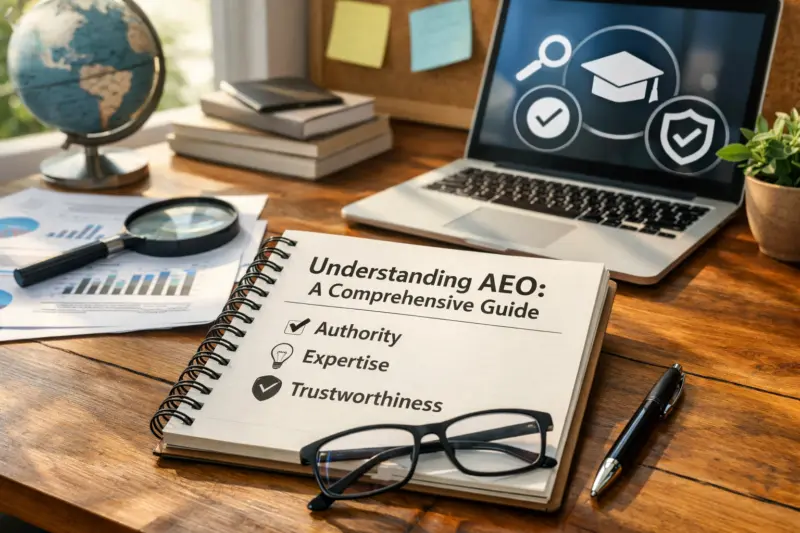
To support AEO readiness, it helps to read official guidance from trusted sources. You can start with customs authority material such as European Commission. You can also use World Customs Organization resources to understand how authorized operator concepts are framed globally.
How to evaluate your eligibility readiness without guessing
Eligibility for AEO-style trusted trader status depends on your compliance foundation and practical capability. You cannot rely on general claims like “we usually comply.” Instead, you need evidence that your controls are structured and consistently applied.
Most AEO expectations start with customs-related compliance history and record quality. Authorities typically assess whether you have a good compliance track record. They also look at whether you keep accurate records that support declarations and audit needs.
Financial solvency can also matter, depending on the program and the operator type. Even when it is not your biggest concern, solvency evidence can slow you down if it is not organized early. Therefore, plan for documentation and internal approvals well before submission.
Practical capability is the part companies often underestimate. You must show that teams can execute procedures in real operations. That includes who owns each step, how updates happen, and how exceptions are handled when something goes wrong.
“Good recordkeeping” has a specific feel in audits. It means data accuracy, traceability, and retention you can prove. For example, you should be able to reconstruct a shipment’s declaration inputs and supporting documents later.
A common mistake is mixing “we have SOPs” with “we can demonstrate the SOPs were used.” Reviewers may ask how often the procedure runs. They may request examples tied to actual shipments and exceptions.
Another nuance is governance maturity. Strong compliance by design uses clear escalation and measurable checks. Weak compliance often relies on a single expert who “knows what to do.” If that person is unavailable, execution quality can drop.
What evidence you should prepare for an AEO application
AEO applications are evidence-based, so you should prepare documents that show control effectiveness. Think in terms of proof that your processes are consistent, not just described. Each evidence item should connect to a control in daily operations.
Start with policies and procedures that map to customs-relevant activities. These may include standard operating procedures for declarations, recordkeeping, and handling amendments. You should also include internal ownership details, so reviewers see clear accountability.
Next, prepare internal audits and control monitoring records. Authorities often want to see how you test your controls. That can include compliance checklists, discrepancy reports, and corrective action logs.
Training evidence is also common. You should show who is trained, what they were trained on, and when training is refreshed. If roles change, you need evidence that onboarding includes compliance expectations.
Security and operational control evidence should be specific. For example, access control documentation can show how you limit who can affect shipment or declaration data. Incident handling and escalation procedures help demonstrate that you respond consistently.
Edge cases help reviewers understand whether controls are resilient. If you use multiple warehouses, you should provide evidence that procedures align across sites. If subcontractors are involved, show how you govern their work and how you verify compliance.
To reduce surprises, consider using an evidence index. Each document should state what requirement it supports and which process step it proves. This also helps you avoid “paper compliance,” where policies exist but people do not apply them consistently.
AEO approval usually follows a structured path: self-assessment, gap work, application submission, and review. Then the authority issues questions or requests additional information before a decision. You should plan for iteration rather than assuming a single-pass submission.
Begin with a self-assessment against your target AEO scope. Clarify which customs activities your authorization would cover. Then compare current operations to what the controls require, and document gaps in plain language.
After gap analysis, you move into control improvements. This can include revising SOPs, strengthening recordkeeping workflows, or updating security governance. It often also includes testing changes through internal checks so you have real evidence.
When you submit, reviewers evaluate whether your controls are coherent. They may compare what you described with what your teams do in day-to-day work. Therefore, readiness planning should include ERP or shipment data flow understanding, even if you do not share every technical detail.
Operational realities can delay authorization if they are not handled early. For example, if shipment data is corrected late in the process, the authority may see risk in timing. If exception handling is not controlled, the review may require clarifications.
Time-and-effort in 2026 varies by readiness depth and review scope. Clarity and evidence quality often reduce back-and-forth. Delays often come from unclear responsibility, inconsistent procedures across departments, or documents that do not match actual workflows.
A deeper nuance involves “mixed” operational setups. Shared services, subcontracted transport, or multiple warehouses can create uneven execution. You must show that controls are uniform enough to be reliably applied across the authorization scope.
Finally, plan for post-submission change control. If you modify systems during review, you may need to update evidence. Therefore, define a “freeze window” or a controlled change approach for the application period.
Why ongoing obligations matter for maintaining AEO status over time
AEO is not set-and-forget. Maintaining it usually requires monitoring, periodic internal checks, and governance that keeps controls effective as your business changes. Over time, even good procedures can drift without active management.
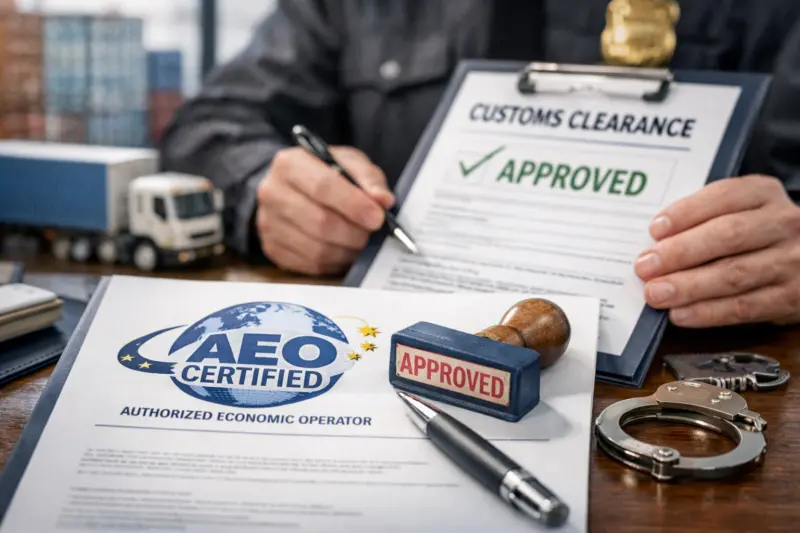
Ongoing obligations often include ensuring recordkeeping remains accurate and complete. They also include continuing security and operational controls. Therefore, you need internal routines that verify performance, not just compliance documents stored in a folder.
Change management is central to long-term status. When you add warehouses, change logistics partners, or migrate systems, you should review whether controls still work. If processes shift, you must update evidence and ensure teams follow the revised approach.
Audit readiness also matters. Authorities may expect evidence of corrective action if issues arise. That means you should document findings, determine root causes, and implement fixes with ownership and timelines.
A real-world scenario is staff turnover in trade compliance roles. If key people leave, procedural knowledge can weaken. As a result, exceptions may get handled differently. This is where “compliance drift” happens.
A common misconception is that AEO maintenance only involves responding to external audits. Internal monitoring and training refreshes are often what prevent issues from escalating. In other words, you want early detection and correction, not last-minute firefighting.
Edge cases include expanded product lines or new customs classifications. If the authorization scope grows, your controls should adapt. You must also ensure that new product data flows into declarations cleanly.
Common misconceptions and pitfalls when teams pursue AEO
Many AEO programs fail due to misconceptions about what the authorization really evaluates. Teams often treat AEO as a checklist project. In reality, it is an operational capability you must prove over time.
Stand Out in Compliance.
Transform Your Website for AEO Success.
Ready to enhance your online presence while ensuring compliance efficiency? Partner with eDesignerz for a tailored website that drives traffic, boosts conversion, and meets your AEO needs seamlessly.
29+ Years of Experience • Custom Solutions • Satisfaction Guaranteed
One misconception is that AEO is only about physical security. Security is part of many trusted trader frameworks, but recordkeeping and compliance governance are equally important. Therefore, an application that focuses on doors and cameras while ignoring control effectiveness can stall.
Another pitfall is assuming one-time documentation is sufficient. Authorities typically want evidence that procedures run consistently. They may ask how you handle exceptions and how you monitor control performance after authorization.
Some teams also assume AEO guarantees fewer inspections. That is not how risk-based facilitation works. Even with AEO status, targeted checks can occur, especially when data or declarations raise questions.
Operational pitfalls are often cross-functional. If customs compliance, finance, logistics, and IT do not share the same control model, inconsistencies appear. For example, your finance team may reconcile invoice data differently than customs declarations require.
Another deeper mistake is “paper compliance.” Policies exist, but the people who execute daily steps do not follow them. Reviewers often spot this when SOPs use vague language or when exception handling is not supported by records.
To avoid these failures, define authorship and ownership. You need clear control owners, not generic committees. Also document decision rules for exceptions so handling is consistent and auditable.
When AEO-style readiness is the right target compared to other compliance approaches
AEO-style readiness is a strong target when your organization wants structured, evidence-driven customs compliance maturity. However, it may not be the first best step for every operator. Other compliance improvements can come first if your baseline controls are still forming.
Some teams start with standardized customs compliance programs and trade compliance audits. These can uncover gaps in declarations, recordkeeping, and governance. In many cases, that is a prerequisite for AEO readiness because AEO requires reliable control execution.
You might choose AEO when you have stable trade flows and enough volume to justify the investment. You may also choose it when you need predictable cross-border processing across lanes. If your operations change frequently, you can still pursue AEO, but you must build governance that keeps controls aligned.
For different starting points, the path changes. New entrants often need baseline controls and evidence foundations first. Mid-level operators may benefit from closing specific documentation and control-effectiveness gaps. Established operators may focus on optimization, evidence quality, and ensuring uniform execution across sites.
A key concept is scope alignment. Your internal processes must cover the customs activities the authorization would cover. If you treat AEO as a broad label, reviewers may see uneven control coverage.
Tradeoffs should also be realistic. AEO readiness can require cross-department process changes. That can create opportunity cost and internal workload. Therefore, plan resources and timelines as part of a compliance roadmap, not as an isolated project.
Here is a simple way to decide how to stage readiness work:
- Readiness level: Entry / improving baseline
- Recommended path: Build controls, then evidence, then submit
- Evidence to build: SOPs, records, training, and monitoring logs
Complex scenarios that require extra attention for AEO controls and evidence
Complex trade operations expose control weaknesses faster. AEO reviewers expect your controls to hold even when business structures or partners add friction. Therefore, you need extra attention in multi-entity, third-party, and data complexity scenarios.
Multi-entity structures often require clear responsibility boundaries. Subsidiaries and branches may manage records differently, even if they share corporate policies. You must coordinate so each entity follows the same control model for the AEO scope.
Third-party dependencies are another common issue. Logistics providers, customs brokers, and IT vendors can affect shipment data quality and process control. You should show how you govern subcontractors, verify performance, and manage responsibility when exceptions occur.
Handling irregularities matters during readiness and after authorization. If a compliance incident occurs, you must contain it quickly and produce corrective action evidence. Reviewers typically want proof that the incident led to process improvements, not repeat failures.

Data and systems complexity can also create gaps. Master data accuracy, tariff classification workflows, and shipment status events can influence declarations. If your systems allow inconsistent data entry, your recordkeeping reliability may suffer.
A deeper nuance is evidence sufficiency across lanes or countries. You may execute differently depending on route. However, your evidence must show consistent control intent and governance. You can document route-specific steps while keeping the same underlying control principles.
Common edge case: shared services teams manage compliance tasks for multiple operators. You must ensure that control owners and monitoring routines are defined clearly across the shared service arrangement. Otherwise, reviewers may question whether controls are truly under your operational governance.
Frequently asked questions about understanding AEO
What is AEO and how does it affect customs compliance?
AEO is a trusted trader authorization that recognizes your customs compliance capability. It ties to internal controls, recordkeeping quality, and risk management maturity. Operationally, it can change how customs authorities assess and process your shipments. It does not remove your legal responsibility for accurate declarations.
Who should consider applying for AEO status within a supply chain?
Companies that handle import, export, or customs-relevant processes often consider applying. This can include manufacturers, importers, exporters, and logistics providers. Businesses that manage trade documentation and shipment workflows are also common applicants. The right fit depends on having stable processes and evidence you can maintain.
What documents and evidence are usually needed for an AEO application?
Expect evidence such as SOPs for customs-relevant activities, recordkeeping procedures, and internal control descriptions. Many applications also require proof of training, internal monitoring, and audit outcomes. You should be ready to share examples of how procedures work in real operations. Incident handling and corrective actions often strengthen an application.
How do you prepare for an AEO audit or review without “paper compliance”?
Prepare by testing your procedures through internal checks before you submit. Use real examples from recent shipments and exceptions to show how your controls work. Ensure the teams who execute the process can explain the workflow and evidence trail. Also confirm that your SOPs match day-to-day behavior, not just theory.
What are the biggest compliance gaps that cause AEO applications to stall?
Stalls often happen when responsibilities are unclear across departments. Incomplete or inconsistent recordkeeping evidence can also slow review. Weak incident handling and unclear exception processes are common issues. Another frequent gap is controls that exist as documents but do not operate consistently in practice.
Does AEO guarantee fewer inspections or faster clearance every time?
No, AEO does not guarantee fewer inspections in every case. It supports risk-based facilitation, so authorities may apply a lighter burden in many situations. However, targeted checks can still occur when something triggers questions. Your accuracy and control performance still matter for each shipment.
Timelines vary based on readiness and the depth of the authority’s review. A complete and consistent evidence package typically reduces delays. If controls require major redesign or multiple rounds of clarification, timelines can extend. A clear internal ownership model and evidence index can help speed the process.
What happens if a company changes systems, warehouses, or logistics partners after approval?
Changes can require a review of controls to confirm they still operate as intended. You should update procedures and evidence if workflows or data flows change. If new warehouses or partners affect handling or security, you must ensure your governance covers them. Maintaining AEO status often depends on proactive change management.
Can small or medium-sized businesses pursue AEO, and how should they scope readiness?
Yes, smaller and medium-sized businesses can pursue AEO-style authorizations. You should scope readiness to the customs activities within your operational control. Focus on building clear ownership, reliable records, and consistent exception handling. Scaling evidence does not mean lowering standards; it means choosing manageable, high-impact controls.
What are the ongoing responsibilities for maintaining AEO status year after year?
Maintenance typically includes monitoring control performance, conducting internal checks, and keeping training current. You also need governance to ensure changes do not weaken controls over time. When issues occur, corrective actions must be documented and implemented. The goal is to prevent compliance drift as your organization evolves.
How do trade compliance teams integrate AEO controls into daily operations and KPIs?
Teams integrate AEO controls by embedding them into daily workflows and measurable routines. For example, they may add control checks for declaration accuracy and exception handling triggers. They also track KPIs like data accuracy rates and timeliness of corrective actions. Training cadence and escalation routines should be included in daily execution.
How to turn AEO understanding into an actionable readiness plan for 2026
To move from understanding AEO to real progress, build a readiness plan tied to how your business actually runs. Start by defining your target authorization scope and the customs-relevant activities inside it. Then map those activities to controls you can prove with evidence.
Next, run a structured gap analysis. Identify where your current SOPs differ from operational execution. Then confirm where recordkeeping and exception handling need stronger governance and traceability.
After gaps are identified, prioritize changes that affect evidence quality and daily execution. For example, improving data flow from ERP to declarations can reduce downstream inconsistencies. Strengthening exception workflows can also improve auditability and confidence.
Finally, create an evidence plan and ownership model. Assign control owners for each area, such as recordkeeping, security, training, and incident handling. Then establish internal monitoring so controls stay effective after improvements are made.
A good readiness plan also includes a change-control approach. If you improve systems or migrate processes, document what changes and how controls remain consistent. This reduces disruption during review and supports ongoing maintenance after authorization.
If you do this work early, you can avoid late-cycle surprises. You also make it easier for reviewers to see how your controls function in real operations. Use external guidance to confirm your understanding and align your approach with official expectations, such as World Customs Organization and European Commission.
AEO is a compliance authorization built on proven internal controls, risk management, and operational capability. It is not just a documentation exercise, and it does not remove your responsibility for correct customs declarations. The path to action is clear: perform a readiness assessment, close evidence gaps, submit with clarity, and maintain controls through monitoring and change management.
If you want better predictability in customs interactions, focus on stronger compliance design and governance. Your next steps are practical: choose a target scope, assign accountable owners, and build an evidence plan that matches how your operations actually run. Before committing resources, run an AEO readiness self-audit and, where appropriate, consult qualified trade compliance specialists to validate your approach for 2026.
Updated September 2026