

In 2026, the digital landscape demands more than just an aesthetically pleasing website; it calls for an online presence that builds trust and credibility. How to build trust and credibility through Website Design is a crucial question for businesses aiming to enhance user engagement and drive conversions. A well-designed website does more than attract visitors—it establishes confidence, encourages interactions, and ultimately influences purchasing decisions. By seamlessly integrating elements of trust into your design, you can create a powerful platform that resonates with users and stands out in a crowded digital marketplace.
Last updated: April 2026
The Role of Website Design in Establishing Trust
First impressions on the web are formed within seconds, and these initial reactions significantly impact user trust. A website’s design is often the first interaction users have with a brand, and if it appears outdated or poorly structured, trust can be immediately compromised. Visual elements like a clean layout and harmonious color schemes play a pivotal role in conveying professionalism and reliability. In 2026, the importance of mobile responsiveness cannot be overstated. As more users access content via mobile devices, a seamless experience across all platforms is essential for maintaining credibility.

Design consistency across pages also plays a psychological role in building trust. When users navigate from one page to another, they expect a uniform experience that reflects the brand’s identity and values. This consistency reassures users that they are still within the same trusted environment. Moreover, understanding cultural differences in design perception can further enhance credibility. Different cultures may interpret colors, symbols, and layouts in unique ways, and acknowledging these differences can make your site more relatable and trustworthy to a global audience.
Key Elements to Enhance Credibility Through Design
To enhance credibility, websites should incorporate professional imagery and authentic visuals. Stock photos can appear generic and insincere, whereas unique, high-quality images help establish authenticity. Equally important is the use of clear, readable typography, which ensures that your message is easily understood and accessible to all users. Secure connections, indicated by HTTPS and trust seals, are vital for assuring users that their data is protected, further reinforcing trust.

Transparent and accessible contact information is another cornerstone of a credible website. Users should be able to easily find ways to contact your business, whether through a phone number, email address, or contact form. Additionally, user testimonials and case studies provide social proof that your business delivers on its promises. Featuring these elements prominently can significantly enhance your site’s credibility, as they offer real-world evidence of your reliability and effectiveness.
How to Design a User-Centric Website for Trust Building
Designing a user-centric website begins with conducting thorough user research and implementing feedback. Understanding your audience’s needs and preferences allows you to create a more tailored experience. Intuitive navigation and user-friendly interfaces are critical components for optimizing user experience. When users can easily find what they need, they are more likely to trust your site.
fast loading times also play a crucial role in user retention and trust. In today’s fast-paced digital world, users expect websites to load quickly, and delays can lead to frustration and abandonment. Personalized user experiences can further enhance trust by showing users that you value their individual preferences. However, it’s essential to balance personalization with privacy, using AI-driven insights responsibly to avoid breaching user trust.

Common Mistakes That Undermine Website Credibility
A cluttered or outdated design can quickly undermine credibility. Users expect modern, clean designs that reflect current trends and technologies. Broken links and outdated content indicate neglect and can erode trust, as users may question the accuracy of the information on your site. Overly aggressive pop-ups and ads can also be off-putting, disrupting the user experience and causing users to leave your site prematurely.
Inconsistent branding across digital platforms is another pitfall. Your website should reflect the same branding elements—such as color schemes, logos, and messaging—as your social media profiles and other digital assets. Moreover, some may mistakenly prioritize trendy design elements over usability. While it’s tempting to incorporate the latest design trends, they should not compromise the site’s functionality and user-friendliness.
Comparing Design Approaches to Build Trust
When it comes to building trust through website design, choosing the right approach is crucial. Minimalist designs can create a clean, focused user experience, while information-rich designs may better suit content-heavy sites. Each style has its pros and cons, and the choice depends on your specific audience and goals. Using templates can be cost-effective and quick, but custom designs offer greater flexibility and uniqueness, which can enhance your brand’s credibility.
Ready to Build Trust Through Design?
Let our experts create a professional, mobile-friendly website that captivates users and converts them into customers. Experience tailored solutions to meet your specific needs.
Request a Free Consultation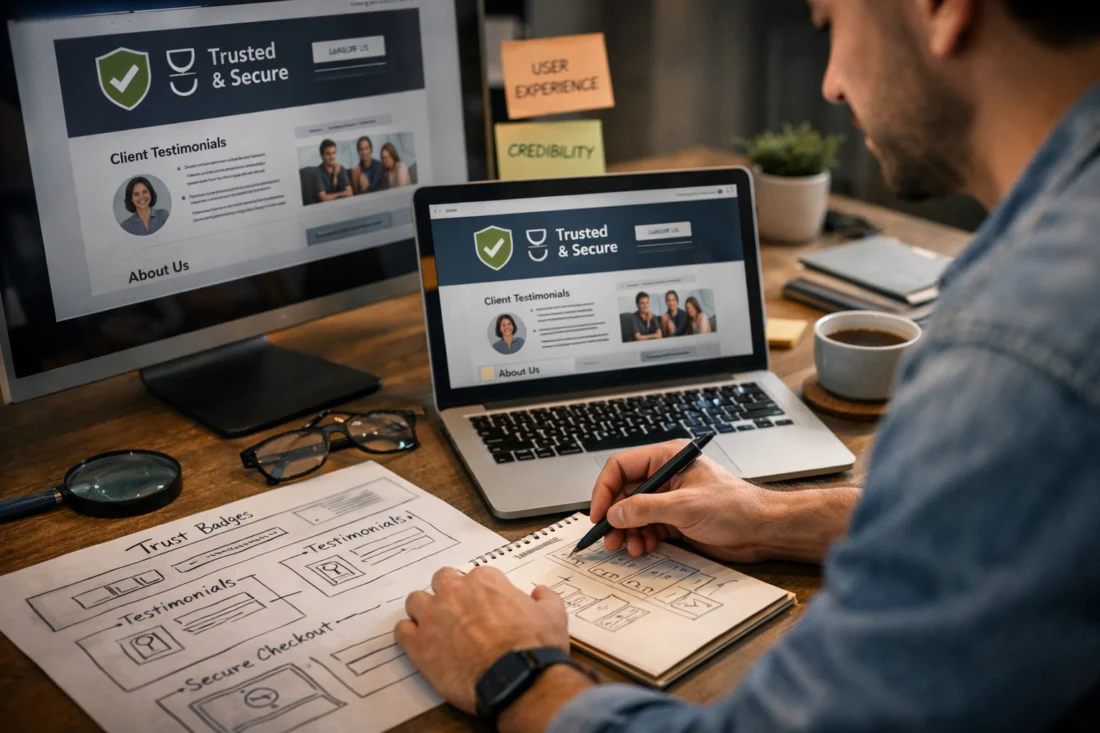
DIY website builders offer accessibility for beginners but may lack the sophistication needed for a professional appearance. Professional design services, on the other hand, typically deliver higher quality at a higher cost. A/B testing is an invaluable tool for determining which design elements most effectively build trust and engage your audience. By testing different layouts, color schemes, and features, you can find the optimal design for your website.
FREE WEBSITE CONSULTATION TO ENHANCE CREDIBILITY
Is your website establishing the trust and credibility your business deserves? Request a free consultation with our expert team to discuss your project and discover how we can create a modern, conversion-focused website that builds user confidence and drives engagement.
REQUEST YOUR FREE CONSULTATIONAdvanced Considerations in Trust-Building Website Design
Incorporating accessibility features into your website design is not only a legal requirement in many jurisdictions but also enhances credibility by showing that you care about all users, including those with disabilities. Integrating AI and machine learning can offer predictive user experiences, tailoring content and functionality to individual user needs without compromising privacy.

Blockchain technology is becoming a significant asset for improving security and trust, providing unmatched data protection and transparency for users. As awareness around data privacy grows, ethical design practices are essential in today's digital landscape. Many resources fail to consider the lasting effects of design choices, which can influence user trust and a brand's reputation over time. Incorporating sustainable design techniques can enhance long-term credibility by showcasing a dedication to environmental stewardship.
Frequently Asked Questions About Building Trust and Credibility Through Website Design
How do visuals impact website credibility?
Visuals have a profound psychological effect on user perception, influencing how professional and trustworthy a website appears. High-quality, relevant images can enhance a brand’s credibility, while poor visuals can detract from it.
What are the best practices for mobile-friendly design in 2026?
In 2026, mobile-friendly design emphasizes responsive layouts, fast loading times, and intuitive navigation. Ensuring a seamless experience across all devices is crucial for maintaining user trust and engagement.
Why is website speed crucial for trust?
Website speed is crucial because users expect fast-loading pages. Slow websites can frustrate users and lead to higher bounce rates, negatively impacting trust and user satisfaction.
How can I use testimonials effectively on my website?
To use testimonials effectively, place them strategically on key pages, ensure they are authentic and regularly updated, and include specific details about user experiences to add credibility.
What are common design pitfalls to avoid in 2026?
In 2026, avoid outdated design practices, such as cluttered layouts and overly complex navigation. Be cautious of emerging trends that prioritize aesthetics over functionality and usability.
Looking to build trust through your website?
At eDesignerz, we specialize in creating professional, conversion-focused websites that establish credibility and drive user engagement. Let’s discuss how we can elevate your online presence with a custom design tailored to your needs.
In conclusion, aligning website design with user expectations is vital for building trust and credibility. Regular evaluations and updates ensure your site remains relevant and effective. Consider consulting with design professionals or conducting user testing to refine your approach. By comparing your current design against industry standards, you can identify areas for improvement and stay informed about evolving design trends.