

If you want your content to be used as the direct answer, not just shown as a link, you need Answer Engine Optimization. Answer Engine Optimization helps you shape content so answer engines can extract, synthesize, and cite it with confidence. Unlike traditional “ranking,” this is about being the best source for the final response. In practice, it changes how you plan topics, structure pages, document evidence, and update guidance. In 2026, the winners will be teams that treat answer readiness as a repeatable system, not a one-off content push. This guide gives you a practical roadmap to master AEO strategies: a decision flow, answer-ready content architecture, proof and update discipline, measurement, and fixes for common failure modes.
Contents
- 1 Turning content into answers with a practical AEO roadmap
- 2 Engineering page structure so answer engines can extract the right block
- 3 Building evidence that answer engines trust and users can verify
- 4 Selecting the right answer formats for each question type
- 5 Measuring AEO success with answer outcomes, not vanity rankings
- 6 Common misconceptions that slow Answer Engine Optimization progress
- 7 Choosing between refactoring, publishing new answers, and improving distribution
- 8 Resolving ambiguous terminology, subjective requests, and conflicting answers
- 9 FAQ: Answering real questions about Answer Engine Optimization strategies
- 9.1 What does Answer Engine Optimization actually change in my content strategy?
- 9.2 How is Answer Engine Optimization different from SEO for featured snippets?
- 9.3 Which content types perform best for answer engines in 2026?
- 9.4 Should I restructure existing pages or publish new ones for AEO?
- 9.5 How do I make sure the “direct answer” matches the rest of my article?
- 9.6 What role does content freshness play in Answer Engine Optimization outcomes?
- 9.7 How do I measure AEO success if I can’t see answer engine citations directly?
- 9.8 Can I use automation to scale Answer Engine Optimization?
- 9.9 What should I do when multiple pages on my site compete for the same answer?
- 9.10 How do I optimize comparisons without making inaccurate “best choice” claims?
- 10 Mastering the loop: structure, evidence, and iteration for long-term AEO gains
Turning content into answers with a practical AEO roadmap
The first step is defining what “answer success” means for each question you serve. Answer engines often return a synthesized response, so your goal is not only relevance. Your goal is to be extractable and trusted for the specific answer type a user needs. This is where Answer Engine Optimization becomes a planning discipline rather than a formatting trick.
Start by choosing an answer goal that matches real user intent. Examples include problem-resolution guidance (“what do I do next?”), eligibility checks (“am I allowed to do X?”), comparisons (“what’s better and when?”), and step-by-step procedures (“how does it work?”). Then map those goals to how people decide. Some users need an overview first, then details. Others want the decision criteria up front, then supporting context.
Next, follow a simple AEO planning flow: research → select answer types → design content structure → publish → validate → iterate. Research should gather the entities and claims that must be present for the answer to make sense. Select answer types by asking what a short extracted response would require. For example, a troubleshooting query needs symptoms, causes, and next actions. A comparison query needs consistent criteria and clear “depends on” boundaries.
To keep this actionable, use an “answer-ready” checklist before publishing. Your content should be clear, complete, and written with unambiguous entities. It should include authority signals like named authors, documented methodology where relevant, and clear evidence for key claims. It should also cover edge cases instead of ignoring them. When you do this well, the answer engines have fewer gaps to invent around your source.
A common limitation is confusing answer readiness with word count. More text does not guarantee a usable extracted block. If your summary contradicts the body, answer systems may still choose another source. A real-world scenario is a guide that says “two steps only,” but the body includes five exceptions later. The extracted response becomes unreliable, and the engine learns not to trust your page for direct answers.
Engineering page structure so answer engines can extract the right block
Answer engines need consistent structure to find the “main claim” and the supporting details. Your job is to design pages that behave like a set of reusable answer components. This is different from writing content that only reads well for humans.
Begin with clear headings and consistent terminology. Use entity-focused sections that name the subject directly in the heading or first sentence. Then make each section do one job: define a term, list criteria, explain a sequence, or provide an evidence-backed attribute table. If you scatter the same concept across unrelated paragraphs, extraction systems struggle to pick one canonical source for the response.
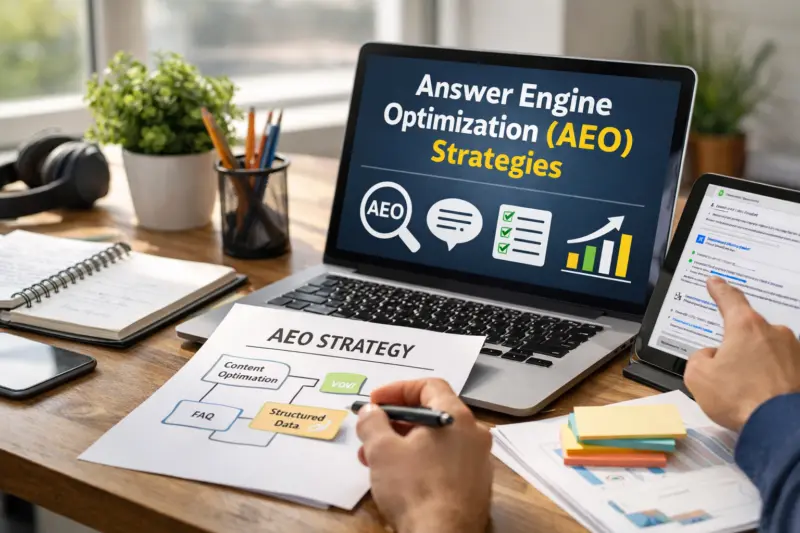
Use answer blocks as patterns you can repeat across your site. Definitions work best as short, precise explanations followed by boundary notes. Step sequences work best when each step has a distinct action verb. Decision trees work best when you lay out the decision criteria in order and label the outcomes. Attribute tables help when users want to compare options by fixed fields, like features, constraints, or eligibility attributes. Keep these blocks aligned with the body so summaries never drift.
Write summaries with strict faithfulness to the article body. If your summary claims “works for most cases,” your body must explain what “most” means. Answer systems often prefer sources where the extracted content matches the broader context. A practical application is placing a two-sentence “answer summary” directly after the relevant heading, then ensuring the rest of the section proves those sentences. That reduces contradictions that weaken extraction quality.
There is also a nuance many guides miss: handling uncertainty without losing extractability. If a recommendation changes by conditions, include a crisp “it depends” section that lists the conditions. Use ranges carefully and state assumptions explicitly. A common mistake is burying key assumptions deep in the text, where extraction might ignore them. Instead, put assumptions near the decision criteria so the extracted answer can include them.
Building evidence that answer engines trust and users can verify
Trust is not a vibe. It is evidence that is easy to map to claims. Answer Engine Optimization improves outcomes when you treat citations, provenance, and update discipline as first-class content requirements.
In AEO, “evidence” means more than general credibility. Use citations for factual claims, first-party data when you have it, and documented methodology when outcomes depend on process. If you quote guidance or specs, format the reference so it is clear what the source supports. For readers, this creates auditability. For answer engines, it increases the chance that a synthesized response stays grounded in your text.
Provenance techniques help. Label sources by type and date, add update timestamps with context, and maintain versioned guidance for fast-moving topics. When you revise a page, include a short changelog that explains what changed and why. This signals that the content remains current, which matters when answer engines decide what to cite.
Verification is the final step in evidence engineering. Audit each major claim and align the wording across your summaries and evidence sections. Ensure the extracted block contains the strongest-supported part of the page, not the most dramatic claim. A nuance is that multiple sections can compete for attention. If one section is speculative and another is well-supported, the speculative section should not contain the “headline” extracted answer.
Real-world scenarios often involve conflicting pages. If two articles on similar topics give different recommendations, answer engines may split their citations. You then get mixed extracted answers and weaker downstream results. The fix is consolidation or clear hierarchy: choose a primary source for the direct answer, and adjust other pages to support it rather than contradict it. That is part of mastering AEO strategies, not an optional cleanup.
For source grounding, you can align your approach to established guidance such as Google Search Central and E-E-A-T guidance from Google plus practical evidence discipline referenced in NIST information on provenance and documentation concepts. These are not AEO “rules,” but they reinforce why evidence clarity and update practices improve trust.
Selecting the right answer formats for each question type
Answer engines choose responses that match an answer format. If you want to be selected, you must map your content to the most likely extracted structure. That means you do not just write “a guide.” You build the right answer blocks for the question type.
Common answer intents include definitions, how-to instructions, comparisons, “best of” style recommendations, troubleshooting, and eligibility or qualification questions. Each intent has a preferred structure. Definitions need a precise first sentence and boundary statements. How-to needs step order, prerequisites, and expected outcomes. Comparisons need consistent criteria and equal treatment of each option.
For “best of” or recommendation-style requests, stay factual and criteria-first. You can include guidance on how to choose, but avoid pretending there is one universal winner. Build the response around a selection rubric and list which factors drive each recommendation. This produces direct answers without oversimplifying real tradeoffs.
Multi-intent pages need segmentation. If a page tries to be both a definition and a deep troubleshooting guide, extraction systems may choose the wrong part for the query. Instead, segment the page so each query has a dedicated answer pathway. Use headings that clearly indicate which pathway a reader or extraction system should use, and keep the summary near the relevant pathway.
Edge cases often involve conditional logic. For eligibility questions, answer engines need the exact criteria and the “if-then” outcomes. A good pattern is eligibility criteria first, then edge cases, then examples. A common mistake is listing examples only, which makes extraction harder for the actual decision criteria. You do not need to remove nuance. You need to make it extractable.
Measuring AEO success with answer outcomes, not vanity rankings
AEO success is not “we improved positions.” It is whether answer engines select, extract, and cite your content. To manage AEO strategies effectively in 2026, you need measurement that tracks answer outcomes and their downstream impact.
Start with metrics that reflect answer usage. Look for answer impressions, answer selections, citation frequency, and assisted conversions. If you cannot directly see every citation behavior, use query-to-page mapping and proxy signals. You can build a mapping by capturing which pages appear for specific question sets and then monitoring changes after structured updates.
Instrument measurement with structured logging. Track page-to-query interactions, record which content blocks were changed, and tie conversions to the answer journey. For example, if your direct-answer content improves signups for a “how to qualify” query, that indicates better answer alignment. This is the shift from classic SEO reporting toward evidence of “answer usefulness.”
Use a validation loop to prevent guesswork. Run controlled tests where you adjust one dimension at a time, such as summary alignment, evidence additions, or decision criteria formatting. Then compare changes in answer outcomes. If your metrics do not improve, diagnose why using a three-part model: your content is not being selected, your content is selected but not trusted, or your content is selected and trusted but not driving the next action.
A nuance is that “selected but not trusted” can look like low citation or inconsistent extracted responses. In that case, focus on evidence clarity, contradiction removal, and entity consistency. If “selected but not driving action” happens, your direct answer may exist, but the page may not help users complete the next step. A common mistake is to treat AEO as purely visibility work. In practice, your answer should also guide behavior.

Common misconceptions that slow Answer Engine Optimization progress
A lot of teams stall because they treat AEO as a single tactic instead of an end-to-end system. The most damaging misconception is that AEO is only about schema. Schema can help structure understanding, but it cannot fix unclear claims, missing evidence, or summary contradictions.
Another myth is that you can game answer engines. If your extracted answers contradict your body text or lack real provenance, you may see short-term gains and long-term drops. Answer engines also evaluate trust signals and consistency, which means “spammy direct answers” often fail human scrutiny and degrade trust.
Some teams also assume that publishing more content automatically increases answer capture. That rarely works. If new pages reuse the same weak evidence or create competing answers, extraction can become diluted. AEO is about choosing the right answer source for each question type and making that source consistently reliable.
It is also important to avoid the misconception that AEO replaces traditional search optimization. AEO and classic SEO overlap in relevance, clarity, and usefulness. However, AEO adds a new requirement: the content must be easy to extract and synthesize without losing meaning. You still need strong topical coverage and match to search intent, but you also need answer-ready formatting and evidence alignment.
Finally, “one snippet wins” is a trap. Many queries require multiple supporting sections, like a comparison rubric plus evidence for each criterion. If you only build a short snippet-like block, you may look extractable but fail on trust or completeness. Build a consistent evidence narrative so the extracted answer can stand alone while still reflecting your full page support.
Choosing between refactoring, publishing new answers, and improving distribution
You do not always need to rebuild everything to improve AEO. The best approach depends on content debt, evidence quality, and how well your current pages match the answer type. AEO strategies are faster when you pick the right category of work.
Refactoring existing pages is often the highest-leverage option when your topic coverage is already there. Refactor when you have outdated evidence, weak answer structure, or summary mismatches. The goal is to make the current page extractable and trustworthy, without losing established authority. A typical refactor adds crisp answer blocks, improves decision criteria formatting, and updates evidence with clear provenance.
Publishing new answer assets works when you have intent gaps. For example, you might have a deep guide but lack a dedicated comparison or eligibility section that answer engines can extract. New assets can be targeted to definitions, troubleshooting patterns, or step sequences. The limitation is evidence building. You must still provide proof and expertise, not just convenience formatting.
Distribution can support discovery and corroboration. Use distribution methods that preserve canonical integrity and do not create conflicting duplicate answers. When appropriate, strengthen visibility through channels that help answer engines discover your best source and confirm alignment across related content. The tradeoff is time and governance: you must ensure distributed copies do not diverge from the authoritative page.
There is also a hybrid option that often wins. Refactor your core “answer hub” page so it becomes the primary extracted source. Then publish smaller intent satellites that cover specific answer types, such as a troubleshooting playbook or a criteria-first comparison page. This reduces cannibalization while expanding coverage for long-tail question patterns.
Choosing between approaches should be guided by signals. If two pages compete for the same direct answer, refactoring and consolidation may outperform new publishing. If the evidence is solid but structure is inconsistent, refactor first. If users ask a new kind of question your pages never address, publish new answer assets. This approach helps you master AEO strategies without wasting effort.
| Approach | Best for | Time-to-impact | Key risk |
|---|---|---|---|
| Refactor existing pages | Structure gaps, stale evidence, summary drift | Short to medium | Residual contradictions remain |
| Publish targeted answer assets | Intent coverage gaps and missing answer types | Medium | Thin evidence for new claims |
| Improve distribution and discovery | Discovery delays, inconsistent access to best source | Medium to long | Divergent duplicates dilute authority |
| Hybrid hub + satellites | Scale coverage while protecting a primary answer | Medium | Internal overlap causes cannibalization |
Resolving ambiguous terminology, subjective requests, and conflicting answers
Answer engines struggle when your content is unclear about definitions or when different pages tell different stories. AEO strategies improve when you fix ambiguity at the source. That means standardizing how you name entities and how you describe decision boundaries.
Ambiguous terminology is common. Users may use the same word for multiple variants, or different terms for the same thing. In your content, define your terms early and map synonyms to your chosen entities. Keep the definitions stable across pages so answer extraction does not oscillate between competing interpretations.
Subjective requests are another edge case. People ask “what should I do” or “what’s best,” but answer engines prefer factual extraction patterns. The solution is to separate factual attributes from recommendation logic. Provide criteria, scenarios, and evidence-backed ranges, then label recommendations as conditional. This lets you produce an extracted “direct answer” without pretending the outcome is universal.

For policy-dependent topics, you must keep guidance precise and jurisdiction-specific to your actual domain. State assumptions about where the guidance applies and cite the most relevant official sources you rely on. If jurisdiction assumptions do not hold, label the limitation clearly in the answer criteria section so a synthesized response does not overreach.
Conflicting answers are the most expensive failure. If several pages could be extracted, answer engines may pick different ones across queries. That creates inconsistent user experiences and reduces trust. Consolidate where possible, or clearly designate a primary source for direct answers by aligning evidence and summaries. Also remove competing “direct-answer blocks” from secondary pages that contradict the primary hub.
A practical troubleshooting workflow helps when you see wrong-answer extraction. First, audit headings and summaries around the extracted block. Then check whether the extracted section is truly the best-supported claim on the page. Finally, remove or rewrite competing direct answers so the correct block becomes the most supported and most consistent option. This turns AEO debugging into a repeatable process.
FAQ: Answering real questions about Answer Engine Optimization strategies
What does Answer Engine Optimization actually change in my content strategy?
It changes what you optimize for on-page. Instead of focusing only on ranking signals, you design pages so answer engines can extract a coherent direct response from specific blocks. You also treat summary alignment and evidence provenance as part of the strategy, not as afterthoughts.
How is Answer Engine Optimization different from SEO for featured snippets?
Featured snippets focus on showing your text in a traditional search results layout. Answer Engine Optimization focuses on extraction and synthesis, where your content may be combined or paraphrased into a final answer. You still need clarity, but you also need evidence alignment across the page so the synthesized response stays faithful.
Which content types perform best for answer engines in 2026?
Content types that map cleanly to answer formats tend to perform well. Definitions, how-to sequences, comparisons with consistent criteria, and troubleshooting checklists often extract reliably. Eligibility and qualification pages also work well when they present decision criteria and edge cases in a structured way.
Should I restructure existing pages or publish new ones for AEO?
Restructure existing pages when your coverage already fits the question but your summaries, evidence, or formatting do not. Publish new answer assets when your site lacks the specific answer type users need, like a criteria-first comparison or a conditional eligibility framework. If two pages compete for the same answer, prioritize consolidation to avoid dilution.
How do I make sure the “direct answer” matches the rest of my article?
Your summary and extracted block must reflect the strongest supported claims in the body. If you include an “it depends” section, keep its conditions close to the direct answer so extracted text does not omit crucial boundaries. Run contradiction checks by reviewing whether any later section undermines the summary’s conclusion.
What role does content freshness play in Answer Engine Optimization outcomes?
Freshness supports trust and reduces stale guidance extraction. Update evidence, clarify what changed, and keep timestamps meaningful by stating the context of revisions. Stale sections can cause answer engines to skip your page or choose another source that looks more reliable.
How do I measure AEO success if I can’t see answer engine citations directly?
Use query-to-page mapping and monitor changes after structured updates. Track answer-like visibility with SERP or SERP-feature monitoring where available, and correlate page changes with assisted conversions. Also compare outcomes across intent clusters to confirm your updates improved selection and usefulness.
Can I use automation to scale Answer Engine Optimization?
You can automate parts of the workflow, like formatting checks, consistency audits, and suggested evidence gaps. However, you should keep human review for evidence quality, uncertainty handling, and final summary accuracy. Automation should not write recommendations without verifying the claims and supporting context.
What should I do when multiple pages on my site compete for the same answer?
Consolidate or refactor so one page becomes the primary source for the direct answer. Remove or rewrite conflicting direct-answer blocks on competing pages. Then align evidence and summaries so the page you want extracted is also the most supported and most consistent.
How do I optimize comparisons without making inaccurate “best choice” claims?
Write comparisons around criteria first, then explain what each option is best for under those criteria. Use consistent measurement units, define terms clearly, and include “depends on” boundaries. Back claims with evidence and avoid universal winners when outcomes change by conditions.
Mastering the loop: structure, evidence, and iteration for long-term AEO gains
Mastering Answer Engine Optimization strategies means building a system that produces answer-ready content and then improving it based on outcomes. Your direct goal is extractability, but your real advantage comes from trust and consistency. Structure helps extraction, evidence helps selection, and iteration helps long-term performance.
Start your next sprint by picking one to three high-impact intent clusters. Then create or refactor answer-ready pages so each one contains a clear direct-answer block aligned with supporting sections and evidence. When you add or update content, keep summaries consistent, document provenance, and address edge cases that would otherwise force uncertainty into extracted responses.
Finally, measure results in a way that connects answer outcomes to user action. If you track answer selections and assisted conversions by query cluster, you can learn quickly whether changes improved selection, trust, or usefulness. That insight prevents circular fixes and helps you focus on the highest-leverage improvements as your content library grows.
If you want a concrete next step, audit your top pages for summary-to-body consistency and contradiction risks, then build an answer-format map for your next publishing targets. Choose one answer hub to become your primary source for each question type. After that, repeat the loop: structure for extractability, evidence for trust, and iteration based on answer outcomes.
Updated September 2026