
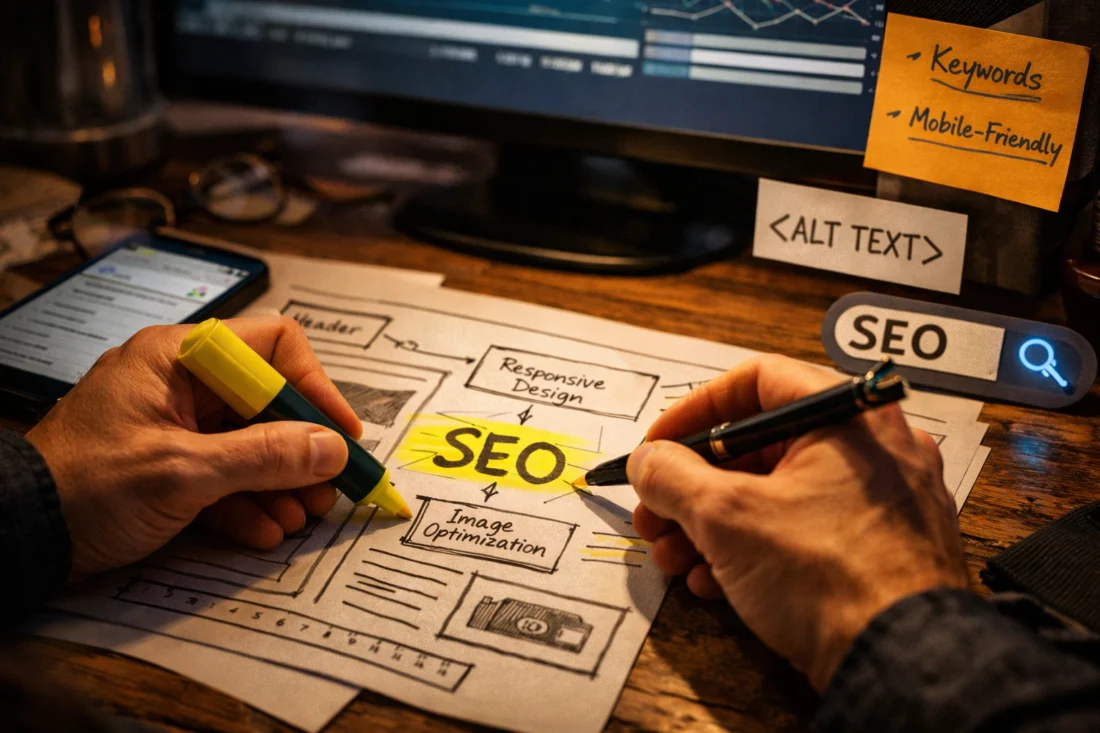
Web design optimization for SEO involves aligning a website’s design elements with search engine optimization principles to enhance visibility and user experience. In 2026, this practice remains crucial as search engines increasingly prioritize user-centric features and technical performance. Understanding how to optimize web design for SEO can lead to improved search rankings, greater user engagement, and ultimately, more conversions. By integrating SEO into your web design from the outset, you ensure that your site is both aesthetically pleasing and highly functional, meeting the demands of both users and search engines.
Last updated: April 2026
Key Principles of SEO-Friendly Web Design
Integrating SEO principles into the web design process from the start is essential for creating a site that ranks well in search engines. This integration ensures that every aspect, from layout to coding, supports search engine visibility. A key component is mobile responsiveness, which significantly impacts SEO. With Google’s mobile-first indexing, a site that adapts seamlessly to various devices ranks higher, highlighting the need for responsive design.
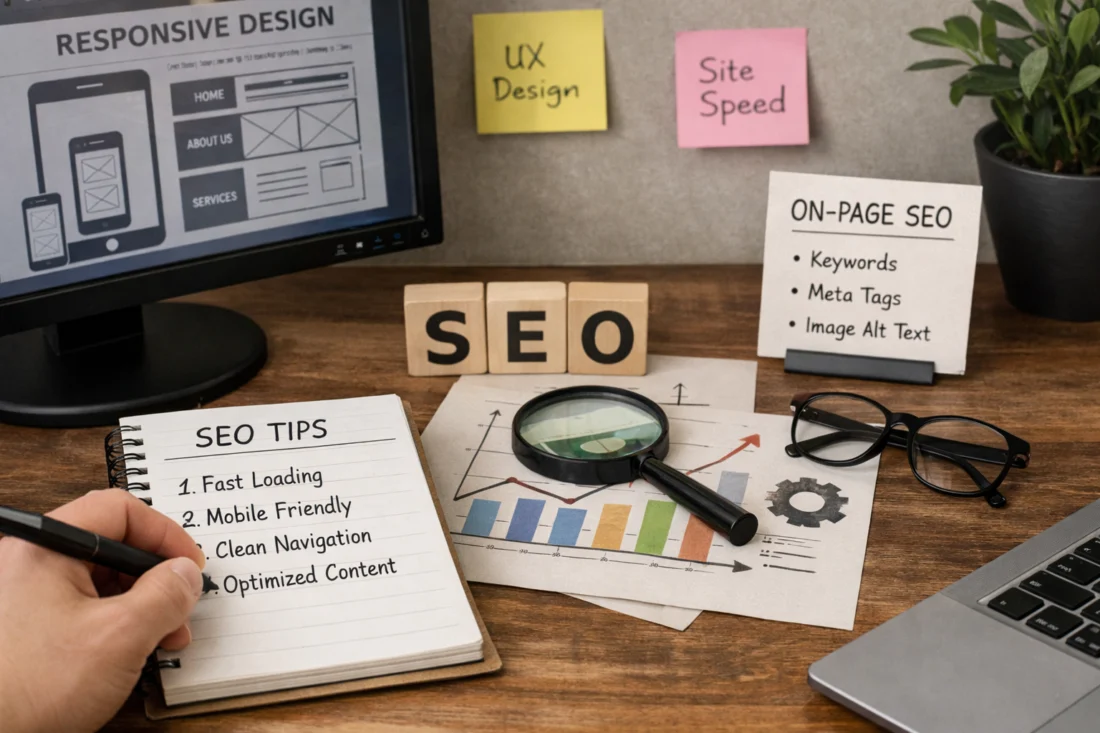
Site speed and performance are also crucial factors. Google has consistently emphasized the importance of fast-loading pages as they directly affect user satisfaction and bounce rates. Optimizing images, leveraging browser caching, and minimizing code can enhance site speed, contributing to better rankings. Similarly, user experience (UX) plays a pivotal role in web design for SEO. A site that offers intuitive navigation, clear calls to action, and engaging content keeps users on the page longer, reducing bounce rates and improving SEO.
Well-structured and semantic HTML/CSS is crucial for enhancing crawlability. When a website's code is organized properly, search engines can read and index it more efficiently. This practice not only supports SEO efforts but also promotes accessibility and uniformity across different browsers, which aligns with the principles of eco-friendly web design. By applying these essential concepts, web designers can craft sites that are visually engaging while being optimized for search engines, resulting in a more sustainable approach to web development. For more insights on how to implement these strategies, check out sustainable website design approaches.
The Process of optimizing web design for SEO
Optimizing web design for SEO requires a systematic approach. Start by conducting an SEO audit using tools such as Google Search Console and SEMrush to identify design-related issues affecting search performance. This audit helps prioritize tasks during the design phase, ensuring that critical SEO elements are addressed early on. Incorporate SEO considerations, such as keyword placement and internal linking, into the design blueprint to build a strong foundation.
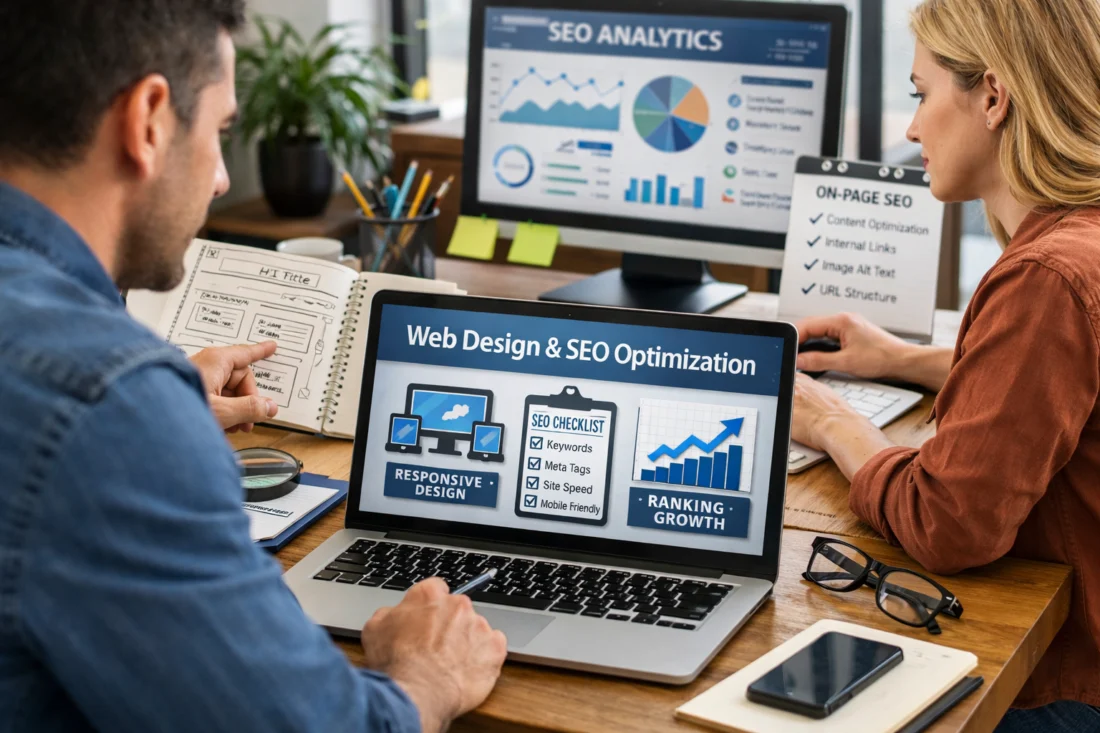
After launch, ongoing monitoring and adjustments are crucial. Use analytics to track user behavior and site performance, making necessary tweaks to maintain or improve rankings. This iterative process is especially important for niche industries or specific demographics, where user expectations may differ significantly. Regular updates and testing ensure the site remains optimized over time.
One common challenge is balancing visual design with SEO functionality. Many designers focus heavily on aesthetics, sometimes at the expense of SEO. It’s crucial to remember that elements like site speed, mobile responsiveness, and clean coding are integral to both user experience and search rankings. By adopting a holistic view that incorporates SEO from the outset, designers can avoid these pitfalls and create a seamless, optimized experience.
Common Mistakes in Web Design Optimization for SEO
Several common mistakes can hinder web design optimization for SEO. Overloading a site with keywords, for example, can lead to poor readability and penalties from search engines. Instead, focus on naturally integrating keywords into content and meta tags. Another frequent error is neglecting mobile users. With mobile-first indexing, failing to optimize for mobile can drastically impact your site’s rankings.
There are also misconceptions about design aesthetics versus SEO functionality. Some believe that a visually stunning site guarantees high rankings, but search engines prioritize technical SEO aspects like site speed and crawlability. Ignoring these technical elements can result in lower search visibility. Similarly, using outdated design practices, such as Flash or non-responsive layouts, can negatively affect SEO, as they hinder both user experience and search engine indexing.
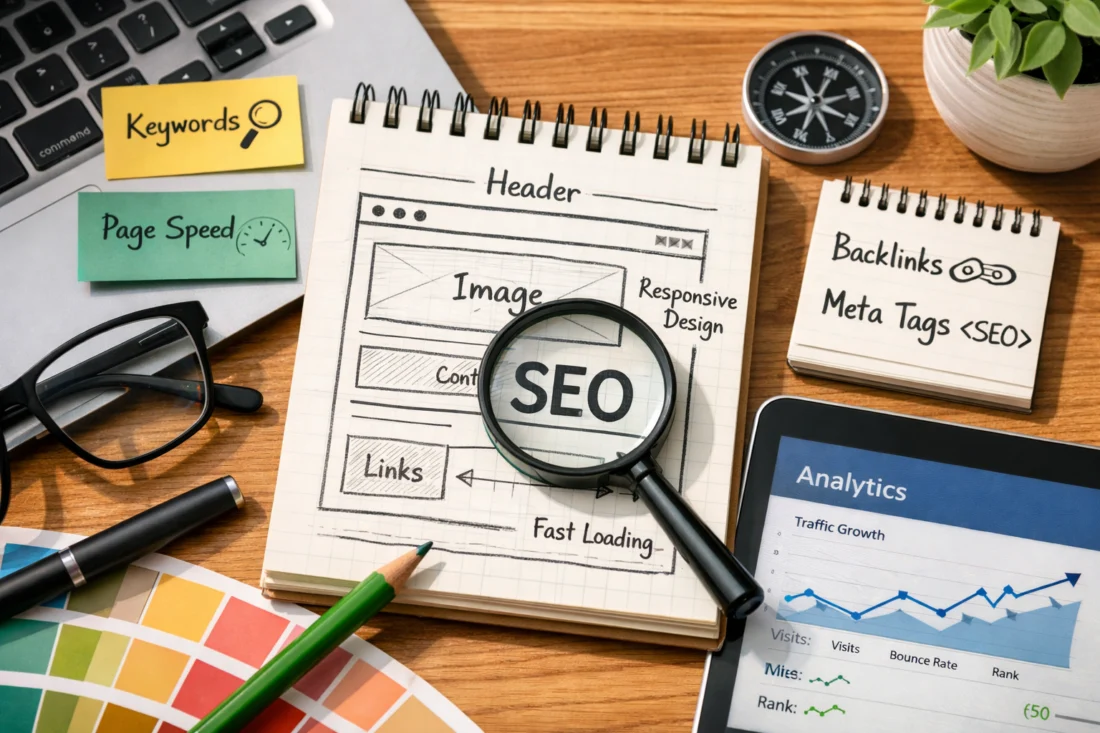
Even small design changes can significantly impact rankings. For example, altering site navigation without considering SEO can disrupt internal linking structures, leading to a drop in search performance. By being aware of these common pitfalls and understanding their consequences, designers can make informed decisions that enhance both the site’s aesthetic appeal and its SEO effectiveness.
BOOST YOUR RANKINGS & CONVERSIONS
Elevate your online presence with our expert web design and SEO solutions tailored to attract visitors and convert them into customers. Let us align your design with SEO best practices for maximum impact.
Comparing Approaches to Web Design for SEO
Choosing the right design framework is crucial for SEO success. Responsive design, which adapts to different screen sizes, is generally more SEO-friendly than adaptive design, which requires separate versions of a site for different devices. Responsive design ensures consistent content delivery and easier maintenance, benefiting both user experience and search rankings.
When it comes to website builders versus custom-coded sites, each has its pros and cons. Website builders offer ease of use and quick setup, but may lack the flexibility needed for advanced SEO. Custom-coded sites, on the other hand, allow for tailored SEO strategies but require more resources and expertise. The choice depends on your specific needs and resources.
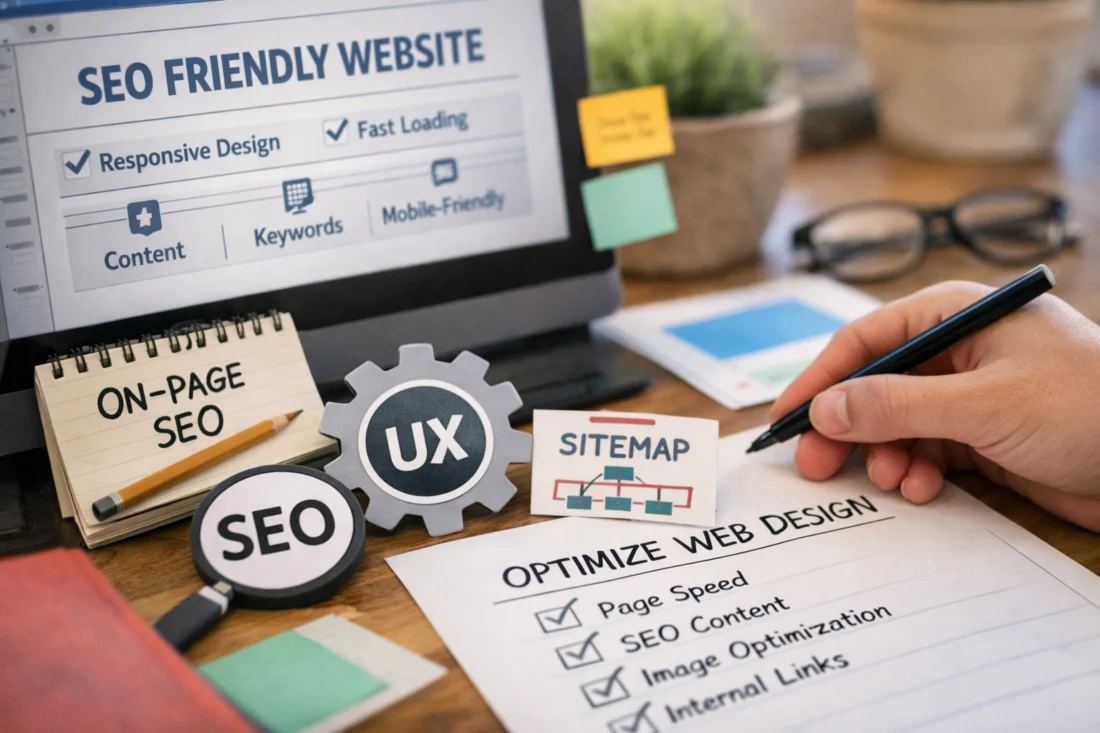
The impact of different content management systems (CMS) on SEO is another consideration. Platforms like WordPress offer extensive SEO plugins and support, enhancing user experience on WordPress sites. However, other CMS options may require additional customization to achieve similar SEO results. Balancing design creativity with SEO compliance is key; while unique designs can enhance brand identity, they should not compromise SEO fundamentals.
BOOST YOUR SEO RANKINGS. ENGAGE USERS EFFECTIVELY.
Transform your web design to enhance SEO and user experience. Our team specializes in creating mobile-friendly, fast-loading websites that attract visitors and convert them into customers.
REQUEST A FREE CONSULTATIONAdvanced Considerations for SEO in Web Design (Beyond Basics)
As technology evolves, advanced considerations in SEO for web design become increasingly relevant. AI and machine learning are transforming how sites are designed and optimized, offering predictive analytics and personalization options that improve SEO outcomes. Structured data and schema markup also play a critical role in 2026, helping search engines understand content context and enhancing visibility in rich search results.
Voice search and visual search optimization are gaining traction as more users rely on these technologies. Designing for voice search involves focusing on natural language processing and concise, informative content that answers user queries efficiently. Similarly, visual search requires high-quality images and detailed metadata to improve discoverability.
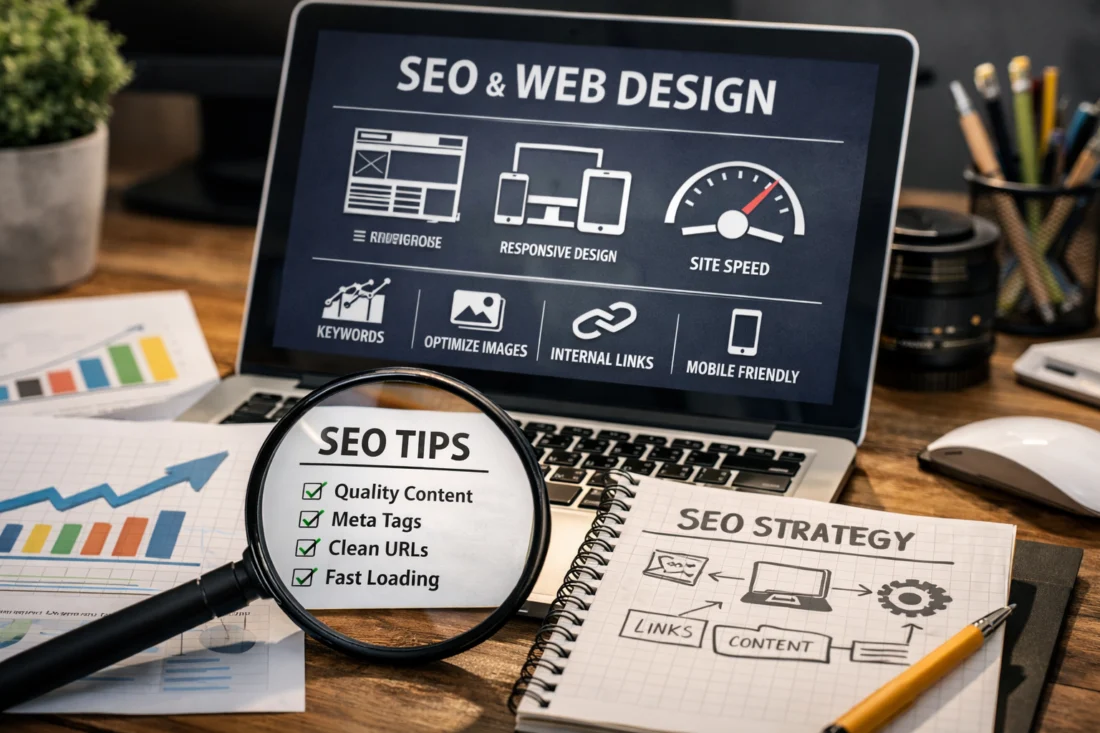
Incorporating accessibility standards into SEO-friendly design is crucial for reaching a broader audience. Accessible websites not only comply with legal requirements but also enhance user engagement and SEO. Emerging technologies like AR/VR offer exciting possibilities, but their impact on SEO requires careful consideration to ensure these innovative elements do not hinder site performance or crawlability.
Frequently Asked Questions About Optimizing Web Design for SEO
What are the latest trends in SEO for web design in 2026?
In 2026, trends include AI-driven personalization, voice search optimization, and the integration of structured data. Websites are increasingly designed with user-centric features, focusing on speed and mobile-first experiences.
How can I balance aesthetics and SEO in web design?
Balancing aesthetics and SEO involves prioritizing user experience and technical functionality. Use clean, semantic code and ensure fast load times while maintaining a visually appealing design. Avoid sacrificing SEO for purely aesthetic elements.
Why is mobile-first design critical for SEO?
Mobile-first design is critical because Google prioritizes mobile-friendly sites through mobile-first indexing. A mobile-responsive site enhances user experience and improves search rankings by ensuring accessibility across all devices.
How does site architecture influence search engine rankings?
Logical site architecture enhances navigation and helps search engines index content more effectively. A well-structured site allows for efficient crawling, improves user experience, and supports higher search rankings.
What are some effective tools for optimizing web design for SEO?
Effective tools include Google Search Console for monitoring site performance, Screaming Frog for technical audits, and Yoast SEO for WordPress optimization. These tools help identify issues and implement SEO best practices.
Website Design Optimization
BOOST YOUR SEO WITH SMART DESIGN.
Transform your website into a powerful conversion tool. Request a free consultation to discuss how our expert web design and SEO services can enhance your online presence and attract more leads.
29+ Years of Experience Custom Solutions Satisfaction Guaranteed
In conclusion, integrating SEO into web design is not just beneficial but essential for long-term success in 2026. As search technologies evolve, staying updated with trends and conducting regular audits ensures your site remains competitive. For complex projects, consulting with SEO professionals can provide the expertise needed to navigate challenges. Explore additional resources or services to continue optimizing your web design for SEO.