
Minimalist web design is a streamlined approach that emphasizes simplicity, functionality, and aesthetic clarity. In 2026, it’s a preferred choice for many designers and businesses due to its focus on user experience and the “importance of clean design“. Creating Minimalist Web Design involves more than just stripping away excess; it’s about enhancing user interaction and improving load times, which are crucial components of successful website design today.
Last updated: April 2026
Principles of Minimalist Web Design
The core principles of minimalist web design include simplicity, functionality, and aesthetics. These elements work together to create a clean, intuitive interface that enhances user experience and reduces load times. By focusing on essential elements, minimalist design ensures that users can navigate a site efficiently, thus improving overall engagement and satisfaction.
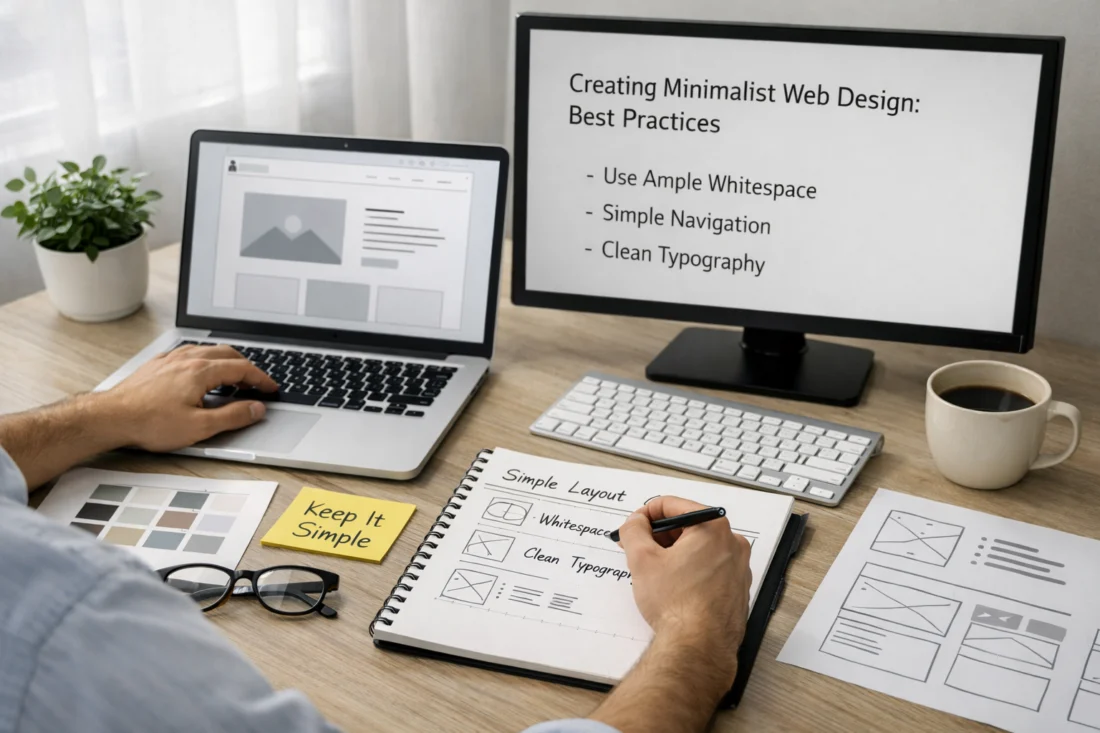
One key aspect is balancing minimalism with brand identity. While minimalism prioritizes simplicity, it doesn’t mean sacrificing brand uniqueness. A minimalist design can still incorporate a “strong brand identity” through strategic use of color, typography, and imagery. Moreover, the role of whitespace and typography in minimalist design is pivotal, allowing content to breathe and become more readable.
A common misconception is that minimalism equates to a lack of content. However, it’s not about having less content but rather about presenting content in a concise and impactful manner. By leveraging “typography in minimalist design”, designers can create visually appealing and effective communication without overcrowding the page.
How to Create a Minimalist Web Design
Creating a minimalist web design involves a step-by-step process that includes planning, wireframing, and execution. Initially, thorough planning is essential to determine which elements are necessary and which can be eliminated. This is followed by wireframing, where designers lay out the site’s structure before adding visual elements. Execution involves bringing the design to life, often using tools and software tailored for minimalist design, such as Figma or Sketch.
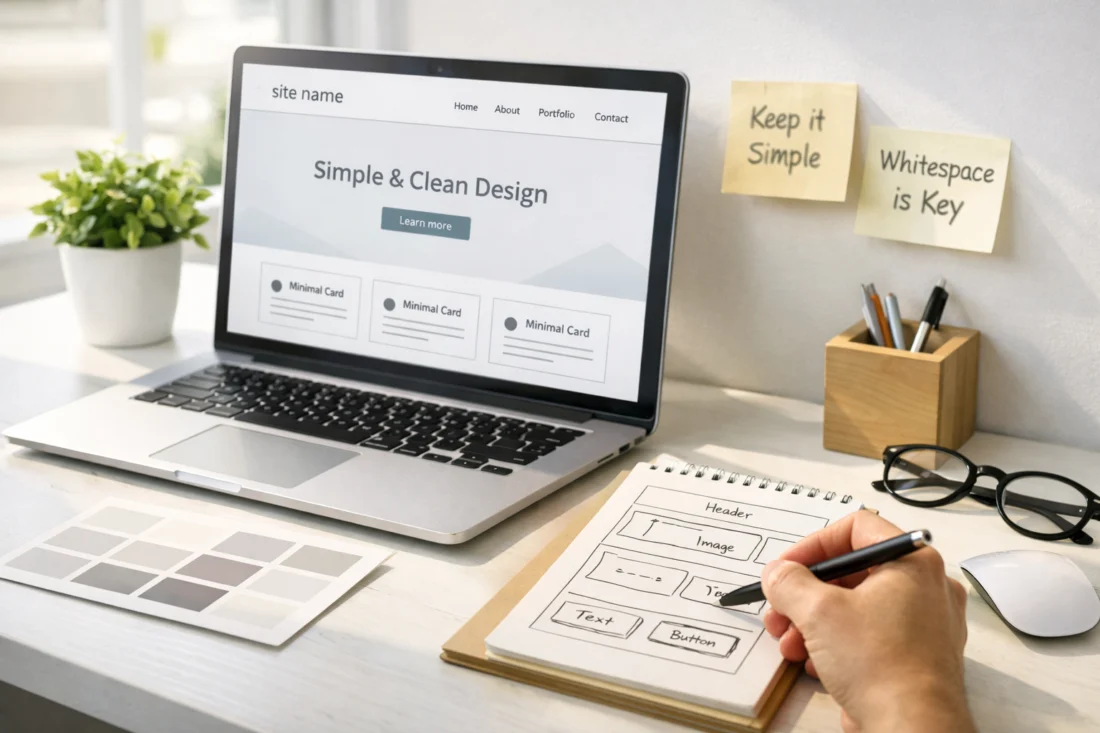
User testing and feedback are crucial in refining designs. By engaging real users, designers can identify areas for improvement and ensure that the design meets user needs effectively. Additionally, the choice of color and imagery plays a significant role in minimalism, with a focus on using muted colors and high-quality images to enhance the aesthetic without overwhelming the user.
Maintaining simplicity without sacrificing functionality is a challenge. Designers must ensure that essential features remain accessible and intuitive. “Enhancing UX with micro-interactions” can add subtle animations that guide users without cluttering the interface, further optimizing the website for UX.
Common Mistakes in Minimalist Web Design
Over-simplification is a frequent error that can negatively impact user engagement. While simplicity is key, removing too much can lead to a site that feels barren and uninviting. It’s crucial to maintain a balance where the design is both functional and aesthetically pleasing.
Another pitfall is ignoring mobile responsiveness. With the growing number of mobile users, a minimalist design must be adaptable across various screen sizes to ensure a seamless experience. Neglecting this aspect can alienate a significant portion of the audience.
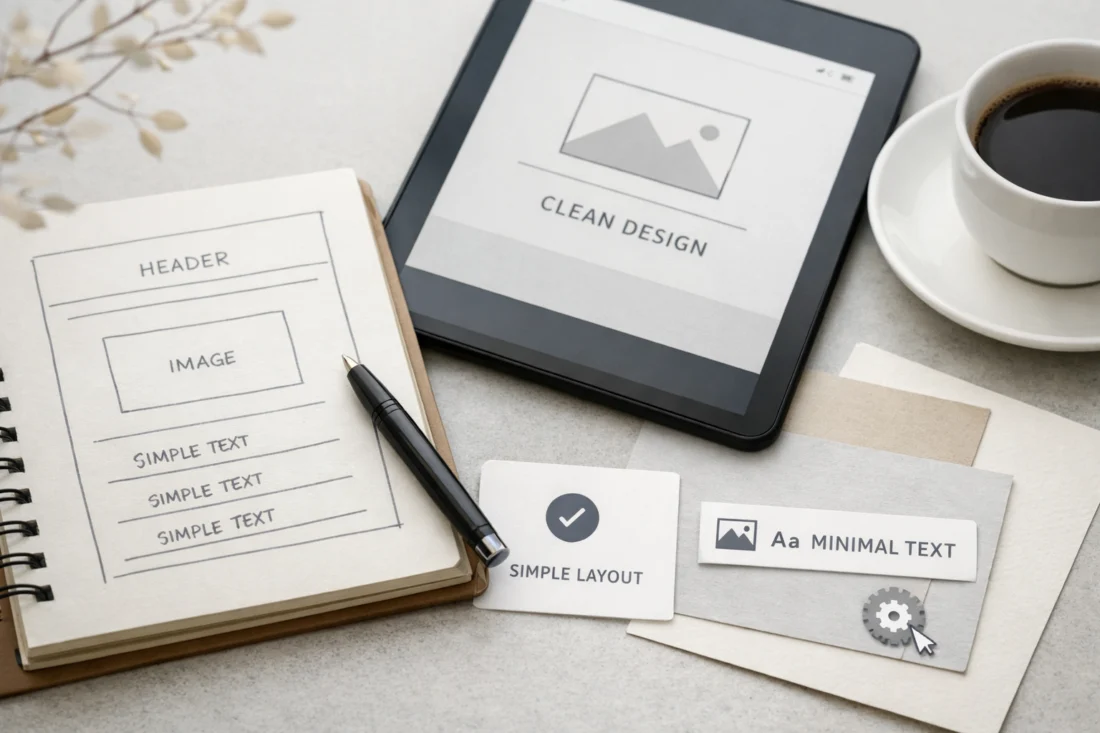
Accessibility standards should never be overlooked. Minimalist design should still cater to users with different needs, ensuring that text is readable and navigation is straightforward. Additionally, in the pursuit of minimalism, there’s a risk of losing brand uniqueness. Designers must remember that a strong brand presence is vital for recognition and trust. Finally, contrary to popular belief, minimalist design is not necessarily faster to implement. It requires careful planning and iteration to achieve the desired results.
Your website is the face of your business.
Minimalist design enhances user experience and boosts speed.
Is Your Website Designed for Conversions?
Get Your Free ConsultationComparing Minimalist Design Approaches
When contrasting different design frameworks, flat design and material design stand out as popular minimalist approaches. Flat design focuses on simplicity and usability, using two-dimensional elements and bright colors. Material design, while also minimalist, incorporates subtle shadows and layers to create a more tactile interface.
Grid systems play a crucial role in minimalist layouts, providing structure and alignment that enhance user experience. They facilitate the organization of content, making it easier for users to find information quickly and efficiently.
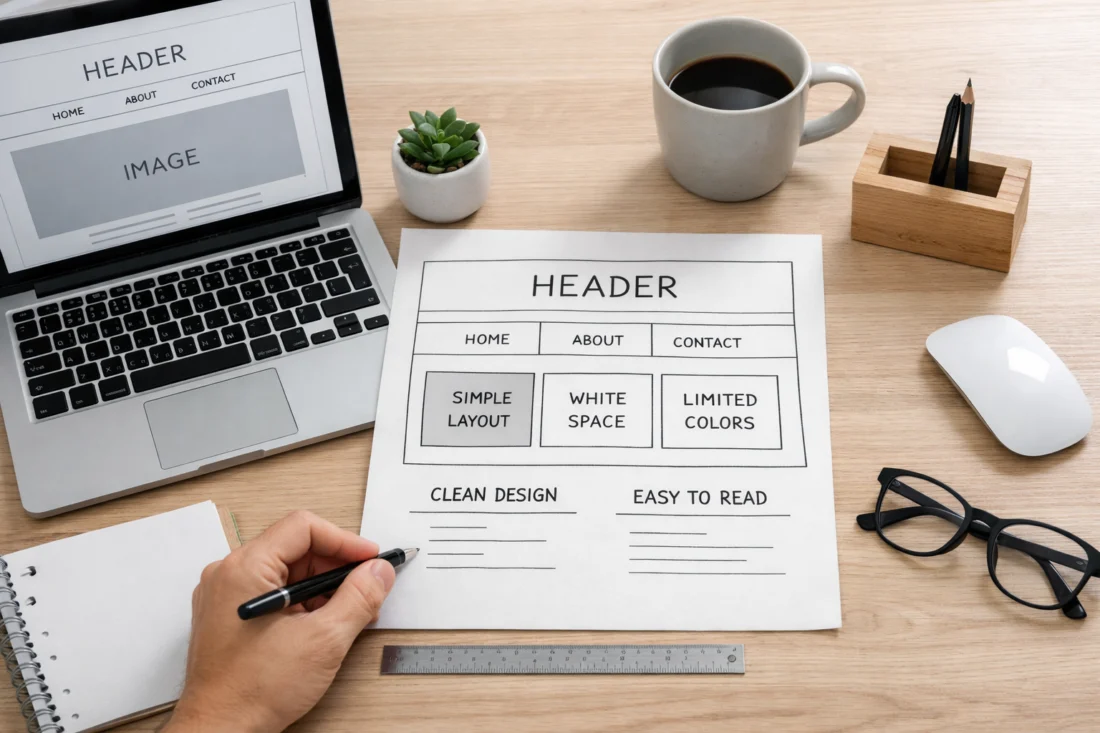
Typography choices, such as serif versus sans-serif fonts, significantly impact minimalist designs. Sans-serif fonts are often favored for their clean, modern look, though serif fonts can add a touch of elegance and readability in certain contexts. Designers must evaluate the trade-offs between custom designs and using templates, considering factors like budget, uniqueness, and time constraints.
Ready to create a stunning minimalist website that enhances user experience and boosts engagement? At eDesignerz, we specialize in custom web design and development tailored to your unique needs. Let's collaborate to bring your vision to life and make a lasting impression.
Get Your Free Website ConsultationAdvanced Considerations in Minimalist Web Design (Beyond Basics)
In 2026, AI and machine learning are transforming minimalist design by personalizing user experiences and optimizing content presentation. These technologies can analyze user behavior and make real-time adjustments to enhance engagement without adding clutter.
Integrating dynamic elements, such as animations or interactive features, must be done cautiously to avoid disrupting the minimalist aesthetic. Elements should add value and guide users without overwhelming them.
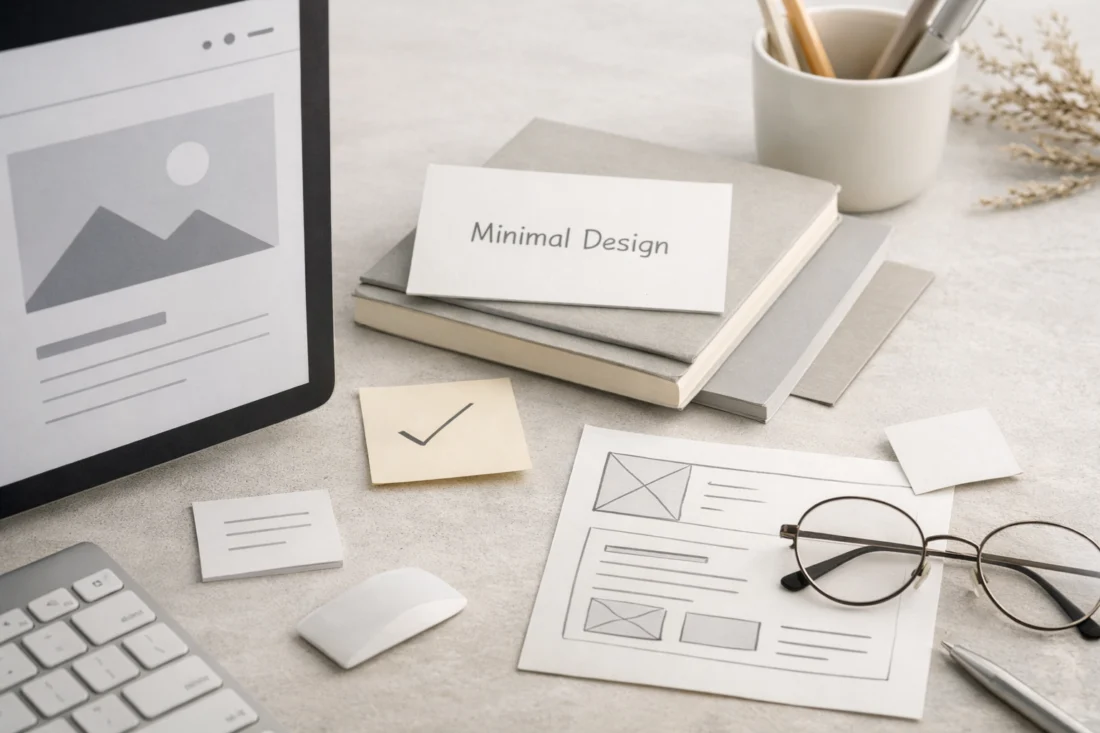
Cultural differences can influence minimalist aesthetics, as perceptions of simplicity and functionality vary globally. Designers need to consider these nuances when creating designs for international audiences. Additionally, as web technologies evolve, minimalist design must adapt to incorporate new capabilities while maintaining its core principles. However, minimalism may not always be the best approach, especially for websites that rely on rich content or complex interactions.
Frequently Asked Questions About Minimalist Web Design
What are the benefits of minimalist web design?
Minimalist web design improves load times and user experience by reducing unnecessary elements and focusing on essential content. This approach leads to cleaner, more efficient websites that are easier to navigate.
How does minimalist web design affect SEO in 2026?
Minimalist design can enhance SEO by improving site speed and usability, which are critical ranking factors. A well-designed minimalist site can also improve user engagement, indirectly boosting search engine rankings.
What are some common tools for creating minimalist web designs?
Popular tools for minimalist design in 2026 include Figma, Sketch, and Adobe XD. These platforms offer features that support streamlined design processes and efficient collaboration.
How can I maintain brand identity in a minimalist design?
Maintaining a strong brand identity in minimalist design involves using consistent colors, fonts, and imagery that reflect the brand’s values and personality. Strategic design choices ensure that simplicity doesn’t dilute the brand’s essence.
Is minimalist web design suitable for all types of websites?
While minimalist design is beneficial for many sites, it’s particularly effective for portfolios, blogs, and e-commerce sites where clarity and ease of navigation are crucial. However, content-heavy sites may require a more detailed approach.
Elevate Your Web Design Game
Transform Your Ideas Into a Stunning Website!
Implementing minimalist design principles is just the beginning. At eDesignerz, we specialize in creating fast, mobile-friendly websites tailored to resonate with your audience. Let’s enhance user experience with a unique touch that reflects your brand.
Schedule Your Free Consultation29+ Years of Experience Custom Functionality Satisfaction Guaranteed
In conclusion, the art of creating minimalist web design lies in balancing simplicity with functionality. As web design trends continue to evolve, it’s crucial for designers to assess their site’s needs and consider consulting with professionals for tailored advice. By exploring new tools and techniques, designers can create websites that are not only visually appealing but also highly functional and user-friendly.