

Creating an effective landing page design is essential for digital marketing success, as it plays a pivotal role in converting visitors into customers. A well-crafted landing page not only captures the attention of your target audience but also guides them towards taking a desired action, such as signing up for a newsletter or making a purchase. In this guide, we will explore how to create effective landing page design, focusing on the core elements and advanced strategies to boost your conversion rates.
Last updated: April 2026
Contents
- 1 Understanding the Core Elements of Effective Landing Page Design
- 2 How to Achieve a High-Converting Landing Page Design
- 3 Common Mistakes in Landing Page Design and How to Avoid Them
- 4 Comparing Different Approaches to Landing Page Design
- 5 Advanced Considerations for Landing Page Design in 2026
- 6 Frequently Asked Questions About Creating Effective Landing Page Design
- 6.1 What is the best way to design a landing page for mobile users?
- 6.2 How can I measure the success of my landing page design?
- 6.3 Why is A/B testing important in landing page design?
- 6.4 What are some effective call-to-action examples for landing pages?
- 6.5 How do I ensure my landing page aligns with my brand identity?
Understanding the Core Elements of Effective Landing Page Design
A landing page is a standalone web page created specifically for a marketing or advertising campaign, designed with the primary objective of driving conversions. The effectiveness of a landing page design hinges on its ability to align with the target audience’s needs, offering a seamless user journey. Key elements of a successful landing page include compelling headlines, clear calls-to-action (CTAs), and engaging visuals. These components work together to maintain the visitor’s interest and direct them towards the desired action.

Understanding your audience is crucial. The design should resonate with their preferences and expectations, ensuring the message is clear and engaging. The integration of “clean design benefits” is vital in maintaining focus, as clutter can distract and deter potential conversions. With mobile usage on the rise, ensuring mobile responsiveness is non-negotiable in 2026, as it impacts both user experience and search rankings.
Critical to this process is the alignment of design elements with user intent. For instance, a headline should immediately convey the value proposition, while visuals should support the text and guide the user naturally towards the CTA. The role of mobile responsiveness cannot be overstated, as users in 2026 expect seamless experiences across devices. Ignoring this could lead to missed opportunities and reduced engagement.
How to Achieve a High-Converting Landing Page Design
To achieve a high-converting landing page design, start with a clear understanding of your marketing goals and target audience. Begin by conducting thorough research to identify the needs and preferences of your audience, and align your design accordingly. The design process should be iterative, involving regular A/B testing and data analytics to refine and optimize the page based on user interactions.

A/B testing is crucial for understanding what works and what doesn’t. By testing different headlines, CTAs, and layouts, you can determine which elements drive the most conversions. This data-driven approach allows for continuous improvement, ensuring your landing page remains effective over time. “Optimizing website UX” is another key aspect; a seamless user journey and intuitive navigation are essential for keeping visitors engaged and encouraging conversions.
User experience (UX) plays a significant role in conversion rates. A well-designed landing page is intuitive and user-friendly, with a focus on fast load times and clear messaging. The integration of micro-interactions can further enhance UX by providing feedback and guiding users through the conversion process. Avoid “common design mistakes” such as cluttered layouts and unclear CTAs, as these can hinder the effectiveness of your landing page.
Common Mistakes in Landing Page Design and How to Avoid Them
Common design mistakes can significantly impact the effectiveness of a landing page. One such mistake is a cluttered layout, which can overwhelm visitors and obscure the main message. To avoid this, focus on “clean design benefits” by using ample white space and ensuring that each element serves a clear purpose. Another frequent error is slow load times, which can lead to high bounce rates. Optimizing images and using efficient coding practices can help mitigate this issue.
Neglecting mobile optimization is another critical mistake. In 2026, mobile users account for a significant portion of web traffic, and ignoring this audience can result in lost conversions. Ensure your landing page is mobile-responsive, with easy navigation and quick loading times on all devices. Unclear CTAs can also hinder conversions; they should be concise and direct, guiding users towards the next step in the conversion funnel.
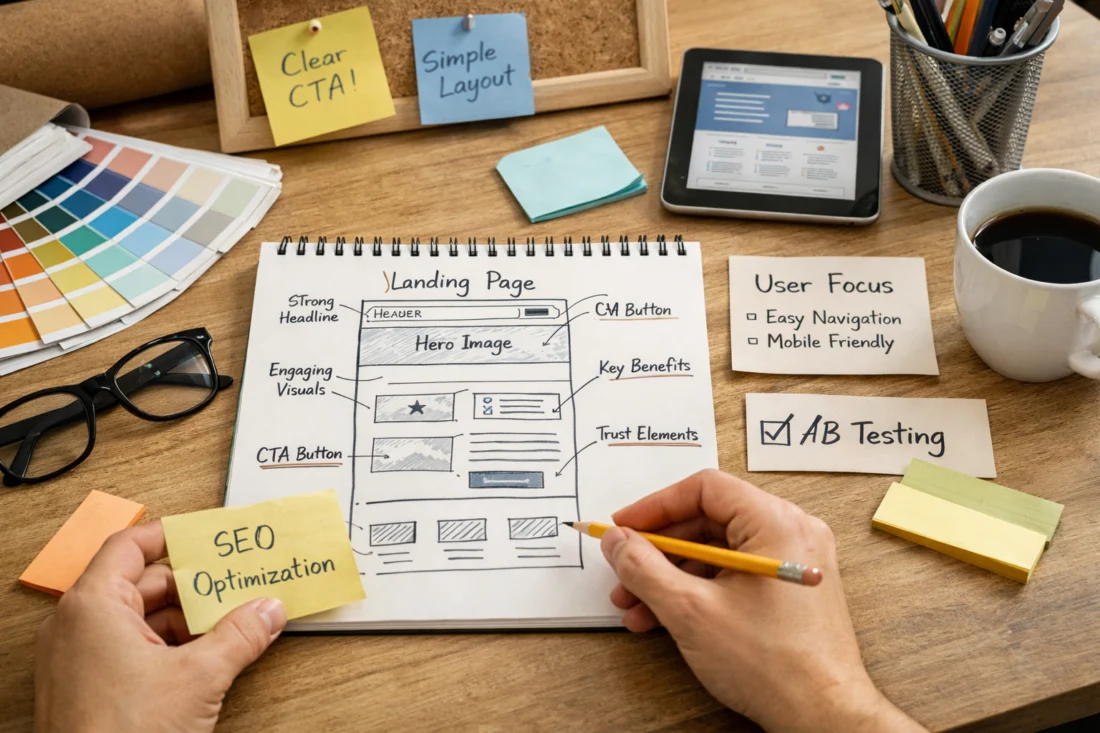
Lastly, following design trends that don’t enhance user engagement can be detrimental. While it’s essential to keep your design modern and appealing, trends should never compromise clarity and function. By focusing on the user’s needs and preferences, you can create a landing page that effectively converts visitors into customers.
Comparing Different Approaches to Landing Page Design
When it comes to landing page design, there are various approaches to consider, each with its advantages and drawbacks. Custom design offers the benefit of a unique and tailored experience, allowing for full alignment with your brand identity and marketing goals. However, it can be more time-consuming and expensive compared to template-based design, which provides a quicker and more cost-effective solution.
Another consideration is whether to implement a single-page or multi-page landing strategy. A single-page design can be effective for focusing on a specific product or promotion, offering a streamlined and direct user experience. In contrast, a multi-page approach may be beneficial for complex offerings, providing additional information and resources to guide the user through the decision-making process.
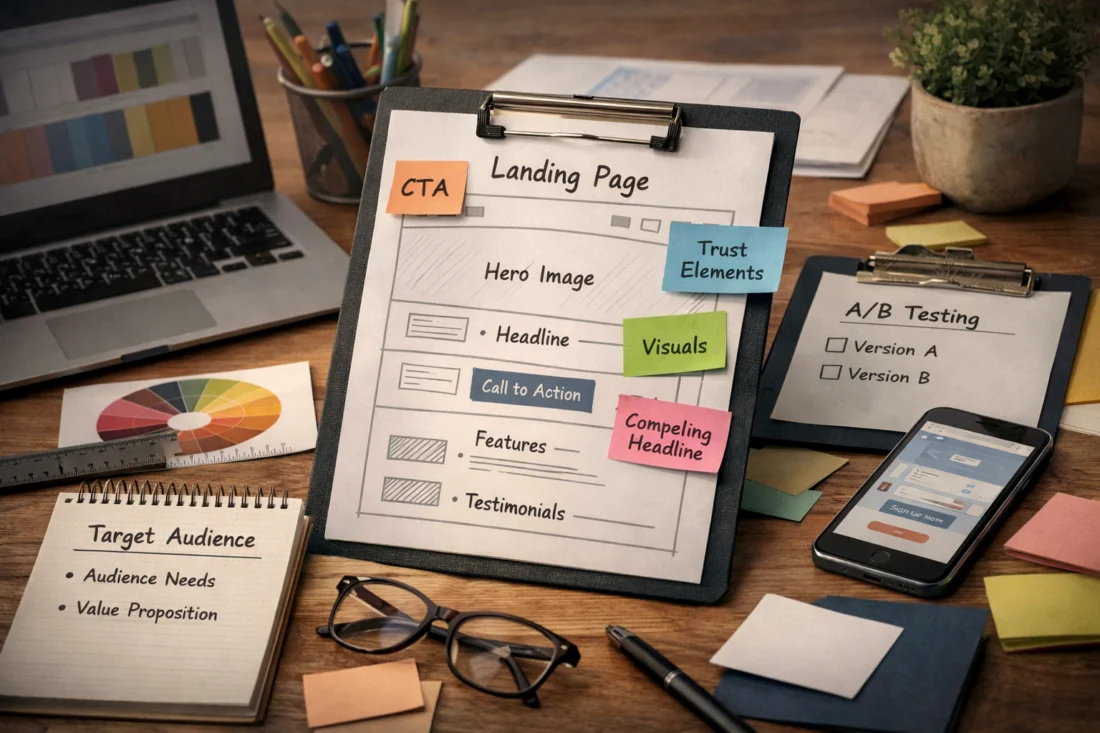
The use of interactive elements, such as videos and “enhancing UX with micro-interactions“, can also influence the effectiveness of your landing page. While interactive content can engage users and provide valuable information, it’s essential to balance it with load times and overall page performance. Consider testing different content types to determine what resonates best with your audience.
Advanced Considerations for Landing Page Design in 2026
As we move into 2026, emerging design trends and technologies are shaping the future of landing page design. The integration of AI and personalization is becoming increasingly important, allowing for more tailored experiences that resonate with individual users. AI can analyze user behavior and preferences to deliver personalized content and offers, enhancing the likelihood of conversion.
Privacy concerns and regulations are also influencing design choices. With increasing scrutiny on data usage, it’s crucial to be transparent about data collection practices and ensure compliance with regulations such as GDPR. This transparency builds trust with users, which is essential for successful conversions.
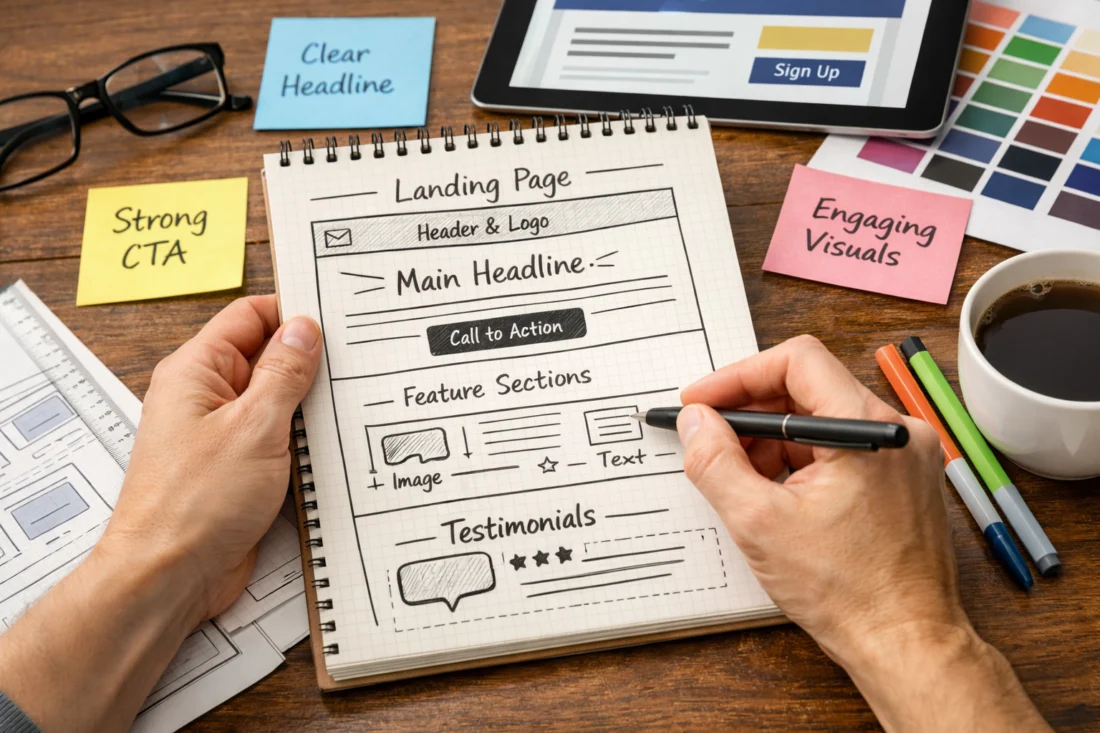
Many guides overlook the importance of measuring landing page success accurately. Beyond basic metrics like bounce rate and conversion rate, it's essential to utilize Google Analytics for (SEO) to gain deeper insights into user behavior and campaign effectiveness. Understanding these metrics can inform future design decisions and marketing strategies, leading to improved performance and higher conversions.
Frequently Asked Questions About Creating Effective Landing Page Design
What is the best way to design a landing page for mobile users?
Designing a landing page for mobile users requires a mobile-first approach, ensuring that the page is fully responsive and loads quickly on all devices. Focus on intuitive navigation and clear CTAs to provide a seamless user experience.
How can I measure the success of my landing page design?
Success can be measured using key performance indicators such as conversion rate, bounce rate, and time on page. Tools like Google Analytics provide valuable insights into user behavior and campaign effectiveness.
Why is A/B testing important in landing page design?
A/B testing allows you to compare different design elements to determine what resonates best with your audience. This iterative process helps optimize conversion rates and enhance the overall user experience.
What are some effective call-to-action examples for landing pages?
Effective CTAs are clear and action-oriented, such as “Sign Up Now” or “Get Your Free Trial”. They should align with the user’s intent and be prominently displayed on the page.
How do I ensure my landing page aligns with my brand identity?
Ensure consistency in design elements such as colors, fonts, and messaging. The landing page should reflect your brand’s values and voice, creating a cohesive experience for the user.
In conclusion, creating effective landing page design is a critical component of achieving your marketing goals. By focusing on the core elements, avoiding common pitfalls, and embracing advanced strategies, you can enhance your conversion rates and drive business success. For more in-depth insights and support, consider exploring “great landing page tips” or consulting with a professional for advanced design needs.