
website development for small businesses in Salem, Oregon means building a site that helps people trust you, contact you, and buy from you—not just one that looks polished. For a local business, the right website should turn Salem visitors into calls, bookings, quote requests, walk-ins, or online orders, and it should do that quickly on mobile devices.
If you are comparing website development for small businesses Salem Oregon, the real question is not “can I get a website?” but “what kind of site will create measurable business results for my stage, budget, and customer base?” Salem customers often decide within seconds whether a business feels legitimate, so your website has to do more than exist; it has to support the exact action you want a visitor to take. That is why structure, speed, messaging, and local trust signals matter as much as visual design.
What small businesses in Salem need from a modern website
A modern small business website should support one main outcome: turning visitors into customers. In Salem, that usually means inquiries, quote requests, appointments, phone calls, store visits, or online sales, depending on the business model.
The right structure depends on how your customers buy. A plumber may need strong service pages, emergency call buttons, and trust signals. A salon may need booking integration, service menus, and staff profiles. A retailer may need product pages, hours, directions, and inventory highlights. A law firm or accountant may need detailed service explanations, credibility markers, and a strong consultation form. A “simple brochure site” is enough when the business mostly needs a digital business card and occasional contact form inquiries. Conversion-focused features become essential when the website is expected to generate steady leads or support paid advertising.
Salem customers also use phones heavily when they search locally, so mobile behavior should shape the experience. If pages load slowly, the phone number is hidden, or the navigation feels cluttered, people leave. That is why mobile-friendly layouts and clear trust signals matter so much. A visitor should immediately understand what you do, where you serve, and how to take the next step. In practice, this means the homepage, service pages, about page, contact page, and location details deserve more attention than decorative extras.
For businesses serving nearby communities, local relevance is part of the experience. Clear Salem references, neighborhood service areas, and visible business information help users feel confident they are in the right place. This is also where content planning matters: the site should answer the questions a local buyer already has, not just showcase generic branding. Well-planned Salem website planning often separates sites that merely look professional from sites that actually produce leads.
How to plan a website development project that actually leads to results
A website project should start with business goals, not design choices. Decide the single most important conversion action first, such as a call, form submission, booking, estimate request, or purchase.
Once that decision is clear, map the pages and features required to support it. This avoids scope creep and keeps the project focused. For example, if the main goal is lead generation, you may need service pages, a dedicated contact page, testimonials, location references, and a simple quote form. If the goal is e-commerce, product structure, shipping logic, and payment integration matter more. The site map should reflect the customer journey, not just a list of pages you think a website “should” have.
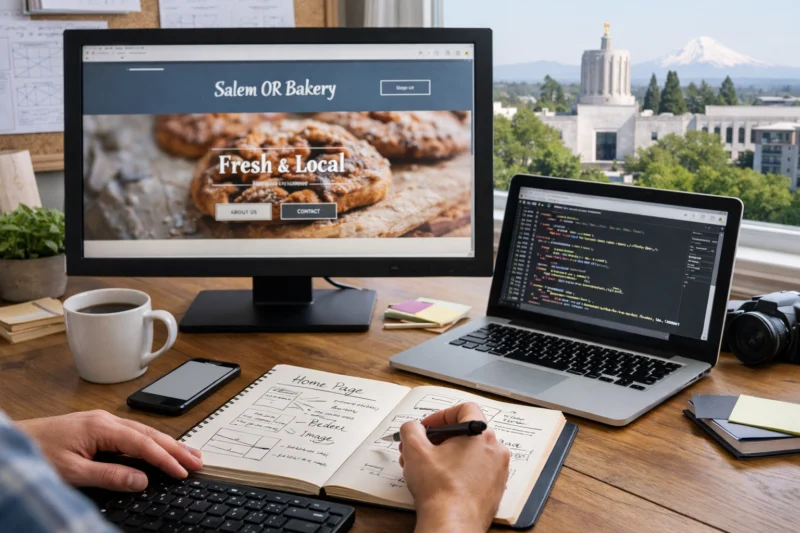
Content planning is where many projects slow down. Before design begins, identify what content already exists, what needs to be updated, and what must be created from scratch. That includes service descriptions, staff bios, FAQs, homepage messaging, photos, and any trust-building material such as certifications or reviews. If content is missing late in the process, the launch gets delayed or the finished site feels thin. This is also where budget website options need to be evaluated honestly: lower-cost builds can work well when content is ready and the scope is tight, but they struggle when the business needs custom messaging or conversion strategy.
The practical rule is simple: prioritize must-have functionality over nice-to-have extras. A scheduling feature is essential for an appointment business, but an elaborate animation system may not be. A portfolio gallery may matter more than a blog. In other words, the best plan is not the biggest one; it is the one that aligns with revenue.
Website development options Salem business owners can compare
Salem business owners usually choose between custom development, template-based builds, and semi-custom builds. Each option can work, but they solve different problems and fit different budgets.
Local Website Solutions for Salem Businesses
Transform Your Online Presence Today.
Your Salem business deserves a fast, mobile-friendly website that converts visitors into customers. With our expertise in custom web design and WordPress development, we can help you craft a site that meets your unique needs and goals.
29 Years in Business Custom Development Satisfaction Guaranteed
Custom development is best when the business needs specific workflows, a distinct brand presentation, or strong scalability. Template-based builds are faster and more affordable, making them a good fit for businesses that need a professional presence quickly and do not require complex functionality. Semi-custom builds sit between the two: they use a proven framework but adapt the design and content to the business. For many small businesses, that middle path offers the best balance of speed and long-term flexibility.
| Option | Best for | Strengths | Tradeoffs |
|---|---|---|---|
| Custom website development | Growing businesses, unique service models, strong branding needs | Maximum flexibility, better scalability, stronger differentiation | Higher cost, longer timeline |
| Template-based build | Startups, lean budgets, fast launches | Lower cost, quicker delivery, easier to scope | Less uniqueness, limited customization, possible future rework |
| Semi-custom build | Most small businesses needing balance | Moderate cost, tailored look, better long-term value | Some limits from the base framework |
The key tradeoff is not just price; it is total cost over time. A cheaper template can become more expensive later if it cannot support your content structure, conversion goals, or new features. A business that plans to invest in ads, local search, or lead generation often outgrows a basic template faster than expected. That is why custom business websites are worth considering when the website is meant to function as a growth asset rather than a placeholder.
Small businesses evaluating budget website options should ask what happens after launch. Can the site be updated without developer help? Will the layout handle added pages? Does the structure support future SEO work and ongoing site maintenance? If the answer is no, the upfront savings may disappear through rework, missed leads, or a full rebuild later. This is one of the most common hidden costs in website development.
What to look for in a Salem web development partner
The right partner understands both technical execution and local business outcomes. A strong Salem web developer should be able to explain how the site will support leads, calls, bookings, and visibility in practical terms.
Look at the portfolio for relevant examples, not just attractive visuals. A good fit has experience with businesses similar to yours in size, service model, and growth stage. The best conversations are specific: how they improved inquiry rates, reduced friction on mobile, or organized service pages for clearer navigation. If a partner only talks about design trends, they may not be thinking about lead quality or conversion path. That matters because many agencies sell visuals without addressing the real business function of the site.
Technical capability also matters. Ask about page speed, mobile responsiveness, security, CMS usability, backups, and how easy it is for your team to make updates. Process transparency is equally important. You should know how discovery works, what happens during wireframing, how many revision rounds are included, what launch support looks like, and who owns the finished assets. These details separate professional teams from vendors that disappear after launch.
When choosing web partners, be wary of vague promises and overbuilt packages. A well-run project usually has a clear scope, realistic timeline, and direct communication. It should also consider search, usability, and maintenance together instead of treating them as separate silos. A developer who understands conversion focused features will usually be more valuable than one who only knows how to make a homepage look impressive.
Common mistakes small businesses make when building a website
The most common mistake is starting with design instead of outcome. If the site does not have a clear conversion goal, visitors can admire it and still leave without contacting you.
Another frequent mistake is choosing visual complexity over usability. Heavy animations, oversized banners, and cluttered homepages can make a site feel expensive while making it harder to use. On mobile, that problem gets worse because users need fast answers and simple navigation. A site that looks good in a proposal but confuses real visitors usually underperforms. This is why mobile friendly layouts are not optional for Salem businesses that depend on local traffic.
Content is another weak point. Businesses often underestimate how much writing and asset collection the site requires. Service pages need clear explanations. About pages need trust-building detail. Contact pages need simple steps. Location messaging needs to be specific enough to help nearby customers know they are in the right place. Without these pieces, the site may look complete but still feel empty. The hidden cost is not just launch delay; it is the lost credibility that comes from thin pages and generic messaging.
Ownership and updateability are also overlooked. If the site is hard to edit, staff will avoid making updates, which leads to stale content, broken pages, and missed opportunities. That becomes especially painful when a business starts running ads or improving local search. In those cases, ongoing site maintenance is not a luxury; it is part of keeping the site useful.
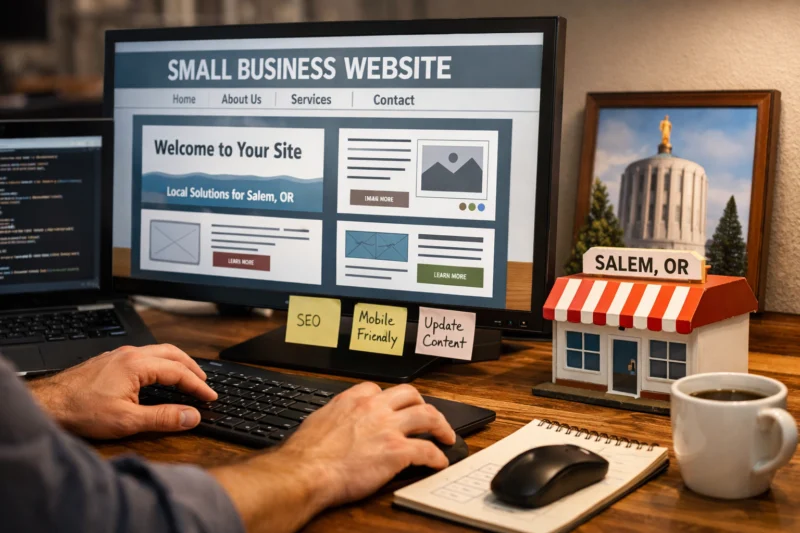
Local SEO and on-page essentials for Salem visibility
Location signals matter because Salem customers want confirmation that a business serves their area. Your website should make that obvious without sounding repetitive or artificial.
The most effective structure usually includes dedicated service pages, a strong contact page, clear business information, and internal links that help both users and search engines understand what you offer. Local references should appear naturally in the copy where they help the reader, such as service area descriptions, homepage messaging, and footers with consistent name, address, and phone details. This is where local SEO essentials intersect with website development: if the site structure is weak, visibility work becomes harder later.
A common mistake is creating thin city pages that are only there to mention a location name. Those pages may look local on paper, but they often fail users because they do not answer real questions. Better local content explains what the business does in Salem, who it serves, and what makes the process convenient for nearby customers. You can also support discoverability with FAQ sections, relevant internal linking, and service-specific pages that reflect actual intent instead of keyword stuffing.
For businesses that want stronger local performance, the site should be built to support future content, not just the initial launch. That includes room for location pages, testimonials, case studies, and service expansions. A site designed with local intent from the start usually performs better than one retrofitted later. Authoritative guidance from Google Search Central and Google Business Profile Help reinforces the importance of accurate business information and helpful page content.
Features that matter most for conversion and lead generation
The most important website features are the ones that make action easy. For most small businesses, that means contact forms, click-to-call buttons, booking options, and clear calls to action on key pages.
Conversion focused features work because they reduce friction. A visitor who is ready to act should not have to hunt for a phone number or wonder which form to use. The best pages guide people toward one obvious next step. Trust elements matter too: reviews, testimonials, guarantees, certifications, before-and-after examples, and portfolio screenshots all reduce uncertainty. For service businesses, proof often matters more than clever copy.
Speed and navigation are part of conversion, not just technical details. Slow pages lose impatient users, and confusing menus hide the very pages people need to make a decision. Mobile layouts matter especially here because people often land on a site from search, tap a button, and either convert quickly or bounce. A well-structured site anticipates that behavior and keeps the path short.
It is also possible to add too many features. Pop-ups, chat widgets, overlapping offers, and multi-step forms can reduce conversions if they create distraction. The best sites are focused. If a business depends on leads, every additional feature should earn its place by improving trust, clarity, or speed. This is one reason conversion strategy and website structure should be planned together instead of added later.
Transform Your Website into a Lead-Generating Machine
Let us help you create a fast, mobile-friendly website that attracts local customers and drives measurable results tailored to your business's unique needs.
Request a Free ConsultationWhat most guides get wrong about small business website development
Many guides focus on how a site should look instead of what the site needs to do. That approach produces attractive pages that do not support sales, calls, or bookings.
Another blind spot is post-launch reality. A website is not finished when it goes live. It needs updates, security monitoring, backups, content changes, and occasional improvements as the business changes. If a site is hard to manage, the team will fall behind, and the quality will decline. That is why ongoing site maintenance should be part of the decision, not an afterthought. A web project that ignores maintenance often creates problems the owner only notices months later.
Guides also make the mistake of assuming every business needs the same sitemap and feature set. A contractor, clinic, retailer, and professional service firm all need different structures. Some need a deep service architecture. Some need booking. Some need product pages. Some need trust-heavy landing pages for paid traffic. The right plan depends on audience behavior, service complexity, and growth goals. One-size-fits-all advice often leads to wasted spend.
Perhaps the biggest miss is treating “just get something live” as a success. If the site cannot support future content, local visibility, ads, or lead capture, it becomes a temporary placeholder rather than a business asset. The better approach is to launch with enough structure to grow. That is where practical planning and honest scope setting matter more than speed alone.
Cost, timeline, and scope: what Salem businesses should expect
Website cost is driven by scope, not just design quality. The biggest factors are page count, custom design, integrations, content creation, revision rounds, and any special functionality such as booking or e-commerce.
Timeline depends on the same variables. A focused small business site with prepared content can move quickly, while a larger project with custom messaging and multiple stakeholder approvals takes longer. Delays usually come from content bottlenecks, unclear decision-making, or scope changes during the project. If the business keeps adding pages or features after the plan is approved, both budget and delivery date will move.
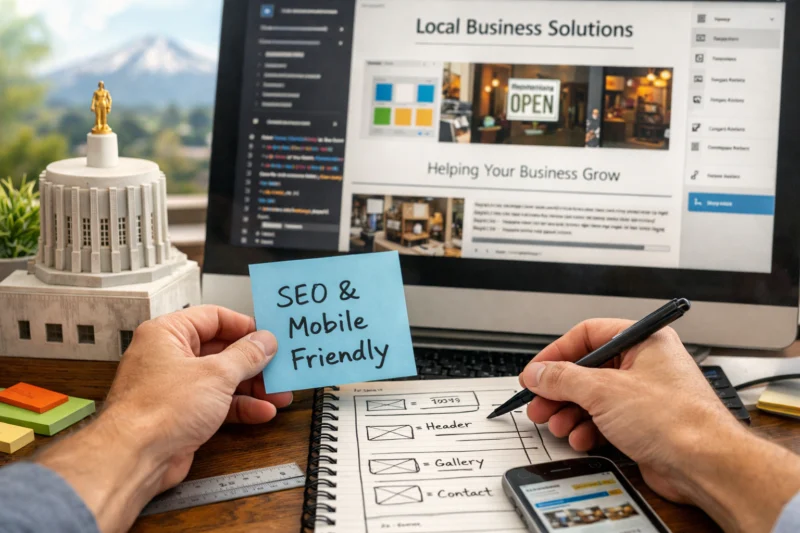
The cheapest quote is not always the lowest total cost. If the work is rushed, poorly structured, or hard to update, the business may pay later through fixes, redesigns, or lost leads. That is especially true when a low-cost build cannot support future growth. Businesses comparing budget website options should ask what is included after launch, whether ownership is clear, and how much work it will take to maintain the site long term. A slightly higher upfront investment can be more economical if it avoids reconstruction later.
For Salem businesses, a realistic project should feel collaborative rather than chaotic. Clear scope documents, defined milestones, and transparent revision limits help keep the work on track. If those pieces are missing, the project may feel inexpensive at the start but costly by the end.
How to choose the right path for your business stage
The right website path depends on where the business is today and where it wants to go next. A startup may need a lean site that establishes credibility fast. An established local business may need a rebuild that improves conversion and local visibility. A growth-stage company may need a more scalable structure, better content depth, and stronger lead handling. A rebrand may require a full refresh so the website matches the new message.
If your current site is built on a weak foundation but still has useful content and reasonable structure, a refresh may be enough. If the design is outdated, the CMS is hard to use, the mobile experience is poor, or the site cannot support new features, a rebuild is often smarter. This is where understanding when redesign is needed can save time and money. Reworking a broken structure usually produces better outcomes than trying to patch over it.
Internal resources matter too. Someone has to update the site, respond to inquiries, and keep information current. If no one on your team can handle that work, choose a platform and process that make updates easy. If the business plans to run ads, publish content, or expand service areas, the website should be built with those tasks in mind. The point where a site becomes a growth asset is when it reliably supports revenue instead of simply representing the brand online.
Businesses that are ready to invest should also think about how the website will connect to broader marketing. Strong service pages, local pages, and clear lead paths support email, ads, and local search. That is why choosing a path is less about “website vs. no website” and more about building an asset that can scale with the business.
Frequently Asked Questions About website development for small businesses Salem Oregon
How much does website development for small businesses in Salem Oregon usually cost?
Costs vary based on page count, design complexity, content creation, and whether the site needs booking, forms, or e-commerce. A simple site costs less than a custom build with multiple service pages and integrations.
How long does it take to build a small business website in Salem?
Smaller projects can move in a few weeks if content is ready and approvals are quick. More complex builds take longer, especially when copy, photography, and revisions are involved.
Should I choose a custom website or a template-based site?
Choose custom when your business needs flexibility, differentiation, or long-term scalability. Choose a template when speed and budget matter more and the required functionality is straightforward.
What pages should a small business website include?
Most businesses need a homepage, about page, service pages, contact page, and trust-building content such as testimonials or FAQs. Some businesses also need location pages, booking pages, or product pages depending on how they sell.
Do Salem small businesses need local SEO built into the website?
Yes, especially if they rely on nearby customers. Local references, accurate business information, service pages, and clear internal structure all help support visibility and trust.
Can my existing website be improved instead of rebuilt?
Often yes, if the site still has a usable structure and the main issues are visual or content-related. If the CMS is hard to manage, the mobile experience is weak, or the site cannot support growth, a rebuild is usually smarter.
What makes a website actually generate leads?
A lead-generating site makes the next step obvious and easy. It uses strong calls to action, fast loading pages, trust signals, and simple forms or click-to-call actions.
How do I know if a web developer is the right fit?
Look for relevant portfolio examples, clear communication, and a process that covers discovery through launch support. The right partner also explains ownership, updates, and how the site will support business goals.
What should I prepare before starting a website project?
Prepare your goals, examples of sites you like, business details, service descriptions, and any photos or testimonials you already have. It also helps to know who approves decisions so the project does not stall.
How often should a small business website be updated?
Basic updates should happen regularly, especially for hours, offers, services, and team information. Bigger redesigns are often needed every few years, or sooner if the site no longer supports growth or is difficult to manage.
Transform Your Salem BusinessWith a Custom Website
Stop settling for a website that just looks good. Let us build a conversion-focused site that drives calls, bookings, and sales for your Salem small business.
For Salem businesses, the best website decisions come from a simple framework: define the business goal first, choose the right build approach second, and then add the features and content that support conversion. The strongest sites combine clarity, trust, mobile usability, and local relevance so visitors know exactly what to do next.
If you are evaluating a new build or wondering whether your current site still works, compare your options carefully before you start. A good website is more than design; it is a lead-generating asset that should support your reputation, your search visibility, and your revenue in Salem, Oregon.
Updated April 2026