
If your small business in Salem gets website traffic but not qualified calls, you need a lead system, not more ads. lead generation strategies for small businesses work best when your site attracts the right visitors, converts them with one clear offer, and follows up fast with measurable next steps. In 2026, you also must track conversions in a privacy-aware way, reduce friction on mobile, and make landing pages do the selling work. This guide shows how to build that system step-by-step so visitors become booked appointments, not just form submissions.
Build a conversion-first lead capture system for Salem small businesses
Lead generation becomes predictable when you set up an end-to-end system: attract, convert, follow up, and measure. Many Salem small businesses have marketing, but they do not have a complete path that moves a visitor from curiosity to action. Your job is to design each stage so the next step feels obvious and low-risk.
Start with core components that work together. Your offer tells people exactly what they get and what it costs in time. Your landing page (or service page) should match the visitor’s reason for clicking. Your form or chat captures contact details with the right consent language and then confirms what happens next. After submission, route the lead into a CRM or a structured spreadsheet so nobody “forgets” to respond.
Choosing the right decision path matters because it affects lead quality. If your services are complex or require a site , “request an estimate” may fit better than “book instantly.” If your work is standardized and quick to assess, appointment booking can reduce back-and-forth. For longer sales cycles, a consultation call can work as the first commitment, while quotes can come after you confirm scope.
A practical nuance is to avoid form fatigue. Too many fields can cut conversion rates, but too few can increase junk leads. Use minimal fields at the first touch, then ask qualifying questions later in the follow-up email or on the thank-you page. Also, route leads by intent: someone who requests an estimate should get different follow-up than someone who downloads a checklist. A common mistake is sending every lead the same message, even when the visitor clearly signaled different needs.
Finally, fix the failure mode behind “we have a website but no one converts.” Often the visitor’s intent does not match the page. Or the offer is vague, so people hesitate to share their info. Or the business has no post-submit follow-up, so leads cool off. In Salem, where buyers may compare several local options, minutes matter as much as messaging.
Target local intent with Salem-specific visibility and trustworthy onsite proof
local lead generation in Salem starts with making it easy to believe you serve the area and can solve the problem now. People search with location cues, such as “near me,” a service plus Salem, or references to the region you truly cover. If your site feels generic, visitors assume you are one of many and delay contacting you.
Build location relevance without keyword stuffing. Keep your name, address, and phone number consistent across your website and key profiles. Create pages that explain your service area in plain language, and place Salem proof where it affects decisions, like service pages and your main contact flow. Use testimonials that mention real projects in the Salem area, and show project examples with dates or seasonality when appropriate. Avoid vague claims like “we serve all of Massachusetts” on a single page that otherwise targets Salem.
Your onsite trust assets should reduce friction for cautious buyers. Include real testimonials, before/after examples when your work allows it, and team bios that explain experience. Add guarantees or service boundaries that set correct expectations. If you do not handle a specific request, say so clearly. This prevents mismatched leads that can waste your follow-up time.

One nuance many businesses miss is how to support “we serve multiple areas” while keeping Salem primary. Use page structure that centers on your core service area first, then add supporting locations with clear, separate sections or pages. Pick one dominant call to action for each page, so Salem visitors do not get pulled into a different path by competing CTAs. A common mistake is offering quote requests on every page, even when the service page should first educate and qualify.
Measurement also matters for local visibility. Track leads separately by source so you know whether calls came from organic local search, paid search, or maps clicks. Use call tracking if calls are a major channel, and always track form submissions in your analytics. Then confirm quality by tagging leads in your CRM by source and intent.
Maximize Your Lead Generation
Transform Your Website into a Lead Machine.
Ready to capture more qualified leads and boost your bookings? At eDesignerz, we specialize in designing mobile-friendly, conversion-focused websites that turn traffic into tangible outcomes. Let’s create a streamlined path for your visitors that guides them from curiosity to action.
Custom Solutions SEO Included Satisfaction Guaranteed
Choose the right lead magnets and offers so visitors self-qualify
The best offers make visitors self-qualify, so your sales team spends time on the right inquiries. A lead magnet that feels valuable but generic attracts curiosity, not action. A strong offer feels specific to the Salem customer’s problem and clearly states the deliverable.
Use offer types that match how small businesses sell. A free estimate or cost range guide works well when customers need pricing clarity. A checklist or pre-service preparation guide helps when customers want control and readiness. A risk-free consultation can work when you must evaluate constraints first. For ongoing services, maintenance reminders or a warranty review checklist can qualify customers who are proactive.
Balance breadth and narrowness. Broad offers can increase volume, but they often lower lead quality. Narrow offers usually improve conversion and close rate, even with fewer submissions. For example, “request a general quote” can pull in the wrong scope, while “get an estimate for X service type” reduces mismatches.
Match your offer to the visitor’s stage. Awareness-stage visitors need a low-commitment next step, like a guide that clarifies options. Comparison-stage visitors want reassurance, like case examples and a consult. Ready-to-buy visitors are often looking for a schedule, price transparency, or a direct way to start.
A nuance that improves both quality and conversions is smart qualification. Ask a couple of qualifying questions without making the form feel like an interrogation. For instance, you can ask the service type and timeline. Then use the follow-up to confirm details, propose next steps, and explain what happens after submission. The tradeoff is that qualification must stay simple, or conversion drops and you lose the whole point.
For 2026, choose offers with ethical clarity. Avoid bait-and-switch language or vague promises. Provide a real deliverable timeline and explain what the visitor gets after they submit. When the offer is clear, you get higher intent leads and fewer unhappy prospects.
Turn website inquiries into booked appointments with fast follow-up and nurturing
Inquiries turn into booked appointments when you respond quickly and guide the next step clearly. Most leads do not disappear because your website is “bad.” They disappear because no one owns the follow-up or contact happens too late. A conversion-first system treats lead response like part of the sales workflow.
Start with immediate action. Use instant confirmation on the thank-you page, and send an email right away. If you capture a phone number with consent, call within minutes during business hours. In 2026, buyers also expect clear expectations, so your message should say when you will reach out and what you will cover.
Choose follow-up channels based on lead type. A quote request often needs a short phone discussion to confirm scope, while a guide download can start with an educational email sequence. Voicemail should be structured: who you are, why you are calling, the specific service they requested, and the exact time window you will return. Include a direct next action, like “reply with your availability” or “book your slot.”
Then nurture with short sequences that answer objections. Use 3–7 touches for most small businesses. Touches can include a reminder, a proof element like a relevant project example, and a “what to expect” message that reduces uncertainty. For instance, if the service has site measurements, explain what happens next and what the visitor should prepare.
A deeper insight is lead “latency,” the delay between submission and your first meaningful contact. If your team cannot call instantly, set expectations on the thank-you page and adjust your follow-up timing. For example, confirm email delivery and promise same-day outreach when possible. A common mistake is generic thank-you messaging that never references the service the visitor requested, which makes people feel ignored and reduces replies.
Optimize landing pages and forms for measurable conversion lift
Landing pages and forms should be built to convert, not to impress. A beautiful site can still fail if the page does not match the visitor’s reason for clicking and the CTA is unclear. Optimization means you tighten the message, remove friction, and measure results by lead quality.
Use a landing page structure that supports the offer. Start with a headline tied directly to the offer and the customer’s outcome. Add benefit bullets that explain what changes after you help them. Include proof near the CTA, such as testimonials or project examples, and then lay out your process in simple steps. Add FAQs that cover the most common questions that prevent action.
Keep the page focused on one dominant action. If the visitor can choose between quote request, consultation, and booking, you can increase confusion and reduce conversions. You can still offer choices, but sequence them. For example, offer booking as the primary CTA for visitors who are ready, and use an FAQ for others to learn more.
Form optimization is where many Salem small businesses lose qualified leads. Use the minimum fields needed to route the inquiry. Start with progressive profiling when possible: collect essential data first, then request additional details in the follow-up. Validate fields clearly, keep error messages readable, and ensure the form works smoothly on mobile devices.
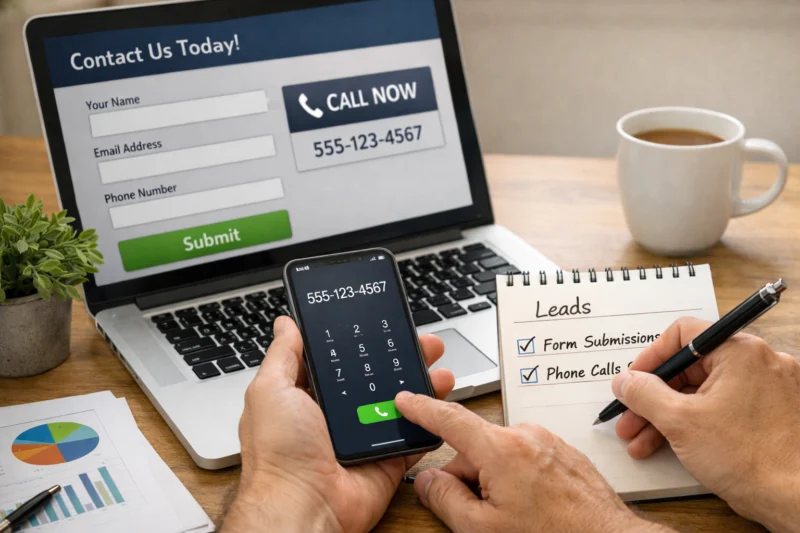
In 2026, also watch for conversion killers that look “small.” Broken embeds, calendar issues, unclear consent text, and slow mobile load can all raise abandonment. Track conversion rate by landing page and follow-up response rate by lead source. Then measure beyond clicks: focus on lead-to-appointment rate and cost per qualified lead.
For A/B testing, pick high-impact variables first. Test CTA wording, form length, proof placement, and offer clarity. A common mistake is testing colors while ignoring mismatch between the page message and the visitor’s intent.
Use data to refine your acquisition channels without wasting budget
Data helps you improve lead generation strategies for small businesses by showing what works for qualified inquiries, not just traffic. Without measurement, you cannot tell whether you have a marketing problem or a conversion problem. In Salem, that distinction matters because local competition can make high-intent visitors expensive.
Start with a channel framework that matches how small businesses buy and sell. Organic search and local visibility often bring high-intent visitors over time. Paid search can fill gaps quickly when landing pages are strong. Paid social can work for awareness and lead magnets, but it must be paired with conversion-focused pages. Email list capture and partnerships can also produce leads with higher trust.
Test one variable at a time so you can learn fast. For example, keep your landing page constant while you test ad copy angles. Or keep targeting stable while you test CTA and offer wording. In a privacy-aware 2026 environment, rely on first-party data and track conversion events such as booked appointments, not just form submissions.
Build a measurement plan with clear baseline KPIs. Weekly, review conversion rate by landing page, lead-to-call rate, and lead-to-appointment rate. Also track show rate if appointment scheduling is a major step. Tag leads in your CRM by source and intent, then compare closed-won outcomes where possible.
A common pitfall is chasing vanity metrics like form submissions without quality checks. A cheaper lead that never turns into an appointment is more expensive in reality. Evaluate quality using appointment show rate and whether the inquiry fits your service scope. Tradeoffs also matter: urgent services may benefit more from paid search and booking CTAs, while longer sales cycles can work better with nurture and content-backed trust.
Common pitfalls that prevent small businesses in Salem from getting real leads
Most missed lead goals come from a broken match between visitor intent and your site experience. Salem small businesses often focus on marketing volume, but the real issue is often offer clarity, conversion friction, or slow follow-up. Fixing these gaps usually beats adding more traffic.
Start with the common misconceptions. “More traffic will solve it” fails when your page does not convert. “A contact form is enough” fails when you do not clearly state the next step after submission. “SEO takes care of leads automatically” fails when rankings bring visitors who need education, not a quote request. And “ads will compensate for weak pages” fails because poor landing page conversion raises your effective cost per qualified lead.
Transform Your Website into a Lead Magnet.
Is your Salem business ready to turn visitors into customers? Let our expert team design a website that captures leads and drives conversions.
Pitfalls also happen operationally. Leads might sit in an inbox nobody checks, or they might go into a spreadsheet without any follow-up owner. Teams may lack a call script that references the service the user requested. Calendars can be missing, or booking embeds can fail on mobile devices.
Deeper insight includes consent and privacy handling. If your form lacks clear consent language or if opt-out options feel unclear, visitors may hesitate to submit. This hurts trust and conversion. Make sure your forms explain how you will use the information, and store data responsibly with defined retention practices.
Here is a practical diagnostic you can use to spot issues quickly. Review whether your headline matches the visitor’s click intent. Check CTA visibility above the fold and on mobile. Test form friction by counting required fields and checking errors. Verify your confirmation page tells people what happens next. Finally, confirm follow-up ownership and timing are clear.
Compare realistic website lead generation approaches small businesses can choose from
Small businesses in Salem can generate qualified leads through different website approaches, but each has tradeoffs. The right choice depends on your sales cycle, your service complexity, and your team capacity to follow up. You want an approach you can operate consistently, not just launch once.
One category is dedicated landing pages paired with paid search. This works best when you can align ad intent with a narrow offer and a strong conversion page. Lead quality can be high because visitors arrive with clear intent, but costs can rise if your pages do not convert well.
Another category is content paired with local visibility and conversion CTAs. This approach suits small businesses that can teach and build trust over time. It often brings steady lead volume, but it takes longer to ramp and needs strong calls to action that fit each stage.
A third option is lead capture via service pages plus chat or booking. This can be effective when customers prefer a quick start and your team can respond fast. Lead quality can improve if your service pages clarify scope and your chat handles qualification. The tradeoff is operational: if your response time slips, you lose the value of instant capture.

A fourth category is partnerships and referrals amplified with dedicated pages. This works when other businesses or community partners can send visitors reliably. Your pages should match the partner’s promise so the visitor understands exactly what to do next. Lead quality can be strong because referrals come with trust, but you still need consistent tracking.
A deeper nuance is avoiding CTA overlap that cannibalizes each other. For example, if a page offers both “quote” and “book now” without guidance, visitors may hesitate. Sequence CTAs instead: use one dominant CTA for the page goal, and use supporting content to route others toward the right next step.
Pick a starter stack for two to four weeks before expanding. The minimum viable set is one primary landing or service page, one lead capture method, one confirmation step, and one follow-up sequence. Validate with a clear success threshold such as lead-to-appointment rate or qualified lead cost.
Fix the objections that stop Salem prospects from converting
Prospects often stop at objections they cannot resolve on your website. Conversions rise when your site answers concerns about trust, price uncertainty, timelines, process clarity, and fit for their situation. This is especially true for Salem shoppers comparing local options.
Map common objections to specific onsite elements. If people doubt credibility, add testimonials, project examples, and team bios near the CTA. If price feels risky, provide pricing guidance such as cost ranges and explain what changes the final number. If timelines are unclear, show availability windows and what scheduling looks like from first contact to completion.
If customers worry the process will be confusing, create “what to expect” walkthroughs. Break the process into simple steps and tell them what they do and what you do. Also list service boundaries so people know what you will and will not handle. This prevents mismatches that lead to abandoned calls and weak appointment shows.
For comparison-stage leads, use FAQs and comparison content that reduces decision effort. Answer questions about differences between your options and why you recommend your approach. Include reassurance around next steps, such as how you confirm scope and when they receive updates. A common mistake is leaving FAQs as generic “we offer quality” statements instead of addressing the real reasons people delay.
Edge cases require flexible CTAs. If someone “only needs this once,” offer an estimate or one-time consultation rather than steering them into subscription calls. If someone is not ready to buy, offer a low-commitment next step such as a guide and permission-based reminders. Keep the lower-commitment path genuinely useful, or you will attract low-quality leads that do not convert.
Frequently Asked Questions About Lead Generation Strategies for Small Businesses in Salem
What website changes create the fastest lift in leads for a small business?
The fastest lift usually comes from clarifying your CTA and matching the landing page to the reason someone clicked. Replace vague buttons like “Contact Us” with action-specific wording that reflects the offer, and keep the CTA visible on mobile. Next, reduce form friction by removing nonessential fields and improving confirmation messaging so visitors know what happens. Finally, ensure you track conversion events such as booked appointments and not just submit clicks.
How many website form fields should a Salem small business use?
A good starting point is three to five fields for first contact, such as name, email or phone, service type, and a short timeline question. If you must collect more detail, use optional fields or progressive profiling after the initial submission. For higher-value services, you can add one qualifying question, but keep the form readable on phones. The key is balancing conversion rate with routing quality.
What should my thank-you page include to increase appointment bookings?
Your thank-you page should confirm what the visitor requested and what the next step is. Include expected contact timing, such as “we’ll reach out the same business day,” and a brief note about what information you still need. Add proof near the bottom, like a testimonial snippet or a short “what to expect” timeline. Also include one clear next action, such as booking if appropriate or replying to the confirmation email.
How can I measure which parts of my website produce qualified leads?
Measure conversion rate per landing page and lead-to-appointment rate, not just traffic. Then track lead source in your analytics and match it to your CRM tags. Also monitor show rate so you can separate high-intent leads from tire-kickers. In attribution, focus on booked outcomes and keep conversion events consistent in 2026 with consent-aware tracking practices.
Why are my SEO visitors not turning into leads even though rankings look good?
Your rankings may be bringing visitors who need education, but your page pushes for a decision too early. Fix intent mismatch by aligning the headline and offer with the visitor’s likely question. Add trust proof and clarify the process so visitors feel safe taking the next step. Also check CTA placement and form friction, then confirm your follow-up happens quickly after submission.
What is the best follow-up sequence for website leads in 2026?
A strong sequence usually starts with instant confirmation and then follow-up within the first hour during business hours. Use same-day outreach for phone calls and email, then add 2–5 more touches over the next few days. Common touches include a short email with proof, a reminder with a “what to expect” note, and a final check-in with a scheduling link. Always respect consent and include easy opt-out language in your follow-ups.
How do I generate leads if my business can’t respond immediately to every inquiry?
You can still convert leads by setting expectations and using automated confirmation that tells people when to expect a response. Route inquiries to the right person or team and prioritize leads based on service type and timeline. Use a follow-up schedule that matches your operational capacity, such as same-day emails and next-day calls when needed. Add a clear SLA internally so every lead gets an owned response, even if it cannot be immediate.
Live chat works best when you can monitor it during key hours and answer service-specific questions quickly. Call buttons help when your sales process benefits from a short phone conversation and your team can pick up. Booking forms work well when your service can be scheduled after basic qualification and you can confirm appointments reliably. Choose based on your response capacity and the kind of inquiry you want to attract.
What are the biggest lead generation mistakes small businesses make with their contact forms?
Common mistakes include too many required fields, unclear privacy or consent language, and forms that break on mobile devices. Another mistake is missing validation, which creates submission errors and lost leads. Many businesses also fail to send a confirmation that sets expectations, or they store leads in a place nobody monitors. Finally, templates that do not reference the specific service requested reduce replies.
How can I get leads from my website if I service multiple cities near Salem?
You can keep Salem relevance by organizing your pages so Salem is the primary service focus where visitors will decide. Use page structure that states your service area clearly and includes proof that you have served Salem customers. Then support additional areas with separate sections or pages that explain coverage and show relevant examples. Route CTAs consistently so a visitor sees one clear next step for their location.
CAPTURE MORE QUALIFIED LEADS WITH A CONVERSION-FOCUSED WEBSITE
Transform your Salem small business's website into a lead generation machine with our custom design and development services. Get the right visitors, and turn them into loyal customers today.
REQUEST A FREE CONSULTATIONConclusion: a repeatable system beats random lead tactics in Salem
The goal of Lead Generation Strategies for Small Businesses in Salem is qualified leads, not just more website visits. You get that by building a conversion-first system: focused pages and offers, qualifying capture, fast follow-up, and measurement that reflects booked outcomes. When your site clarifies what happens next, visitors feel safer reaching out and your team can respond with confidence.
To start, audit one landing page or service flow end-to-end. Tighten the CTA, reinforce proof, reduce form friction, and ensure your thank-you page sets clear expectations. Then implement an immediate follow-up workflow so every inquiry gets owned and handled quickly. If you can only improve one thing first, prioritize the match between visitor intent and your offer.
Finally, pick one acquisition approach to test for 2–4 weeks, such as dedicated landing pages with paid search or service pages with booking. Keep your success threshold tied to lead-to-appointment rate and show rate, not vanity submissions. If results improve, scale the approach; if they do not, adjust your offer, page message, or follow-up before spending more budget.
To guide your tracking and privacy-aware measurement decisions, review the principles in Google Analytics documentation and consider consent and data practices outlined by FTC guidance on privacy. For general guidance on structured data and search performance, see Google Search Central.
Updated September 2026