

Landing pages are a critical component of digital marketing in 2026, acting as gateways where potential customers decide whether to engage further with a brand. Understanding how to design landing pages that convert is crucial for any business aiming to maximize its online marketing efforts. With the ever-evolving landscape of digital marketing, creating landing pages that are not only visually appealing but also highly effective at converting visitors into customers is essential. This article will explore the key elements, optimization techniques, and common pitfalls to ensure your landing pages achieve the highest conversion rates possible.
Last updated: April 2026
Understanding the Role of Landing Pages in Digital Marketing
A landing page is a standalone web page created specifically for marketing or advertising campaigns. Its primary purpose is to guide visitors toward a single call to action (CTA), such as signing up for a newsletter or purchasing a product. In the broader digital marketing funnel, landing pages act as the bridge between an ad or email campaign and the ultimate conversion goal.
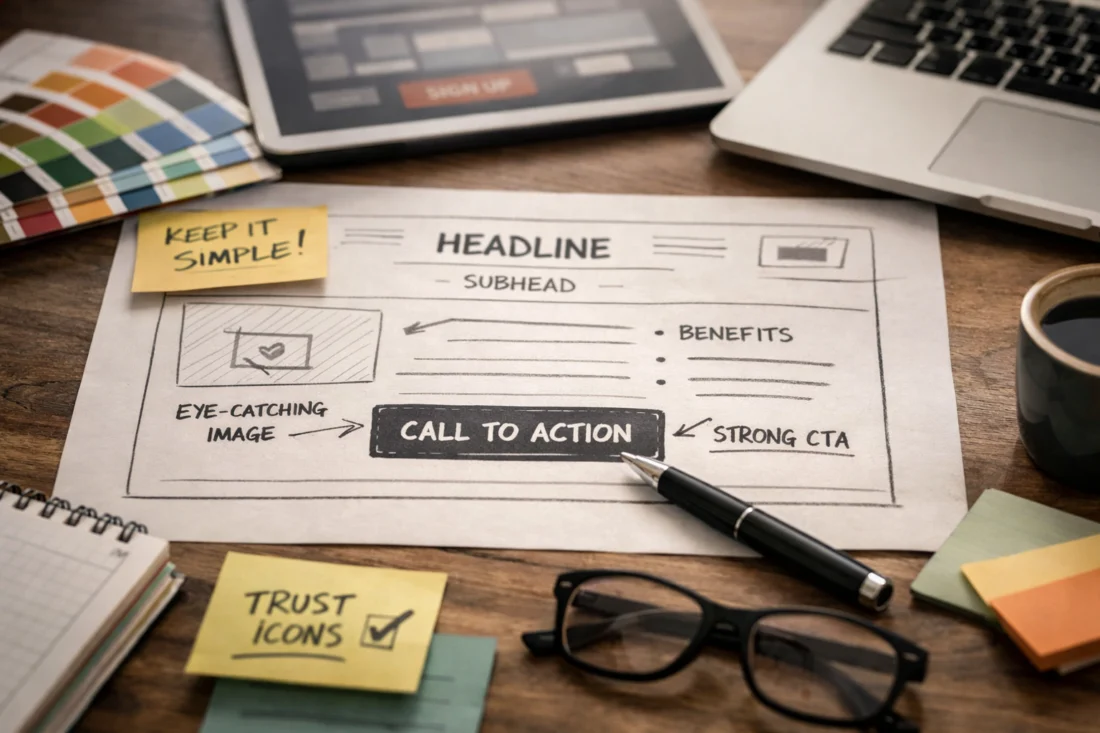
Conversion rates are vital as they directly impact the return on investment (ROI) of marketing efforts. High conversion rates mean more leads or sales from the same amount of traffic, optimizing the cost-effectiveness of marketing endeavors. As of 2026, landing page design trends continue to evolve, emphasizing minimalistic designs, interactive elements, and personalization to engage users more effectively.
While the basic structure of landing pages remains largely unchanged, 2026 sees a significant focus on user-centric designs that incorporate AI and machine learning to tailor the user experience. This evolution highlights the necessity of staying updated with design trends to maintain a competitive edge in digital marketing.
Key Elements of a High-Converting Landing Page
To create a high-converting landing page, several essential components must be included: compelling headlines, clear CTAs, attractive visuals, and user-friendly forms. Each of these elements plays a critical role in capturing attention and guiding users toward the conversion goal. A great landing page design often begins with a headline that immediately communicates the value proposition, supported by visuals that resonate with the target audience.
User experience (UX) and design aesthetics are also paramount. A well-designed landing page should be intuitive and straightforward to navigate, ensuring that users can easily comprehend the offer and how to act on it. As mobile devices continue to dominate internet usage, mobile optimization is crucial in 2026. Ensuring that your landing pages are responsive and load quickly on mobile devices is essential for capturing the growing number of mobile users.

Furthermore, personalization and dynamic content have a significant impact on conversion rates. By tailoring content to individual user preferences and behaviors, businesses can create more relevant and engaging experiences. This approach not only increases the likelihood of conversion but also enhances user satisfaction and loyalty.
How to Optimize Your Landing Page for Maximum Conversions
Optimizing landing pages for maximum conversions involves a systematic approach that begins with understanding your target audience’s needs and preferences. Start by crafting a clear and compelling value proposition that addresses these needs. A/B testing is a powerful methodology that allows you to experiment with different elements of your landing page—such as headlines, images, and CTAs—to determine what resonates best with your audience.
Data analytics is another crucial tool in refining landing page performance. By analyzing metrics like bounce rate, time on page, and conversion rate, you can identify areas for improvement and make data-driven decisions. Utilizing tools like Google Analytics for SEO can provide insights into user behavior and help you optimize your landing page accordingly.
SEO plays a pivotal role in enhancing landing page visibility. Incorporating relevant keywords naturally into your landing page content, meta descriptions, and alt tags can improve search engine rankings and drive more organic traffic. Additionally, ensuring your landing page adheres to current SEO best practices will enhance its overall performance.
HIGH-CONVERTING LANDING PAGES. UNLOCK YOUR POTENTIAL.
Transform your landing pages into powerful marketing tools with our expert website design and SEO services. We craft stunning, user-friendly pages that engage visitors and drive conversions.
REQUEST A FREE CONSULTATION
Common Mistakes to Avoid When Designing Landing Pages
Designing effective landing pages requires avoiding common pitfalls that can significantly reduce conversion rates. One frequent mistake is overcrowding the page with too much information or unnecessary elements, which can overwhelm visitors and detract from the primary CTA. It’s essential to maintain a clean, focused design that highlights the most important aspects of your offer.
Another misconception is about the ideal length of a landing page. While some believe that longer pages provide more information and thus increase conversions, others argue for brevity. The key is to balance content length with clarity and relevance, ensuring that every word serves a purpose. Poor targeting is another issue; if the landing page content does not align with the audience’s expectations, conversion rates will suffer.
Ignoring mobile users is a major oversight. With mobile traffic surpassing desktop in many industries, ensuring your landing page is optimized for all devices is non-negotiable. Adhering to best practices in mobile friendly design benefits is crucial for capturing and converting mobile users effectively.
Comparing Different Landing Page Approaches
Choosing between single-page and multi-step landing pages depends on the complexity of the offer and the user’s journey. Single-page landing pages work well for straightforward offers, allowing users to quickly understand and act. In contrast, multi-step pages can guide users through more complex processes, gradually building interest and commitment.
Maximize Your Landing Page Success
Transform Your Landing Pages to Drive Conversions!
Create high-converting landing pages that engage users and boost your business. With eDesignerz, you can have a stunning, mobile-friendly website optimized for performance and SEO, tailored to your audience's needs.
Get Your Free Consultation29+ Years of Expertise Custom Designs Satisfaction Guaranteed
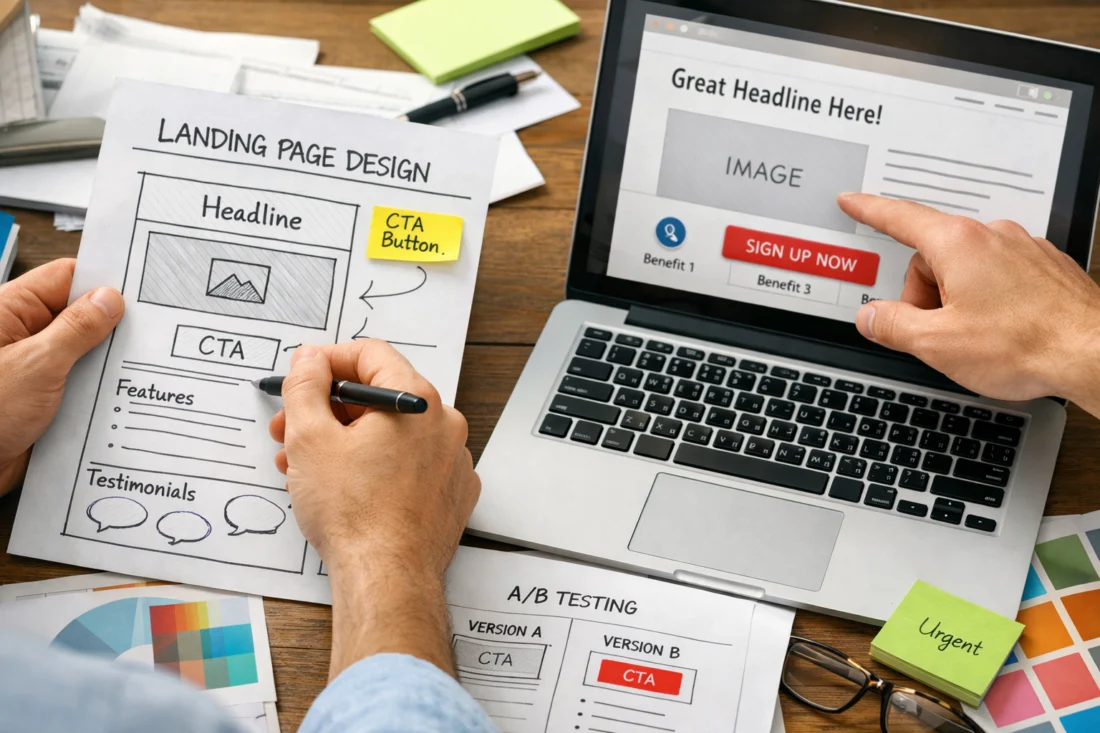
The choice between using video and static images on landing pages also influences conversion rates. While videos can effectively convey messages and engage users, they may increase loading times and cause distractions if not used judiciously. Static images, on the other hand, are quicker to load and can still be impactful if designed well.
The decision between templates and custom designs involves weighing convenience against uniqueness. Templates provide a quick and cost-effective solution, but they may lack the distinctiveness of custom designs. Custom designs offer more flexibility and can be tailored to specific brand needs, often resulting in higher conversion rates.
Advanced Considerations for Landing Page Design (Beyond Basics)
As we move into 2026, the role of AI and machine learning in personalizing landing pages becomes increasingly relevant. These technologies enable real-time adaptations based on user behavior, enhancing engagement and conversion rates. Designing for niche markets or unique user behaviors can also provide a competitive advantage, allowing businesses to cater to specific segments effectively.
While adhering to best practices is generally advisable, there are times when breaking the rules can lead to innovative solutions. For instance, a landing page for a highly creative product might benefit from an unconventional design to capture the brand’s essence. However, it’s crucial to ensure any deviations from standard practices do not compromise user experience or accessibility.
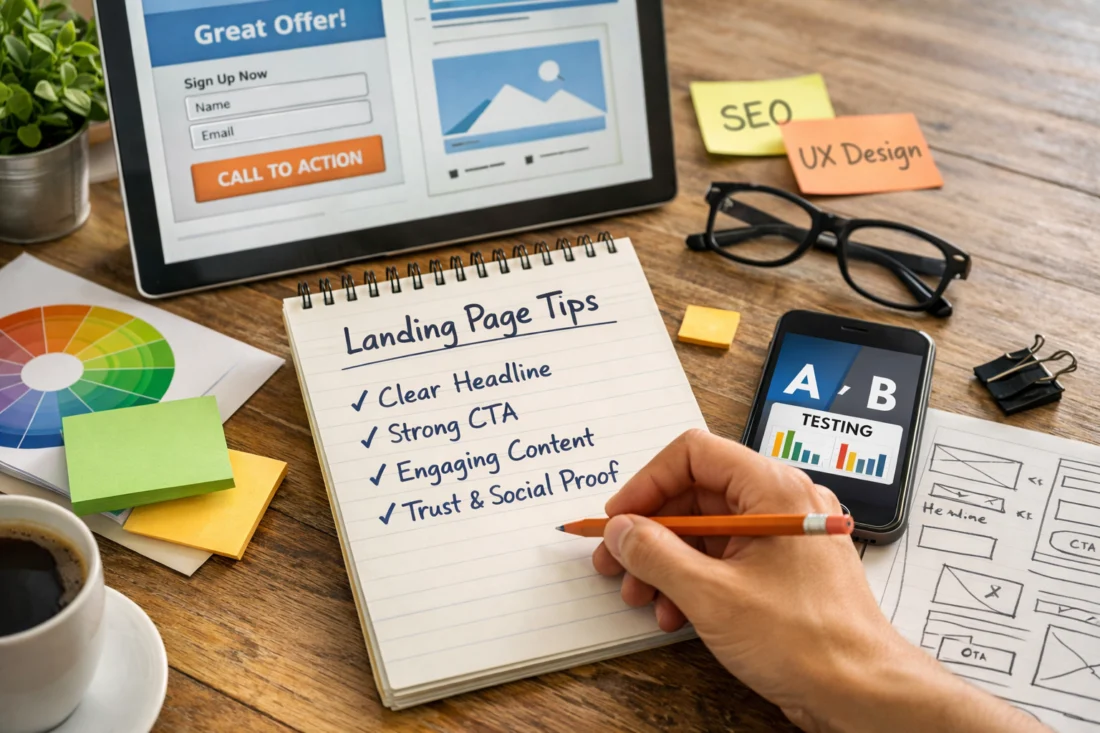
Accessibility and inclusivity are important considerations in landing page design. Ensuring that all users, including those with disabilities, can access and navigate your landing pages not only broadens your audience but also demonstrates a commitment to social responsibility. Implementing features like alt text for images and keyboard navigation can significantly improve accessibility.
Frequently Asked Questions About Designing Landing Pages that Convert
What are the best practices for landing page design in 2026?
In 2026, best practices for landing page design include optimizing for mobile devices, personalizing content through AI, and focusing on user-centric designs. Incorporating interactive elements and minimalistic aesthetics can also enhance user engagement.
How can I measure the effectiveness of my landing page?
Effectiveness can be measured using key metrics such as conversion rate, bounce rate, and time on page. Tools like Google Analytics provide detailed insights into user behavior and help identify areas for improvement.
What is the ideal length for a landing page?
The ideal length varies based on the offer and audience. While some pages benefit from detailed information, others perform better with concise content. Testing different lengths can help determine what works best for your specific audience.
How do I ensure my landing page is mobile-friendly?
Ensuring mobile-friendliness involves using responsive design techniques, optimizing images for faster loading, and simplifying navigation. Prioritizing mobile-friendly web design is crucial for capturing the growing mobile user base.
Why is A/B testing important for landing page success?
A/B testing allows you to experiment with different elements of your landing page to see what resonates best with your audience. By testing variations, you can make data-driven decisions that enhance conversion rates and user engagement.
Maximize Your Conversions.
Transform Your Landing Pages into Lead Magnets.
At eDesignerz, we specialize in crafting high-converting landing pages that not only look great but also drive results. Turn your visitors into customers with our tailored web design solutions.
29+ Years of Experience Satisfaction Guaranteed
In conclusion, designing landing pages that convert requires a strategic approach that incorporates essential design elements, optimization techniques, and continuous testing. By focusing on user experience, personalization, and avoiding common mistakes, businesses can significantly enhance their landing page effectiveness. As digital marketing continues to evolve, staying informed about the latest trends and best practices will be key to maintaining competitive advantage. For those seeking further assistance, consulting a professional or utilizing advanced design tools can provide valuable support in achieving high conversion rates.