
High-Quality Web Design Salem Oregon starts with a website that earns trust, loads fast, and turns visitors into inquiries, calls, or sales. For a business in Salem, Oregon, that means choosing a partner who can combine design quality with usability, SEO readiness, mobile performance, and a process that actually supports growth.
If you are comparing vendors, this article is for you. It is designed to help you choose the right partner, not just understand what web design is. The best option is rarely the prettiest mockup or the lowest quote; it is the team that can translate business goals into a site people can use, trust, and act on.
In practical terms, high-quality work includes strategy, content structure, conversion thinking, and technical execution. That is especially important for local companies that need more than a brochure site. If you want a partner who can deliver small business development value, you need more than visual polish.
Contents
- 1 What “High-Quality” Means in Salem Oregon Web Design
- 2 How to Choose the Right Web Design Partner in Salem
- 3 Salem Web Design Options: Agency, Freelancer, or In-House Support
- 4 Key Qualities to Look For Before You Hire
- 5 The Web Design Process That Produces Better Results
- 6 Common Mistakes Businesses Make When Buying Web Design
- 7 Advanced Considerations Most Buyers Overlook
- 8 What to Ask for in a Salem Oregon Web Design Proposal
- 9 How to Evaluate Value Without Getting Trapped by Low Prices
- 10 Frequently Asked Questions About High-Quality Web Design in Salem Oregon
- 10.1 How much does high-quality web design cost in Salem Oregon?
- 10.2 How long does a professional website project usually take?
- 10.3 What should be included in a high-quality website package?
- 10.4 How do I know if a web designer is a good fit for my business?
- 10.5 Is a local Salem web design company better than a remote one?
- 10.6 What makes a website actually generate leads?
- 10.7 Do I need SEO included with web design?
- 10.8 Can a new website work with my current branding?
- 10.9 What should I own after the website launches?
- 10.10 How do I compare two web design proposals fairly?
- 11 Conclusion
What “High-Quality” Means in Salem Oregon Web Design
High-quality web design is a business asset, not just a visual exercise. In Salem, Oregon, it should support credibility, usability, mobile performance, and lead generation in a way that matches how real customers search and decide.
A polished homepage can still fail if the navigation is confusing, the call to action is weak, or the mobile layout breaks on a phone. True quality combines strategy, clear messaging, fast load times, and a structure that helps visitors take the next step. That is why the best projects focus on measurable outcomes, not just attractive layouts.
Many businesses confuse “nice looking” with “effective.” Those are not the same. A website can look modern and still underperform if it does not answer questions, build trust, or guide users toward contact, booking, or checkout. This is where a stronger better user experience matters more than surface-level style.
Quality also means the site is built to support future growth. That can include search visibility, content expansion, service-area pages, and easier maintenance. If the site is only designed around current trends, it may look dated fast or become expensive to update later. The better measure is whether the website fits your goals now and can adapt later without a full rebuild.
How to Choose the Right Web Design Partner in Salem
The right partner is the one whose process, experience, and communication style match your business complexity. To choose Salem agencies well, compare how they think, not just how they design.
Start by reviewing relevant portfolios. A designer who has built local service sites, professional service sites, or e-commerce platforms similar to yours will understand common user expectations and conversion paths. Then ask how projects begin, who writes copy, how revisions work, and what happens after launch. A clear process often predicts a better result more reliably than a flashy portfolio.
Ask direct questions about scope and ownership. Who owns the domain, hosting, files, and content after launch? How many revision rounds are included? What support is available when something breaks or needs to change? These details matter because website projects often stall when the commercial terms are vague.
The deeper issue is fit. A simple brochure site may not need a large team, but a business with multiple services, locations, or aggressive lead goals may need more structure and coordination. When comparing providers, think about operational fit, not just price or visual style. The right partner should understand your audience, your sales cycle, and the kind of website work that actually supports revenue.
Salem Web Design Options: Agency, Freelancer, or In-House Support
The best model depends on your budget, pace, and internal capacity. In many cases, the choice comes down to freelancer versus agency, but there is also a practical hybrid option where your team manages content and a specialist handles design and development.
An agency usually offers broader support: strategy, design, development, SEO basics, and project management. That makes it a strong fit for businesses that need coordination and long-term support. A freelancer can be a better fit when the project is focused, the budget is tighter, or the business already has in-house content and strategy support. A hybrid model can work well for organizations that want control but still need expert execution in specific areas.
Here is a simple comparison to help frame the decision:
| Option | Best For | Strengths | Tradeoffs |
|---|---|---|---|
| Local agency | Growing businesses, complex sites, ongoing updates | Strategy, project management, wider skill set | Higher cost, less flexibility in some cases |
| Freelancer | Smaller sites, tighter budgets, simpler scope | Direct communication, lean process, lower overhead | Limited bandwidth, narrower specialization |
| Hybrid or in-house managed | Teams with internal marketing support | Control, speed on content updates, flexible execution | Requires internal coordination and clear ownership |
The hidden risk is that the cheapest option can become the most expensive one if strategy, SEO, or support is weak. That usually shows up later as a redesign, poor conversions, or technical cleanup. If you are comparing models for modern site development, make sure the savings are real and not just deferred costs.
Key Qualities to Look For Before You Hire
Portfolio quality matters, but outcomes matter more. Look for evidence that the designer has built sites for your type of audience and that the work supports a clear business goal, such as getting quote requests, appointment bookings, or product sales.
Do not stop at the visuals. A strong partner understands conversion paths, calls to action, and how page structure affects decisions. If the site is meant to generate leads, the layout should guide visitors from problem to proof to action. That is one reason to care about better user experience rather than decorative detail alone.
Technical capability is equally important. Mobile-first design, page speed, clean site architecture, and search-friendly structure all influence performance after launch. A designer who understands WordPress SEO improvements can save you time later by building foundations correctly from day one. This is especially important for businesses planning content growth or service-area expansion.
Another sign of quality is whether the partner designs for your audience instead of recycling generic templates. A clinic, contractor, nonprofit, and law firm all need different trust signals and different calls to action. Generic design may look acceptable at a glance, but it often misses the details that move a visitor to contact you. In practice, the best partners show they understand the difference between a template site and a business-specific site.
The Web Design Process That Produces Better Results
A professional process should include discovery, strategy, wireframing, design, development, testing, and launch. When a team follows these stages, the final site is usually more coherent, easier to manage, and less likely to need expensive rework.
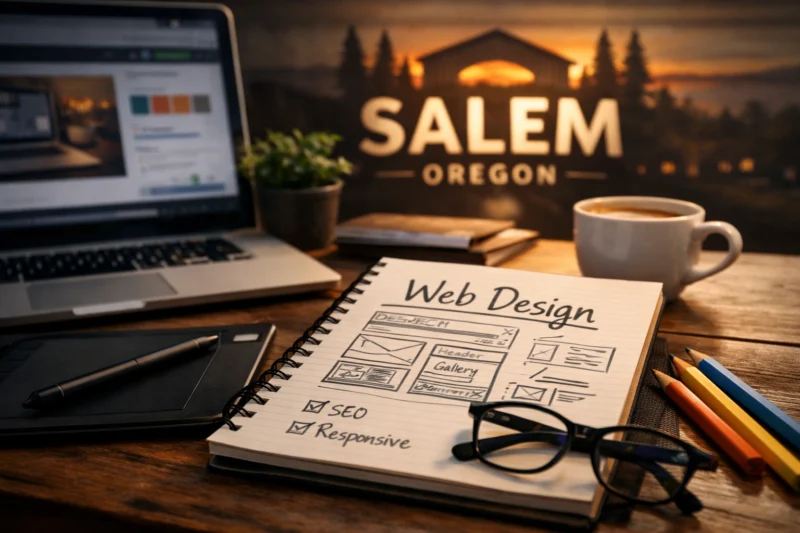
Discovery should define goals, audience segments, competitors, and required conversions. Strategy should translate that into the site structure and messaging priorities. Wireframes then clarify where content and actions belong before visual design starts. This sequence matters because it prevents teams from polishing a layout before they know what the site is supposed to accomplish.
Development should not begin until the structure and design direction are approved. Testing should check responsiveness, browser behavior, links, forms, and performance. Launch should include redirects, analytics setup, and final content verification. A disciplined process reduces scope creep, limits revision loops, and helps the project stay on schedule.
Most guides get this wrong by treating process as overhead. In reality, process is what protects budget and quality. A clear workflow is especially important when the client has multiple decision-makers, changing priorities, or a future plan to add pages and services. That is where a well-run project can avoid delays and reduce costly backtracking.
Common Mistakes Businesses Make When Buying Web Design
The most common mistake is choosing based on price alone. Low cost can be tempting, but it often leaves out strategy, content support, SEO basics, or post-launch help. Those missing pieces usually show up later as slow performance or an underperforming site.
Another major mistake is ignoring mobile usability and page speed until after the site is live. At that point, fixes are more disruptive and may require extra development work. Businesses also underdefine their goals, which leads to vague design decisions and weak conversion paths. If the team does not know whether the site should generate calls, bookings, form fills, or sales, the design will drift.
It is also easy to overlook well-documented common design mistakes such as cluttered navigation, weak hierarchy, and inconsistent calls to action. These issues are easy to miss in a mockup and expensive to fix after launch. Vague scope creates another problem: delays, disappointment, and a website that looks decent but fails to produce business results.
The deeper issue is that many buyers assume a website can be “fixed later.” Sometimes that is true, but often the structure is so poorly planned that the site needs partial rebuilding. If the project starts with clear goals, audience research, and content priorities, the final site is much more likely to perform without a second round of expensive cleanup.
Advanced Considerations Most Buyers Overlook
Accessibility is not optional if you want a durable, professional website. Good practice includes readable contrast, keyboard-friendly navigation, clear labels, and usable forms. If your team wants to understand the practical side of accessible design practices, the website should be usable by more than the average desktop visitor.
Analytics and conversion tracking are also part of high-quality work. Without them, you cannot tell whether the site is generating leads, calls, or sales. If you plan to track campaign ROI, your site needs clean event tracking, form tracking, and clear conversion goals from the start. That makes performance decisions much easier after launch.
Brand consistency and messaging clarity matter, especially for local service businesses. Visitors decide quickly whether your company feels credible, organized, and relevant to their problem. If your branding, headlines, and calls to action feel disconnected, trust drops. In 2026, that matters even more because users often compare several providers in one search session before contacting anyone.
Ongoing maintenance is another overlooked area. Launch is not the finish line; it is the point where updates, security, backups, and content changes begin. Edge cases matter too: multi-location businesses, service-area targeting, and future expansion need a structure that can grow without a rebuild. This is where a strategic partner is more valuable than a purely visual one.
What to Ask for in a Salem Oregon Web Design Proposal
A strong proposal should spell out scope, timeline, deliverables, revision limits, cost, and support terms. If any of those items are vague, you are taking on unnecessary risk. A good proposal reads like a practical plan, not a sales pitch.
Compare proposals on what they include, not just the final number. One vendor may include strategy sessions, copy support, SEO setup, and analytics configuration, while another only includes page design and development. Those are not equivalent offers. A fair comparison requires you to understand the actual deliverables and what work you would need to source elsewhere.
Watch for warning signs such as missing ownership details, unclear hosting arrangements, or phrases like “basic SEO” without explanation. You should know whether revisions are capped, how long the project takes, and what happens if your team is slow to provide feedback. That clarity protects both sides and keeps the project moving.
The best proposals also show alignment with business outcomes. They should explain how the website will help with lead generation, customer trust, or operational efficiency. If the document only describes design tasks and not results, it may not be built around your actual goals. That is especially important when a business wants a site that can support small business development over the long term.
How to Evaluate Value Without Getting Trapped by Low Prices
Website value should be measured by long-term return, not just upfront cost. A lower-priced site can be expensive if it needs a redesign quickly, fails to convert visitors, or requires constant fixes.
Think about the website in terms of leads, credibility, and operational efficiency. If a stronger site increases inquiries, reduces confusion, or saves staff time answering basic questions, it is creating value. The right investment depends on how much revenue or efficiency the site can support over time, not how inexpensive the initial build appears.
Higher pricing is justified when the project includes strategy, custom design, technical setup, accessibility, content support, and post-launch help. It is not justified if the team is simply charging more for the same limited deliverables. The point is to understand why the price is higher and what outcome that extra investment supports.
This is where smart buyers compare tradeoffs carefully. A website that is built well from the start often costs less over two or three years than a cheaper site that must be patched repeatedly. For many companies, especially those that depend on lead generation, the best value is the partner who can deliver quality and support without forcing a rebuild later.
Frequently Asked Questions About High-Quality Web Design in Salem Oregon
How much does high-quality web design cost in Salem Oregon?
Pricing depends on page count, custom functionality, content support, and whether SEO or analytics setup is included. A simple brochure site costs much less than a custom lead-generation site or e-commerce build. The real question is whether the proposal includes the work needed to meet your business goals.
How long does a professional website project usually take?
Most projects take several weeks to a few months, depending on scope, approvals, and content readiness. Timelines move faster when the client has clear goals, organized assets, and quick feedback. Delays usually happen when content is missing or scope changes mid-project.
What should be included in a high-quality website package?
A strong package should include strategy, design, development, mobile responsiveness, basic SEO setup, and testing before launch. It should also explain what support is available after launch. If content, analytics, or form setup matter to your business, those should be named explicitly.
How do I know if a web designer is a good fit for my business?
Look for portfolio relevance, a clear process, and strong communication. The designer should understand your goals and be able to explain how the site will support them. If they only talk about aesthetics, they may not be focused on business outcomes.
Is a local Salem web design company better than a remote one?
A local company may understand the market, service area, and customer expectations more naturally. A remote team can still be an excellent choice if they bring stronger specialization or better systems. The best fit depends on experience, communication, and whether they understand your audience.
What makes a website actually generate leads?
Lead generation usually comes from clear messaging, visible calls to action, trustworthy proof, and a page structure that supports action. Forms should be easy to find and simple to complete. If the visitor cannot quickly tell what you do and why they should contact you, conversions usually suffer.
Do I need SEO included with web design?
Yes, at least the SEO foundations should be built into the project. That includes clean structure, page titles, metadata, internal linking support, and mobile-friendly performance. It is much easier to build those elements correctly during the project than to patch them later.
Can a new website work with my current branding?
Yes, many projects improve the website without changing the brand identity itself. A designer can refresh layout, spacing, imagery, and messaging while keeping your logo and core colors intact. A full rebrand is only necessary when the current brand no longer reflects the business.
What should I own after the website launches?
You should have access to the domain, hosting, site files, CMS logins, analytics, and content assets. Ownership matters because it gives you control if you change vendors later. A professional partner will make those handoff details clear before launch.
How do I compare two web design proposals fairly?
Compare scope, deliverables, support, and technical setup rather than only the final price. Look at what each proposal includes for strategy, content, SEO, and launch support. A lower quote may leave out critical work and cost more later.
Conclusion
The best Salem web design partner is the one that combines quality, process, local fit, and business-focused thinking. If you want a site that is easy to trust, easy to use, and built to grow, evaluate partners by outcomes, support, and overall value rather than visuals alone.
As you compare options, review portfolios, ask for detailed proposals, and look closely at process clarity and post-launch ownership. Whether you need a local agency, a specialist freelancer, or a hybrid model, the right choice should make your website a stronger business tool from day one. If you are ready to move forward, compare proposals, review portfolios, or schedule a consultation to assess fit.
For businesses that want durable results, good design is only the beginning. The real goal is a website that supports credibility, conversion, and long-term growth in Salem and beyond.
Updated April 2026