

Choose the Salem web design company that can show clear process, relevant proof, and measurable business results—not just attractive mockups. For Salem OR Web Design Companies, the best choice is the one that helps you get more qualified calls, form fills, and local visibility without creating avoidable rework later.
That matters in Salem because local buyers often compare several providers before they contact anyone, and your website has to earn trust fast. The right partner understands service-area relevance, local search expectations, mobile usability, and conversion-focused page structure, so the site supports leads instead of simply existing online. This guide will help you compare options, spot weak proposals, and build a shortlist with confidence.
If your goal is to choose right partner, start by separating “pretty design” from performance-driven design. A site can look polished and still fail to rank and convert if it lacks strong messaging, search foundations, or a clear path to contact. The sections below explain what to evaluate, what to ask, and how to avoid expensive mistakes in 2026.
Contents
- 1 What a Strong Salem Web Design Partner Should Actually Deliver
- 2 How to Evaluate Salem OR Web Design Companies Step by Step
- 3 Service Options and How They Compare
- 4 What to Look for in a Proposal or Estimate
- 5 Common Mistakes When Hiring Salem OR Web Design Companies
- 6 Advanced Considerations Most Buyers Miss
- 7 Questions to Ask Before You Sign
- 8 Frequently Asked Questions About Salem OR Web Design Companies
- 8.1 How do I choose the best Salem OR web design company?
- 8.2 What should I ask before hiring a web designer in Salem?
- 8.3 Are local Salem web design companies better than remote agencies?
- 8.4 How much do Salem OR web design companies typically charge?
- 8.5 What is included in a professional web design package?
- 8.6 How long does a web design project usually take?
- 8.7 Do I need SEO with my web design project?
- 8.8 What are the signs of a low-quality web design company?
- 8.9 How do I compare multiple Salem web design agencies?
- 8.10 What should a small business in Salem prioritize first?
- 9 Final Takeaway: How to Make a Confident Choice
What a Strong Salem Web Design Partner Should Actually Deliver
A strong web design partner should deliver more than a visually appealing homepage. The real outcome is a website that earns qualified inquiries, explains what you do clearly, and creates trust quickly for visitors in Salem and the surrounding area.
That usually means the project includes strategy, design, copy guidance, development, SEO fundamentals, and launch support. If a provider only talks about colors, fonts, and layout, you may get a polished site that does not support lead generation. The better firms think about content hierarchy, calls to action, local relevance, page speed, and the user journey from first visit to contact form submission.
This is where many buyers misjudge value. A company can be excellent at visuals but weak at conversion strategy or local search implementation. In practice, that can leave you with a site that looks premium but underperforms on the goals that matter most. If you need fast SEO websites or a build that supports growth, the partner should explain how the site will help visitors find answers, trust your business, and take the next step.
It also helps to look for support around copy and technical quality. Good web partners know that design and messaging work together, especially for service businesses with short decision windows. For deeper planning, compare proposals against small business development needs rather than judging only on portfolio screenshots.

How to Evaluate Salem OR Web Design Companies Step by Step
Start by defining your business goals before you compare agencies. Decide who the site must attract, what action you want them to take, and how you will measure success after launch.
Then review portfolios for relevance, not just style. A beautiful portfolio is not enough if the work does not match your industry, your level of complexity, or your conversion goals. A provider that has built sites for local service companies, professional firms, or retail businesses similar to yours will usually understand the content structure and trust signals you need.
Next, examine the discovery process. The best teams ask about your customers, lead quality, service areas, objections, and current marketing channels before they propose a solution. That discovery phase is often the difference between a website that simply looks good and one that is built to rank and convert. A provider that jumps straight into design ideas may be skipping the strategy work that protects your budget.
Also check how they handle content, SEO, mobile experience, and launch readiness. Good process includes planning for future edits, new services, seasonal updates, and ongoing measurement. Most guides focus on the initial launch, but the smarter question is whether the site can adapt after it goes live. That matters for businesses that expect to expand services, update offers, or improve local SEO over time.
If you want a practical filter, ask whether their process includes local Salem design thinking, page-by-page content planning, and QA across major devices. Those details tell you far more than a generic “full-service” claim.
Service Options and How They Compare
Custom web design is the best choice when your business needs specific functionality, a unique customer journey, or a more distinctive brand presentation. Template-based design can be a smart fit for smaller budgets or simpler sites, but it usually comes with constraints in layout, scalability, and differentiation.
The tradeoff is usually time and cost versus flexibility. Custom builds take longer and require more collaboration, but they allow the site to better support business goals and future changes. Template-based projects can launch faster, yet revisions may become costly if the template does not fit your structure or conversion needs. The cheapest option can become the most expensive choice if you later need a rebuild, extra plugins, or a second round of development to fix foundational issues.
There is also a meaningful difference between a local Salem agency and a remote regional provider. A local team may understand regional search terms, neighborhood context, and buyer expectations better, while a remote specialist may have stronger expertise in a niche like ecommerce or lead generation. The right choice depends on whether proximity, specialized experience, or ongoing accountability matters most to your project.
Full-service web design is ideal when you want strategy, copy, development, and launch support handled together. Design-only work may suit businesses that already have content and SEO support in place. SEO-focused builds are useful when visibility matters early, especially if your site must support local discovery and long-term marketing. For businesses evaluating local Salem design, the best fit is often the one that balances budget with the amount of strategic help you truly need.
| Service Model | Best For | Tradeoff |
|---|---|---|
| Custom web design | Unique brands, lead generation, complex needs | Higher cost and longer timeline |
| Template-based design | Smaller budgets, simple sites, faster launch | Less flexibility and differentiation |
| Local Salem agency | Service-area businesses, in-person collaboration | May be less specialized in niche verticals |
| Remote specialist | Specific technical or industry expertise | Less local familiarity |
| Full-service partner | Hands-off buyers, strategy-heavy projects | Higher investment |
The most common mistake is assuming faster is better. If the provider is skipping strategy or using a rigid template that does not fit your content, revisions later can add far more time and cost than a well-planned build.
What to Look for in a Proposal or Estimate
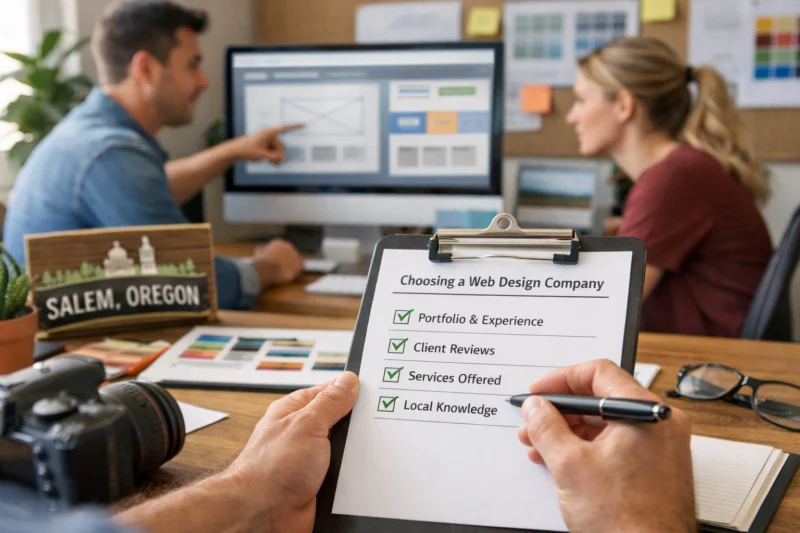
A good proposal should spell out exactly what is included, what is optional, and what counts as out-of-scope. If the estimate is vague, you will likely encounter surprise costs during content collection, revisions, integrations, or launch.
Scope clarity matters most. Look for page count, feature list, revision limits, content responsibilities, hosting or plugin assumptions, and launch tasks. If an agency says “website design” without defining the pages or technical work, the proposal is not detailed enough to compare fairly. A professional estimate should also identify who handles forms, analytics, redirects, backups, and post-launch troubleshooting.
Timeline realism is equally important. Discovery, content development, design, development, quality assurance, and launch all take time. If the schedule looks unusually fast, ask what is being compressed. Projects that rush content or testing often create problems later, especially on mobile devices or when tracking leads. This is where ongoing website maintenance becomes part of the buying decision, not an afterthought.
Ownership and access should also be defined before work begins. You want clear answers about the domain, hosting, CMS logins, design files, and final handoff. The best proposals also disclose what happens if you need post-launch changes, additional pages, or plugin licenses. Watch for vague language about extra costs tied to content edits, third-party tools, or support after launch.
If a provider cannot explain the estimate in plain language, that is a warning sign. Good partners make it easy to compare the real value of different offers, which is especially important when you are evaluating small business development budgets.
Common Mistakes When Hiring Salem OR Web Design Companies
One of the biggest mistakes is choosing based on appearance alone. A portfolio can be attractive while the actual websites fail to drive leads, communicate clearly, or support local discovery.
Another common problem is ignoring local SEO basics. A Salem business needs more than a generic site if it wants nearby customers to find it. That means location cues, service-area pages, clear contact details, and content that reflects how real people search in the area. If the company does not understand that connection, the site may look fine but remain invisible for practical local searches. A team that helps you rank and convert will usually treat design and visibility as connected tasks rather than separate departments.
Content responsibility is also a frequent source of delays and disappointment. If nobody owns the writing, revision, or approval process, the website can stall for weeks and launch with thin copy. That weakens trust and often leads to awkward page structure. It is better to clarify who creates the draft, who approves it, and how many revision rounds are included.
The deeper mistake is underestimating post-launch support. Many buyers focus entirely on launch day and forget about updates, security, plugin changes, and technical fixes. If you do not plan for future support, a site that begins strong can deteriorate quickly. If your business depends on stable leads, the partner should explain maintenance, update cadence, and troubleshooting before the project starts.
To avoid common mistakes, compare more than creative samples. Evaluate process, communication, local search knowledge, and whether the company is building a site that can actually support your business model over time.
Advanced Considerations Most Buyers Miss
Accessibility should be part of your buying decision because it affects reach, usability, and risk. A site that is hard to navigate with a keyboard, screen reader, or mobile device excludes potential customers and can create avoidable compliance concerns.
Good accessibility work is not just a legal box to check. It improves usability for everyone by creating clearer labels, better contrast, more readable content, and stronger structure. In practical terms, this can help visitors complete forms, find services, and understand your offers faster. A team that can design for accessibility is usually thinking more carefully about real user behavior, not just visuals.
Conversion strategy is another area that many buyers overlook. Effective websites guide visitors through a logical sequence: identify the problem, build trust, explain the solution, and offer a clear action. That means your page structure, CTAs, service descriptions, and trust signals matter as much as the homepage hero section. For service businesses, even small changes like better form placement or clearer benefit statements can affect lead quality.
Technical quality also matters more than many clients realize. Fast loading, stable mobile behavior, and clean development practices make the site easier to maintain and more flexible for future marketing. A technically sloppy build can limit later work such as landing pages, analytics improvements, or local campaign expansion. This is one reason fast SEO websites are valuable when built correctly: speed should support both user experience and future growth, not come at the expense of structure.
The edge case most guides ignore is that a site can “launch successfully” and still become a bottleneck later if it was built with shortcuts. Poor architecture, broken tracking, or inflexible templates can make future campaigns harder and more expensive than they should be.
Questions to Ask Before You Sign
The right questions help you see how a provider thinks before you commit. You want to know whether they have built similar sites, how they make decisions, and what happens when a project gets messy.
Ask how they decide on site structure and page priorities. A thoughtful agency should explain how it determines which pages need attention first, how it handles service pages, and how it supports local visibility. Also ask what is included in the estimate and what is not, because vague quotes are one of the most common causes of budget drift.
Content ownership is another critical topic. Who writes it, who revises it, and who approves it? If your team is busy, you need a process that keeps the project moving without relying on constant back-and-forth. It is also smart to ask how they handle mobile design and testing, what changes are allowed mid-project, and what happens if a third-party dependency delays launch. That last question matters more than people think because plugins, hosting, approvals, and integrations often affect timelines.
Ask about SEO support for a Salem-area business and be specific. You are not just asking if they “do SEO”; you want to know whether they handle local page structure, metadata, indexability, and on-page fundamentals at launch. Also ask who owns the files, domain, and login access after launch, and what ongoing support is available. Good answers should feel concrete, not rehearsed.
The best agencies are comfortable discussing project delays caused by missing content or slow approvals because they have a real process for handling them. If the answer is vague, that is usually a sign that the process is not mature enough for a business-critical site.
Frequently Asked Questions About Salem OR Web Design Companies
How do I choose the best Salem OR web design company?
Choose the company that best fits your business goals, not just the one with the nicest portfolio. Look for relevant examples, a clear discovery process, strong communication, and proof that their sites help businesses generate results.
The best choice usually has solid process quality and can explain why the design decisions support leads, trust, and local visibility. If they cannot connect the work to outcomes, keep looking.
What should I ask before hiring a web designer in Salem?
Ask about similar projects, scope, content responsibilities, mobile testing, SEO support, and ownership after launch. Also ask what is excluded from the estimate so you can avoid surprise costs later.
Pay attention to vague answers about revisions, maintenance, or integrations. Those are often the first signs of a weak proposal.
Are local Salem web design companies better than remote agencies?
Local providers can be better when you want regional insight, easier communication, or a partner who understands Salem-area customers. Remote agencies may be better if you need a specialist with deeper experience in your industry or technical stack.
The better choice depends on your goals, not geography alone. If local search and community context matter, local experience can be an advantage.
How much do Salem OR web design companies typically charge?
Pricing depends on scope, complexity, content support, custom features, SEO work, and the level of strategy included. Smaller brochure-style sites cost less than custom lead-generation sites or ecommerce builds.
Rather than shopping only by price, compare what each proposal includes and what post-launch support is available. A lower quote can become more expensive if it excludes essential work.
What is included in a professional web design package?
A professional package usually includes discovery, design, development, basic SEO setup, content guidance, testing, and launch support. Many strong packages also include analytics setup and handoff documentation.
The exact mix matters because missing fundamentals often create rework later. Always confirm whether copywriting, hosting, plugins, and maintenance are included.
How long does a web design project usually take?
Most projects take several weeks to a few months depending on scope, approvals, content readiness, and technical complexity. A simple site can move faster if the content is ready and decisions are made quickly.
Delays usually come from missing content, unclear approvals, or third-party integrations. A realistic timeline should account for review cycles and testing before launch.
Do I need SEO with my web design project?
Yes, because launch is the best time to build SEO basics into the site structure. At minimum, the project should include metadata, page hierarchy, mobile usability, indexability, and local signals relevant to your service area.
Without these basics, you may need extra cleanup later. SEO is most effective when it is planned during the build, not added as an afterthought.
What are the signs of a low-quality web design company?
Warning signs include vague scopes, weak communication, thin portfolios, and a focus on aesthetics without business outcomes. Another red flag is when the provider cannot clearly explain content, SEO, or launch responsibilities.
If they avoid discussing ownership, maintenance, or revisions, be cautious. Good firms are specific because they know how projects actually run.
How do I compare multiple Salem web design agencies?
Make a fair shortlist by asking each provider the same questions and comparing scope, process, and proof of results. In a realistic buyer context, you might be choosing between a local firm, a regional specialist, and a budget template shop, so the comparison should account for what each one actually includes.
Do not judge only by upfront price. Look at how well each agency matches your goals, how clearly they explain the work, and what support you will have after launch.
What should a small business in Salem prioritize first?
A small business should prioritize a clear homepage, strong service pages, contact options, and a site structure that supports local discovery. The first budget dollars should usually go toward the pages and features that drive inquiries, not decorative extras.
If you are comparing options, focus on practical launch priorities like content clarity, mobile usability, and lead capture. Those fundamentals usually deliver more value than advanced features a small business does not need yet.
Final Takeaway: How to Make a Confident Choice
The best way to choose is to focus on outcomes, process, and fit—not aesthetics alone. A site should help you earn trust, generate leads, and support future marketing, which means the provider must understand both design and business goals.
As you compare options, pay close attention to proof, scope clarity, local relevance, and post-launch support. Those four factors tell you far more about long-term value than a single portfolio image or a low starting price. If you need a partner who can support local search and practical growth, ask each company to explain how their work supports Salem-area visibility and conversions.
The smartest move is to request proposals from a short list, ask the same questions of each provider, and compare them side by side. That approach helps you avoid emotional decisions and choose the firm that best matches your budget, timeline, and goals. If one company can show a stronger process, better communication, and a clearer plan for launch and maintenance, that is usually the safer investment.
For businesses that want to build a durable website foundation, the right partner will help you launch with confidence and adapt over time. That is the difference between a website that simply exists and one that keeps working for your business.
Updated April 2026