The future of ecommerce is being shaped by a few powerful forces at once: changing shopper expectations, faster technology adoption, tighter logistics, and new business models that reward flexibility over rigidity. In 2026, that does not mean one single outcome for every brand; it means online retail is evolving in different directions depending on category, margin structure, and operational maturity. If you are trying to understand The Future of Ecommerce – Trends to Watch, the real question is which shifts are durable, which are hype, and which ones will actually change how your store earns trust and converts visitors.
That distinction matters now because customer expectations are rising faster than many teams can adapt. Buyers compare channels, expect quick fulfillment, want fewer checkout steps, and are increasingly comfortable with AI-assisted discovery and support when it is useful and transparent. At the same time, platform changes, payment innovation, and fulfillment pressure are forcing brands to rethink how they operate. This guide breaks down the trends, the tradeoffs, and the practical ways to decide what matters most for your business, whether you are considering a new ecommerce website using WordPress, refining a profitable strategy, or strengthening the successful store foundations that support long-term growth.
The biggest ecommerce shifts shaping what comes next
The biggest shifts in ecommerce are not isolated trends; they are interacting forces that change how people discover products, evaluate brands, complete purchases, and get orders delivered. Consumer behavior is moving toward convenience and trust. Technology is making discovery, support, and operations more automated. Logistics expectations are becoming stricter. Business models are also fragmenting, with some brands leaning into direct-to-consumer control while others depend on marketplaces, retail partnerships, or subscriptions to scale.
What separates a durable shift from short-lived hype is whether the change solves a recurring customer or operational problem. For example, faster checkout and better mobile payment options are durable because they remove friction across nearly every category. By contrast, a flashy feature that adds complexity without improving conversion often fades quickly. The best way to evaluate a trend is to ask whether it changes behavior in a measurable way, whether it can scale economically, and whether it works across product types rather than only in a narrow use case.
One common mistake is treating “new” as “necessary.” Many stores would get more value from improving product pages, site architecture, and analytics for conversion than from adopting an experimental tool. Sources such as U.S. Census Bureau retail data and NIST guidance on AI risk management help frame the broader direction: ecommerce is becoming more data-driven, more automated, and more sensitive to trust. The brands that win usually blend experimentation with operational discipline.
What shoppers will expect from online stores in the near future
Shoppers will increasingly expect online stores to be fast, convenient, personalized, and trustworthy by default. They will want product discovery that feels relevant, checkout that feels effortless, and policies that are clear before they commit. The bar is rising because consumers move across devices, channels, and touchpoints before buying, and they do not separate the brand experience into neat online versus offline categories anymore.
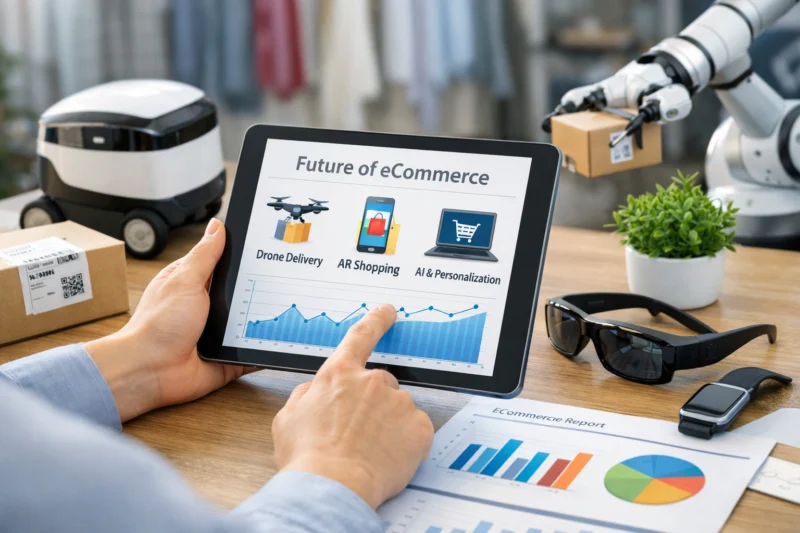
This matters because buying decisions are often made under time pressure. For everyday products, shoppers care most about speed, price clarity, and reorder convenience. For higher-priced items, they care more about trust, detailed information, and reassurance. In low-frequency categories, policies and reviews can carry more weight because the buyer is less familiar with the brand. That is why frictionless checkout and transparent shipping, returns, and warranty information matter more than novelty features that look impressive but do not reduce hesitation.
Modern buyers also expect consistency. A customer may discover a product on social media, compare it on mobile, read reviews later on desktop, and finalize the order after a retargeting email. If the product details, pricing, or inventory status change across those touchpoints, trust erodes. This is where strong ecommerce SEO tactics, clear navigation, and mobile-first content presentation support not just traffic but actual conversion. A custom store design can help, but only if it is aligned with behavior, not aesthetics alone. The deeper insight is that expectations differ by category, so a replenishment brand, a luxury retailer, and a technical B2B seller should not define “good UX” the same way.
AI and automation in ecommerce: where they actually add value
AI and automation add value in ecommerce when they reduce repetitive work, improve decision quality, or help shoppers find the right product faster. The most practical uses are product discovery, customer support, merchandising, forecasting, and content operations. Customer-facing AI can help with chat, search refinement, recommendations, and guided shopping. Back-office automation can help with inventory planning, fraud review, ticket routing, and catalog enrichment.
The distinction matters because AI is not equally useful everywhere. In customer-facing experiences, it must be accurate, consistent, and transparent, or it can damage trust quickly. In operational workflows, it is often more forgiving because a human can review exceptions. For example, an AI-assisted search tool can improve product discovery when a catalog is large and attributes are well-structured, but it becomes risky when products are complex, regulated, or highly nuanced. Sparse data is another limitation: a new store with limited history may not have enough signal for reliable recommendations or forecasting.
Most guides overstate automation and understate the human work required to make AI perform well. Good results depend on clean product data, consistent taxonomy, and monitoring. That means AI works best as an amplifier for strong systems, not a substitute for them. Brands that have invested in successful store foundations, strong product content, and disciplined analytics for conversion can usually apply AI more effectively than brands hoping the tool will fix weak merchandising. The practical takeaway is to start with narrow, measurable use cases such as support deflection or catalog cleanup, then expand only when quality and ROI are proven.
Omnichannel commerce and the blur between online and offline
Omnichannel commerce means the customer experience continues across digital and physical channels without forcing the shopper to restart their journey. That includes buy online, pick up in store, ship-from-store, in-store returns for online orders, and unified inventory visibility. The future of ecommerce is increasingly hybrid, especially for retailers with physical locations or distributed inventory networks.
This matters because customers now expect flexibility, not channel loyalty. A shopper may research online, buy in store, and return by mail. Another may reserve online and pick up the same day. If the brand cannot keep pricing, stock status, promotions, and policies consistent across those touchpoints, the experience feels broken even if the sale still happens. Consistency affects both conversion and loyalty because it reduces uncertainty and makes the brand easier to trust on repeat purchases.
The operational complexity is often hidden behind the phrase “seamless omnichannel.” It requires inventory accuracy, order routing logic, training across locations, and systems integration between ecommerce, POS, and fulfillment. That is why omnichannel is less a marketing feature than an operating model. Brands exploring this path should connect it to their profitable ecommerce strategy and their category economics, because ship-from-store can improve speed while also creating picking errors, labor strain, or returns complexity if the back end is weak. Many retailers underestimate how much coordination is needed before omnichannel becomes an advantage rather than a burden.
Checkout, payments, and conversion: what to look for next
Checkout will keep moving toward fewer steps, smarter defaults, and more payment flexibility. Wallet adoption, buy-now-pay-later in selected categories, localized payment methods, and one-click-style flows are all part of the same direction: reducing the effort required to complete a purchase. The fastest improvements usually come from simplification rather than adding more features.
Payment choice affects conversion especially on mobile, where typing is harder and patience is lower. If a store forces account creation too early, hides shipping costs until the last step, or offers only one or two payment methods, abandonment rises. Better defaults, such as preselecting the most relevant shipping option or saving customer data securely for repeat purchases, can have an outsized impact. Strong effective checkout prompts also matter because they reduce ambiguity at the moment of decision and help shoppers finish with confidence.
There is a limit, though: too many payment options can create decision friction instead of helping. This is more common than brands expect, especially on smaller screens where choice overload slows people down. The right balance depends on the audience and market. A high-volume consumer brand may benefit from wallet-first design, while a premium or regulated category may need more reassurance and fewer distractions. Testing by device, region, and product type is essential, and many teams will find that the biggest gains come from improving form usability, error handling, and trust signals rather than from adding yet another payment logo.
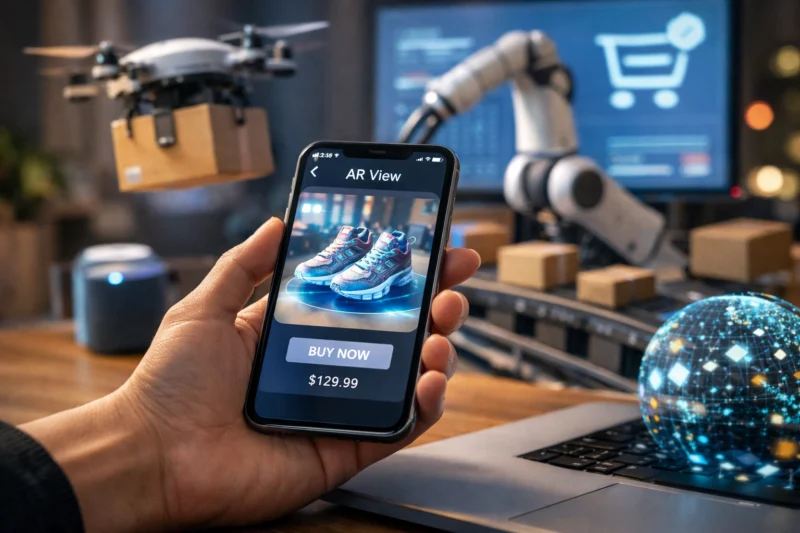
Supply chain, fulfillment, and delivery expectations are becoming strategic
Fulfillment is no longer a back-office function; it is a strategic part of the customer experience. Speed, accuracy, and visibility all influence whether a buyer feels confident enough to purchase again. In 2026, customers expect shipping transparency, dependable delivery windows, and clear return handling nearly as much as they expect a polished storefront.
Distributed inventory is becoming more important because it helps brands balance speed and cost. Shipping from a closer node can reduce delivery times, but only if inventory accuracy is high and order orchestration is reliable. Return handling is equally important because a poor returns experience can erase the trust gained during checkout. For many categories, especially apparel, home goods, and electronics, returns can be a decisive part of the buying decision. That means the best ecommerce operations treat returns as part of conversion, not just a cost center.
Resilience matters alongside speed. Faster shipping is not always the best strategy if it erodes margins, increases picking errors, or creates dependency on a fragile carrier mix. The deeper lesson is that service level should match the category economics. A premium same-day promise may be rational for urgent products or dense urban markets, but not for bulky items or low-margin goods. Brands need to understand when speed builds value and when reliability, visibility, and cost control deliver a better long-term outcome.
Comparison: the main ecommerce approaches businesses should evaluate
Most businesses should evaluate marketplace-led, DTC-led, omnichannel-led, and subscription or replenishment models as different ways to match product economics to customer behavior. Each model offers a different balance of control, margin, scalability, data ownership, and platform dependence. The best choice is not universal; it depends on category, audience, and the team’s operational maturity.
| Model | Main advantage | Main tradeoff | Best fit |
|---|---|---|---|
| Marketplace-led | Fast access to traffic and demand | Less control over brand and margins | Commodity-like products, reach-focused sellers |
| DTC-led | Strong brand control and customer data | Higher acquisition and retention burden | Distinctive products, premium positioning |
| Omnichannel-led | Flexible fulfillment and channel reach | Operational complexity and system integration | Retailers with stores or distributed inventory |
| Subscription/replenishment | Predictable recurring revenue | Churn management and retention pressure | Consumables, repeat-use products |
Hybrid strategies can be powerful when they match real customer behavior. For example, a brand may use marketplaces for discovery, DTC for full-margin repeat purchases, and retail partners for visibility. That mix can expand reach, but it also introduces complexity in pricing, attribution, and inventory planning. This is where beginner ecommerce basics and a clear channel strategy become more valuable than pursuing every channel at once.
What most comparison guides get wrong is assuming one model will stay optimal forever. In practice, models evolve as the business grows. A brand might start marketplace-led, then build a stronger owned channel using custom store design, better content, and structured ecommerce SEO tactics. Another might start DTC and later add wholesale or store pickup. The right question is not “Which model is best?” but “Which model is best for this category, this margin structure, and this stage of operational readiness?”
Common mistakes and misconceptions about the future of ecommerce
One common mistake is assuming every new technology is automatically necessary. Another is chasing trends without a clear customer problem to solve. Brands often see a competitor launch a new feature and rush to copy it before understanding whether the feature actually improves conversion, lowers support load, or increases retention.
Another misconception is that future-ready always means more automation and less human involvement. In reality, the strongest ecommerce businesses use automation where it helps scale and human judgment where it protects quality. Product assortment, merchandising, customer support escalation, and returns resolution often still need people because edge cases matter. Over-automation can make a brand feel cold or brittle, especially in higher-consideration categories.
The core issue lies in underinvesting in essential elements while overemphasizing new trends. A store with inadequate product pages, sluggish performance, poor mobile usability, or ambiguous policies won't benefit from AI innovations or an upgraded checkout system. Therefore, many businesses need to reevaluate their foundational conversion strategies, WordPress store configurations, and consider adopting effective frameworks for responsive web design before pursuing advanced features. A forward-thinking approach begins with dependable operations, compelling content, and transparent messaging. Embracing trends should enhance these core strengths rather than divert attention from them.
Advanced considerations: what most ecommerce trend guides get wrong
Most trend guides focus on the visible part of innovation and ignore second-order effects like margin pressure, data quality, and organizational readiness. A new capability can help growth while quietly increasing support burden, technical debt, or fulfillment complexity. That is especially true when teams underestimate how much integration is required between ecommerce, ERP, CRM, and warehouse systems.
Adoption timing matters more than trend awareness alone. A store that implements a technology too early may spend more time maintaining it than benefiting from it. A store that waits too long may fall behind on customer expectations. The best timing depends on whether the team already has the data, processes, and people to support the change. For example, AI-driven merchandising makes more sense when product attributes are structured and traffic volume is meaningful. Distributed inventory makes more sense when stock accuracy is high enough to trust routing decisions.
Most importantly, a trend can be strategically right and operationally wrong at the same time. A subscription model may improve retention but also increase churn management complexity. A faster delivery promise may improve conversion but reduce margin if the network is not efficient. An AI assistant may improve response times but frustrate shoppers if it cannot resolve complex questions. This is why decision-making should start with capability mapping, not trend excitement. Businesses that connect innovation to analytics for conversion and operational readiness tend to make better long-term bets.
How to decide which trends are worth investing in first
The best way to choose ecommerce trends is to evaluate them through customer impact, business fit, implementation effort, and expected ROI. A trend is worth prioritizing when it solves a real friction point, fits your category economics, and can be implemented without destabilizing core operations. That is the difference between a useful experiment and an expensive distraction.
Start by identifying the bottlenecks in the customer journey. If discovery is weak, invest in product content, search, and ecommerce SEO tactics. If checkout is leaking revenue, focus on payment options, form simplification, and trust signals. If fulfillment is causing dissatisfaction, improve shipping visibility, inventory accuracy, and return handling. Then test in sequence rather than trying to modernize everything at once. Sequencing matters because some capabilities depend on others; for example, AI recommendations are much less useful if product data is incomplete.
It is also wise to test trends through pilots, not full commitments. A limited rollout across one category, one region, or one customer segment can reveal whether the idea helps or hurts. That approach is especially important when adopting a custom store design, new automation stack, or omnichannel workflow. If the pilot improves measurable outcomes such as conversion rate, support efficiency, or repeat purchase rate, expansion becomes easier to justify. If it does not, you have learned cheaply. The practical rule is simple: prioritize changes that improve customer experience and operating discipline at the same time.
Frequently Asked Questions About the future of ecommerce trends to watch
What is the future of ecommerce likely to look like?
The future of ecommerce is likely to be more hybrid, more automated, and more focused on convenience and trust. Shoppers will move fluidly between channels, and brands will need to support that behavior with better fulfillment, clearer policies, and smarter personalization.
Which ecommerce trends matter most in 2026?
The most practical trends in 2026 are AI-assisted operations, checkout simplification, omnichannel fulfillment, and stronger delivery transparency. These have direct impact on conversion, customer satisfaction, and efficiency, while many other trends remain more experimental.
How can small ecommerce businesses keep up with new trends?
Small businesses should prioritize trends that solve a specific problem and can be tested at low cost. A focused pilot, such as improving checkout or product discovery, is usually better than adopting multiple tools at once and adding complexity.
Is AI really changing ecommerce or just hype?
AI is genuinely changing ecommerce in areas like support, search, forecasting, and catalog management, but the results depend on data quality and clear use cases. It is most valuable when it reduces repetitive work or helps customers choose faster without adding confusion.
What ecommerce trend improves conversion the most?
Checkout optimization often has the biggest immediate effect because it removes friction at the final step. Clear pricing, fewer fields, trusted payment options, and strong shipping information also matter a great deal, especially on mobile.
How do omnichannel and ecommerce work together?
Omnichannel extends ecommerce into physical touchpoints such as store pickup, in-store returns, and ship-from-store. The goal is to make the experience feel continuous, so customers can buy and return in the way that is most convenient for them.
What is the biggest mistake brands make when following trends?
The biggest mistake is copying a trend without a clear business case. Brands often invest in novelty before fixing fundamentals like product pages, inventory accuracy, and support workflows, which limits the value of any new tool.
How do you know if a trend is worth investing in?
A trend is worth investing in when it improves a measurable customer or operational outcome and fits your business model. Look for evidence that it can be implemented with reasonable effort, scaled sustainably, and tied to ROI.
What ecommerce trends should retailers watch next year?
Retailers should watch AI-assisted merchandising, smarter fulfillment routing, improved wallet and localized payment support, and tighter online-offline integration. These are likely to remain relevant because they affect both customer experience and efficiency.
Will ecommerce keep growing in the future?
Yes, ecommerce is likely to keep growing, but growth will vary by category, region, and business model. The strongest growth will come from brands that combine strong customer experience with efficient operations and disciplined execution.
The future of ecommerce will be shaped less by one breakthrough and more by how well businesses respond to changing customer expectations, tighter operations, and selective technology adoption. The most resilient brands will not chase every trend; they will choose the ones that fit their category, margins, and team capability. That means investing in strong fundamentals first, then layering in the changes that genuinely improve conversion, retention, or operational efficiency.
If you want a practical next step, review your current customer friction points and identify the top one or two trends worth piloting first. Focus on measurable outcomes, not hype, and make sure each experiment strengthens both the customer experience and the business model behind it.
Updated April 2026