

If you are comparing Freelance Web Designers Salem OR, the smart choice is the one that can prove business value, not just attractive visuals.
Most Salem buyers are really trying to answer a practical question: which designer is worth the budget, who will communicate clearly, and who can deliver a site that brings in leads, bookings, or sales without turning into a repair project. The best way to choose is to evaluate fit, process, pricing clarity, and proof of results before you sign anything.
This guide breaks down how to judge a freelance web designer in Salem, OR with confidence, including what a strong project should deliver, how to compare options, where pricing gets confusing, and which red flags usually lead to delays or expensive mistakes.
Contents
- 1 What a Strong Salem Freelance Web Designer Should Actually Deliver
- 2 How to Choose Freelance Web Designers in Salem, OR Step by Step
- 3 Salem Web Designer Options: Freelancer vs Agency vs DIY vs Hybrid
- 4 Pricing, Scope, and What You Should Expect to Pay
- 5 Portfolio, Proof, and Signals of Real-World Results
- 6 Common Mistakes When Hiring a Salem Freelance Web Designer
- 7 Advanced Considerations Most Web Design Guides Get Wrong
- 8 Questions to Ask Before You Hire
- 9 When a Freelance Designer Is the Right Fit for Your Salem Business
- 10 Frequently Asked Questions About Freelance Web Designers in Salem, OR
- 10.1 How do I choose the best freelance web designer in Salem, OR?
- 10.2 What should a freelance web designer include in a quote?
- 10.3 How much does a freelance website designer cost in Salem?
- 10.4 Is a freelancer better than a web design agency?
- 10.5 What red flags should I watch for before hiring?
- 10.6 How long does it take to build a small business website?
- 10.7 Do Salem freelance web designers also handle SEO?
- 10.8 What questions should I ask before signing a contract?
- 10.9 Can a freelancer redesign an existing website without starting over?
- 10.10 How do I compare two or three designers fairly?
- 11 Conclusion
What a Strong Salem Freelance Web Designer Should Actually Deliver
A strong freelance web designer should deliver a website that looks credible, loads quickly, works on phones, and helps visitors take the next step. That could mean calling your business, requesting a quote, booking an appointment, or buying a product. Design is part of the value, but it is not the whole value.
The real difference shows up in how the site is structured. Good designers think about messaging hierarchy, page flow, mobile usability, and launch support, not just colors and layout. That matters because a site can look polished and still fail if visitors cannot immediately understand what the business does or how to act.
For many local businesses, the site must do more than “look professional.” It may need to generate leads, support seasonal promotions, or handle eCommerce without friction. That is where custom website solutions become more important than a generic template approach, especially when the offer, audience, or sales process is not standard. A portfolio full of pretty pages is useful, but it does not prove the designer can solve business problems.

The best designers also help with practical details after launch. A site that works on day one but is hard to update, lacks basic SEO setup, or breaks when content changes can become a burden. When reviewing candidates, look for someone who talks about outcomes, not just appearance, and who can explain how their work supports your business goals in plain language.
How to Choose Freelance Web Designers in Salem, OR Step by Step
Start by defining what the website needs to do, how much you can spend, and when it needs to launch. If you do not know the goal, every designer will look equally plausible. A service business, a nonprofit, and an online store need very different site structures, so deciding the website’s job first makes comparison much easier.
After that, narrow your shortlist by checking whether each designer has relevant experience, a clear process, and a communication style that matches yours. The best candidates ask discovery questions about your audience, offers, competitors, and content needs before they start quoting. That is often the difference between a professional process and a template-based service dressed up as custom work.
This is also where local fit matters. A Salem designer does not need to overclaim insider knowledge to be useful, but they should understand the context of local service areas, nearby competition, and how customers in the region typically search. That is especially relevant when the site must support local SEO essentials and lead generation from nearby buyers. If a designer cannot explain how they think about audience intent, mobile behavior, or conversion paths, they may be more focused on design aesthetics than business outcomes.
When evaluating candidates, pay attention to the questions they ask you. Strong designers want to know what success looks like, what assets you already have, who will approve content, and what constraints exist. Weak ones often jump straight to a package price or a homepage mockup. If you are comparing vendors, the process of choosing the right team should feel like filtering for problem-solving, not just browsing visuals.
Salem Web Designer Options: Freelancer vs Agency vs DIY vs Hybrid
The best option depends on budget, complexity, speed, and how much internal help you have. A solo freelancer can be a strong fit for a straightforward small-business site, while an agency may be better when you need broader support, more specialized roles, or a larger launch process. DIY builders can work for very simple needs, and hybrid models can fill gaps if you already have in-house content or branding help.
The main tradeoff in the freelancer versus agency decision is flexibility versus breadth. Freelancers usually have lower overhead and more direct communication, which can make the project faster and less expensive. Agencies may bring project management, copywriting, development, and strategy under one roof, but that support often costs more and can involve more layers of communication.
DIY is the most affordable on paper, but the hidden cost appears when you need to write content, choose layouts, revise pages, fix mobile issues, or maintain the site after launch. A hybrid setup can be efficient if you already have internal marketing help, but it can also become messy if no one owns decisions, deadlines, or updates. That is why some businesses prefer budget-friendly design options only when the scope is truly simple and the team understands the maintenance burden that comes with it.
| Option | Best for | Tradeoff |
|---|---|---|
| Solo freelancer | Small sites, refreshes, direct collaboration | Limited bandwidth or specialization |
| Small studio or agency | Complex launches, broader support, larger teams | Higher cost and more process layers |
| DIY builder | Very simple websites, tight budgets | Time cost, quality limits, maintenance burden |
| Hybrid support | Businesses with some in-house capability | Risk of unclear ownership and slow decisions |
Pricing, Scope, and What You Should Expect to Pay
Website pricing depends on how much custom work is involved, whether content help is included, and how many technical or strategic tasks are part of the project. A simple brochure site costs less than a site that needs booking integrations, eCommerce, copy refinement, or SEO setup. Revision rounds and launch support also affect the final number.
The hardest part is comparing quotes that are worded differently. One designer may include homepage copy guidance, mobile refinement, and launch troubleshooting, while another may quote a lower number but leave those tasks out. That is why price alone is a weak comparison tool. You need scope clarity, not just a number. In many cases, a quote for fast SEO websites is only truly competitive if it includes mobile testing, metadata setup, and a launch process that does not stall when the site goes live.
Common pricing structures include fixed project fees, hourly billing, retainers, and phased engagements. Fixed fees are easier to budget for if the scope is stable. Hourly billing can work for ongoing or uncertain work. Retainers are best when you want continuous updates, while phased projects help when you need to split strategy, design, and development into separate decisions. The cheapest quote can become the most expensive if it excludes copy support, mobile refinement, or troubleshooting after launch.
If you are reviewing multiple proposals, compare what each one includes for strategy, design, build, revisions, and launch. This is also where many of the common design mistakes happen: buyers focus on the headline price and later discover they are paying extra for basics that should have been specified from the start.
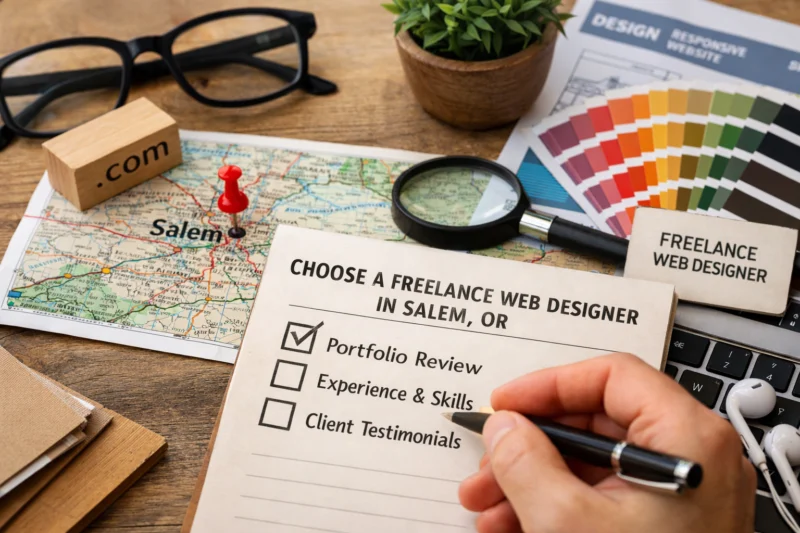
Portfolio, Proof, and Signals of Real-World Results
A portfolio should be judged for relevance, not just aesthetics. Look for work that matches your industry, project size, and complexity. A visually attractive site is useful, but if the designer has never handled the kind of conversion flow, booking structure, or product catalog you need, that matters more than style.
Strong proof includes testimonials, case studies, live sites, and measurable outcomes when available. Even without hard metrics, a good case study should explain the problem, the process, and what changed after launch. If the portfolio is thin, ask for live examples, before-and-after context, or references from recent clients. That can tell you more than a gallery of polished screenshots.
One thing most buyers miss is that design samples alone do not prove project management skill. A designer may create beautiful mockups but struggle with scope control, timeline discipline, or conversion planning. If you are hiring for lead generation, ask how the work supports forms, calls, or appointments. If you are hiring for eCommerce, ask how they handled product browsing, checkout friction, and trust signals. Those details reveal whether the designer understands business outcomes or only visual presentation.
It is also worth checking for signs that the designer understands mobile-friendly website design and accessibility. A site can look great in a desktop portfolio and still fail on a phone, where most local users may first encounter it. Proof that the designer tests across devices is a practical signal, not a bonus feature.
Common Mistakes When Hiring a Salem Freelance Web Designer
The most common mistake is choosing based on visuals alone. A beautiful homepage can hide weak messaging, unclear calls to action, or a confusing page structure. If the site does not guide visitors toward a specific next step, the design may not actually support the business.
Another frequent mistake is failing to define the scope before work begins. Revision limits, ownership of files, launch responsibilities, and content deadlines should be explicit. If those details are missing, the project can drift into “one more change” territory and become more expensive than expected. This is especially risky when the designer and client both assume the other person is handling approvals or final uploads.
Price-only decisions are another trap. A cheap quote may seem safe until you discover it excludes basic copy help, device testing, or post-launch fixes. Communication is often the hidden issue as well. A designer who is good at layout but weak at communication can create friction on every decision, especially when feedback is delayed or decision-makers disagree. That is one of the biggest common design mistakes businesses make: they treat design skill and project reliability as the same thing.
When comparing vendors, remember that the most efficient projects usually have one clear decision-maker, a realistic timeline, and written expectations for deliverables. Without that structure, even a talented freelancer can get pulled off course by unclear feedback or changing priorities.
Advanced Considerations Most Web Design Guides Get Wrong
Many guides focus on design taste and ignore the content that actually makes a website work. A designer cannot fully fix weak messaging, unclear offers, or bad photos without your input. If your service page is vague, your homepage will be vague no matter how polished the layout is. Good projects depend on collaboration, especially when the content needs to be sharpened before the build starts.
Ownership and handoff details are another overlooked issue. You should know who controls hosting, the domain, CMS access, analytics, and editable files after launch. If the designer keeps everything locked away, updating the site later becomes harder than it should be. In practical terms, clean handoff is part of the product, not an afterthought.
Accessibility and mobile behavior also deserve more attention because they affect real users, not just compliance checklists. A site that is difficult to navigate on a phone or hard to read for users with accessibility needs can lose business quickly. That is why accessible website practices should be treated as a normal part of modern site planning, especially for local audiences that include older users, mobile users, and people with varying access needs. A beautiful site that underperforms because forms, hierarchy, or page contrast were never planned is a costly mistake.

It also helps to think beyond the launch date. Small changes in page structure, conversion flow, and form placement can make a large difference. If the designer understands mobile-friendly website design and how users actually move through a site, the final result is more likely to support leads and sales instead of simply looking modern.
Questions to Ask Before You Hire
Start by asking how the designer defines success for a project like yours and what they need from you to reach it. A good answer should mention audience, content, timeline, and the actions you want visitors to take. If the answer is only about visual style, that is a sign the process may be too shallow.
Then ask exactly what is included in the proposal, how many revisions are standard, and what happens if the scope changes. This prevents confusion once work begins and helps you compare proposals fairly. Also ask how they handle SEO basics, mobile testing, launch support, and post-launch fixes, because those items often determine whether the site actually performs after going live. Many buyers also overlook the importance of local SEO essentials when hiring a designer, even though local visibility can be one of the main reasons for the project.
One of the most useful questions is how they manage communication if your feedback is slow or if internal decision-makers disagree. That tells you a lot about whether the designer can keep the project moving without creating tension. If they can describe a clear process for approvals, deadlines, and change requests, you are likely dealing with someone who has handled real client work before.
You can also ask whether they provide support for custom website solutions or mostly build from fixed templates. That question quickly reveals whether the designer is solving problems or just reusing a standard layout for every client.
When a Freelance Designer Is the Right Fit for Your Salem Business
A freelancer is often the right fit when the site is relatively small, the goals are clear, and the business wants direct collaboration. That includes local service businesses, launch-ready brands, refreshes of existing sites, and projects where speed matters more than having multiple departments involved. In those cases, one skilled person can move quickly and keep communication simple.
Freelancers also work well when the business owner wants more control over decisions and fewer layers between concept and execution. If you already have branding, copy, or photography in place, a freelancer can often turn those assets into a polished site efficiently. This is where budget-friendly design options can make sense without sacrificing quality, as long as the scope is realistic and the expectations are aligned.
Be more cautious when the site has multiple locations, complex integrations, advanced content planning, or a large number of stakeholders. Those projects can still be handled by a freelancer, but only if the person has the bandwidth and experience to manage the full scope. The key is that “right fit” depends less on the size of the company and more on the complexity of the site and the quality of your internal decision-making.
For some businesses, a freelancer is the best path to launch quickly and cleanly. For others, especially those needing broader support, the better choice may be a team that can provide ongoing fast SEO websites, content coordination, and technical follow-up after launch.
Frequently Asked Questions About Freelance Web Designers in Salem, OR
How do I choose the best freelance web designer in Salem, OR?
Look for portfolio fit, clear communication, a real process, transparent pricing, and evidence that the designer can support your business goals. The best choice is usually the one that asks smart discovery questions and can explain how the site will help visitors take action.
What should a freelance web designer include in a quote?
A proper quote should cover scope, deliverables, revision rounds, timeline, launch support, and exclusions. If the proposal is vague about content help, mobile testing, or post-launch fixes, ask for those details before you agree.
How much does a freelance website designer cost in Salem?
Pricing varies based on design depth, content support, SEO setup, integrations, eCommerce needs, and the number of revisions. A simple site may cost much less than a custom build, but the total value depends on what is included, not just the starting number.
Is a freelancer better than a web design agency?
A freelancer can be a better fit when you want direct communication, lower overhead, and a smaller project scope. An agency may be better for larger launches or when you need design, development, copy, and project management bundled together.
What red flags should I watch for before hiring?
Watch for vague proposals, unrealistic promises, weak contracts, poor communication, and a lack of relevant examples. If a designer cannot explain their process or avoids discussing revisions and ownership, that is a warning sign.
How long does it take to build a small business website?
Timelines depend on scope, content readiness, revision cycles, and how quickly approvals happen. A small site can move quickly if the content is ready, but delays often come from missing assets or slow decision-making rather than the build itself.
Do Salem freelance web designers also handle SEO?
Some do basic SEO setup such as page titles, headings, metadata, and local search structure. Deeper SEO work may require a separate specialist, especially if you need content strategy, competitive research, or ongoing optimization.
What questions should I ask before signing a contract?
Ask about scope, ownership, revisions, deadlines, payment terms, and post-launch support. It is also smart to ask how they handle feedback delays and disagreement among decision-makers.
Can a freelancer redesign an existing website without starting over?
Yes, if the current site has a solid structure, usable content, and a platform that can still support your goals. A rebuild is better when the site has technical problems, poor content organization, or design limitations that cannot be fixed cleanly.
How do I compare two or three designers fairly?
Compare them on fit, proof, deliverables, communication, timeline, and total value rather than just the headline price. The fairest comparison is one that uses the same project brief so each designer is quoting the same work.
Conclusion
The smartest way to hire a Salem freelance web designer is to compare fit, proof, scope clarity, pricing transparency, and communication quality. A strong portfolio matters, but it is only one piece of the decision.
The best hire is not the prettiest portfolio. It is the designer who understands your goals, asks the right questions, and can handle the project from planning through launch without surprises.
If you are choosing among several candidates, request detailed quotes, compare what is included, and ask targeted questions before you commit. That approach helps you select confidently and avoid the common traps that turn a web project into a budget problem.
For broader context, it can also help to review guidance from U.S. Small Business Administration on small business planning, W3C Web Accessibility Initiative on accessibility, and Google Search Central on search-friendly site basics.
Updated April 2026