

Effective link building means earning relevant, trustworthy backlinks that improve rankings, authority, and traffic without relying on spam. In 2026, the best Effective Link Building Strategies for 2024 still prioritize editorial quality, topical fit, and long-term stability over raw volume, which is a major shift from older shortcut-heavy advice.
This guide answers the core question directly: which link building approaches still work, which ones are safer, and how to choose tactics that fit your site, niche, and resources. It is a strategy guide, not a shortcut list, so you will see how to evaluate opportunities, build link-worthy assets, avoid common mistakes, and measure whether your campaign is actually moving organic growth forward.
Contents
- 1 What makes a link building strategy effective in modern SEO
- 2 How to build an effective link building plan step by step
- 3 Best link building approaches to compare in 2026
- 4 Content assets that attract links naturally
- 5 Outreach that actually gets responses
- 6 Common mistakes and misconceptions in link building
- 7 Advanced considerations most link building guides get wrong
- 8 How to measure whether your link building is working
- 9 Frequently Asked Questions About effective link building strategies
- 9.1 What are the most effective link building strategies in 2026?
- 9.2 How many backlinks do I need to rank?
- 9.3 Is guest posting still an effective link building tactic?
- 9.4 What is the safest way to build links for a new website?
- 9.5 How do I know if a backlink is actually valuable?
- 9.6 What are the best long-tail link building strategies for small businesses?
What makes a link building strategy effective in modern SEO
An effective link building strategy creates measurable gains in relevance, authority, referral traffic, and rankings, while remaining stable under algorithm updates and manual review. The goal is not simply to collect backlinks; it is to earn placements that make sense for your topic, your audience, and the destination page.
That matters because a link can look impressive on paper and still do little for growth if it comes from an unrelated page, weak editorial context, or a source with no audience overlap. In modern SEO, quality signals are not just about the domain. Page-level relevance, surrounding text, link placement, and the trustworthiness of the linking page all influence value. This is why a backlink from a smaller industry publication can outperform a generic placement on a larger but irrelevant site. The practical difference shows up in rankings, crawl efficiency, and sometimes direct referral traffic.
Another important aspect to consider is the difference between strategy and tactics. Tactical link acquisition prioritizes obtaining links quickly, whereas a well-defined strategy links those efforts to broader organic growth initiatives, such as enhancing a category page, reinforcing a content hub, or generating interest in a new product line. By also focusing on improving backlink authority fundamentals, refining content planning, and aligning with a broader model of collaboration, link building can evolve into a valuable, compounding asset rather than a one-time effort. Many teams complement this process with a comprehensive SEO audit and regular assessments of SEO performance metrics, ensuring that link effectiveness is evaluated based on business impact rather than mere quantity. To understand the connection between these elements, explore how SEO and content marketing complement each other.
One common mistake is assuming “more links” is always better. That is not true when the links are off-topic, sitewide, poorly placed, or acquired in a pattern that looks artificial. Effective strategy means choosing the right links, in the right places, at the right pace, with the right destination pages.
How to build an effective link building plan step by step
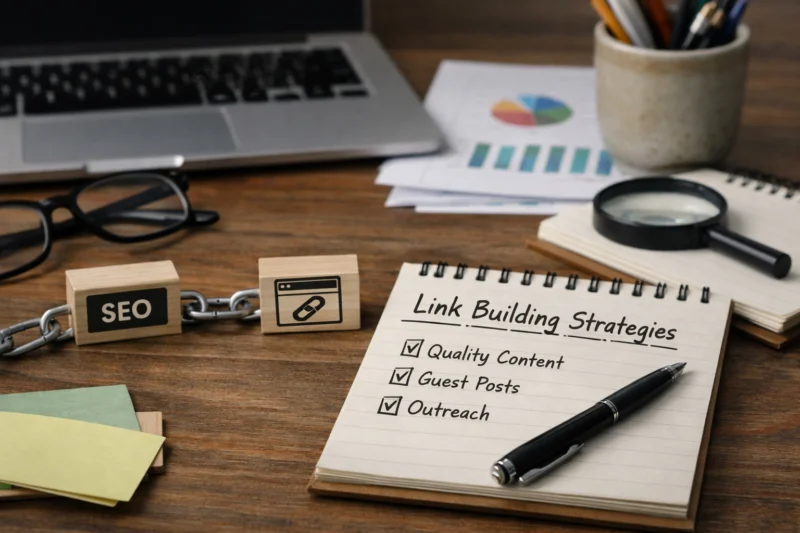
The best link building plan starts with a specific goal: rankings, referral traffic, brand visibility, or authority building. Each goal changes your tactics. A page trying to rank for a competitive query may need editorial links from relevant publications, while a local service page may benefit more from community mentions, resource pages, and partnerships that drive qualified traffic.
Before you begin your outreach efforts, it’s crucial to identify your strongest linkable assets. Many campaigns falter at this stage because teams start prospecting without a clear understanding of what they can effectively promote. If your website features valuable resources like a comprehensive research report, an informative statistics page, a comparison guide, or a practical tool, these should be the focal points of your outreach. If your site lacks such assets, your first step might be to create one or two quality pages worthy of backlinks. In many cases, this aligns with a broader approach to internal linking, as having a well-organized site structure enhances the efficacy of external links when your destination pages are grouped into coherent topical clusters. For more insights on this, explore effective techniques for internal linking.
Then prioritize opportunities by effort, relevance, and likely value. Do not chase the easiest links if they do not support your goals. A small site in a competitive niche may need fewer but better placements, while a larger brand can often benefit from broader visibility through digital PR and expert commentary. The right path depends on your current authority and content quality. That is why the best plan is not the most diverse one; it is the one aligned with where your site is now and what it can credibly earn.
A practical decision path is simple: if you have strong content and some existing authority, lead with digital PR and targeted outreach. If you have a smaller site with useful niche expertise, start with resource pages, broken link outreach, and guest contributions that are genuinely editorial. If you are in a regulated or sensitive niche, focus on expert-led content, references from reputable industry sources, and trust-building rather than volume. This is where advanced SEO tactics matter, because the winning approach is often the one that fits constraints, not the one with the loudest promise.
Best link building approaches to compare in 2026
In 2026, the most reliable link building categories are digital PR, guest contributions, broken link outreach, resource page outreach, and promotion of link-worthy assets. Each has a different balance of speed, control, scalability, and editorial quality, so the best mix depends on your niche maturity and resources.
Digital PR works best for brands that can produce newsworthy data, expert commentary, or compelling angles. It can earn high-quality links from major publications, but it demands strong ideas and often a longer production cycle. Guest contributions are useful when the publication is relevant and editorial standards are high, but they lose value quickly if they become repetitive or overly promotional. Broken link outreach is efficient when you have a strong replacement page and can find genuinely relevant dead resources, though it is less scalable than PR. Resource page outreach is especially effective for educational or evergreen content, but it depends heavily on the quality of your asset and the curator’s standards.
Link-worthy asset promotion is often the most durable approach because the asset itself does the heavy lifting. A strong research page, calculator, glossary, or definitive guide can attract references repeatedly over time. The tradeoff is upfront investment: you must create something worth citing before outreach starts. In many industries, this is the most stable path because it compounds with internal promotion, social sharing, and organic discovery. It is also where page relevance matters most, since a strong asset can still underperform if the site does not have enough topical depth around it.
| Approach | Best for | Main strength | Main limitation |
|---|---|---|---|
| Digital PR | Brands with data, insights, or strong angles | High-authority editorial links | Requires strong ideas and patience |
| Guest contributions | Subject-matter experts and niche publications | Control over topic and placement | Can become low-value if scaled poorly |
| Broken link outreach | Useful replacement pages in niche verticals | Clear value proposition | Limited by available dead links |
| Resource page outreach | Evergreen guides and educational assets | Highly relevant citations | Response rates vary widely |
| Asset promotion | Sites with strong original content | Compounding, long-term value | Needs strong content and promotion |
One nuance many guides miss is that not every white-hat tactic scales equally. A tactic that works well for a small niche site may be inefficient for a large brand with multiple content teams. That is why campaign design should reflect industry maturity, publication standards, and the type of pages you are trying to support.
Content assets that attract links naturally
The pages most likely to earn links naturally are original research, statistics pages, tools, definitive guides, and highly practical resources. These assets reduce outreach friction because they offer something a curator, journalist, or creator can confidently cite.
Original research works well when it fills a real knowledge gap. If you can analyze industry trends, survey a customer base, or compile unique data from your own platform, you create something that others cannot easily replicate. Statistics pages are useful because writers constantly need source material for supporting claims. Tools and calculators can attract links because they solve a practical problem, especially in B2B, finance, health, marketing, and technical niches. Definitive guides earn links when they are more useful than the average article on the topic, not merely longer.
Choosing the right asset type depends on audience need and link intent. If the audience wants facts, build a source page. If they want a repeatable action, build a tool. If they need a framework, build a guide. If they need proof, build original research. This is where off page authority intersects with content planning: the best external links often go to assets that are easy to reference and easy to trust. It also aligns with broader content strategy planning, because a good asset should support the site’s topic clusters, not sit alone as an orphan page.
One deeper issue is that some assets attract links but do not rank well by themselves. That usually happens when internal linking is weak, topical relevance is shallow, or the destination page does not sit inside a strong content cluster. In other words, link attraction is not the same as ranking performance. The destination page still needs depth, contextual support, and a clear role in the site architecture.
Outreach that actually gets responses
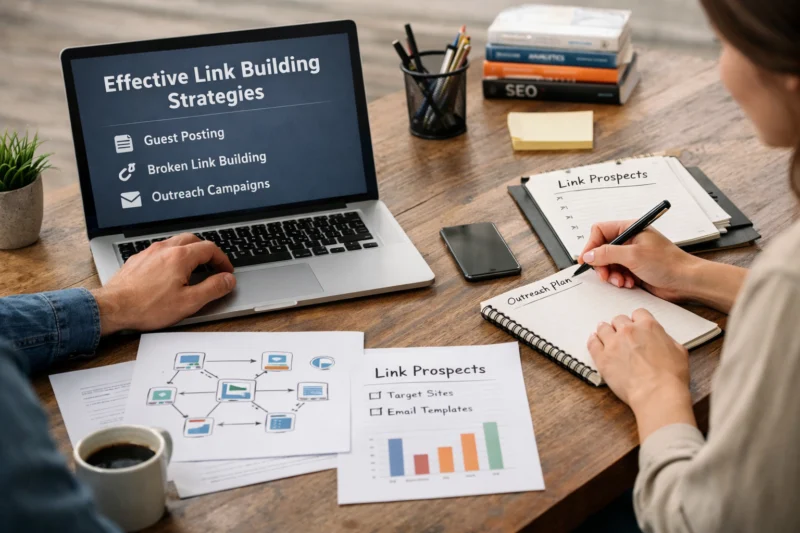
Outreach gets responses when it is relevant, timely, and clearly useful to the recipient. Personalization helps, but relevance is the real lever. If your pitch does not explain why the target page or publication should care, even a well-written email will feel generic.
Start by identifying the right prospects, not just the biggest domains. A smaller site with a tightly matched audience can be worth more than a broad publication with weak topical overlap. Look at the page that would contain the link, not only the domain. If the page already references similar topics, is recently updated, or serves a resource-oriented audience, the link is more likely to be editorially accepted and semantically useful. This is especially important in campaigns that support a product category, a comparison page, or a long-form guide.
Common outreach angles include replacing outdated resources, citing useful research, or contributing expert insight. These work because they help the recipient improve their content. For example, if a university resource page links to an old statistic source that is no longer current, a newer data page can be a strong replacement. If a publication needs a quote from a practitioner, a concise expert insight can earn a mention in context. If a resource page lists tools, a genuinely useful tool can be a strong fit. The more naturally your pitch fits the publisher’s goal, the better the response rate.
The deeper point is that outreach often fails because of weak relevance signals, not because the email copy is bad. If the prospect list is wrong, no amount of polish will fix it. One helpful approach is to build prospect lists from topical adjacency, not vanity metrics. That is also where supporting content matters: a site with a clear SEO audit process, credible reference pages, and a disciplined content marketing synergy approach will usually earn better replies because it looks more trustworthy before the first email is even sent.
Common mistakes and misconceptions in link building
One of the biggest mistakes is chasing domain authority alone. A high metric score does not guarantee a useful link if the page is irrelevant, buried in weak context, or surrounded by unrelated content. Many teams overvalue the domain and undervalue the page. That leads to links that look impressive in reports but do little for rankings or traffic.
Another misconception is that all nofollow links are useless. That is false. Nofollow links can still drive referral traffic, brand visibility, and natural discovery, especially when they appear on highly relevant pages or in communities where your audience actually spends time. The mistake is treating them as a direct substitute for editorial dofollow links, rather than as part of a broader authority-building mix.
Over-optimization is another common risk. If anchor text becomes repetitive, placements become too similar, or links arrive in unnatural bursts, the campaign can look manipulative even if each individual link appears respectable. That is why link velocity, placement diversity, and topical fit matter. A few genuinely relevant links over time usually beat a sudden flood of mismatched mentions. This is one of the areas where site owners working on advanced SEO tactics need restraint as much as ambition.
The deeper warning many guides skip is that links can create risk when they appear engineered rather than earned. Even a “high authority” placement can be a liability if it sits on a page with little relevance or if the linking site has obvious outbound-link patterns. Page-level relevance matters just as much as domain-level metrics, and sometimes more. This is especially true when you are building links for category pages, money pages, or regulated topics where trust signals are closely scrutinized.
Advanced considerations most link building guides get wrong
External links do not work in isolation. Their value changes based on topical authority, internal linking, and the depth of the destination content. A page with strong supporting content and a coherent site structure can convert a single good backlink into a meaningful ranking lift, while a weak or isolated page may barely move even with several decent links.
Link context also matters more than generic mentions. The surrounding paragraph, the sentence that introduces the link, and the editorial reason for including it can all affect perceived value. A link embedded in a practical recommendation or cited statistic usually carries more weight than a bare mention in a long list. This is why better campaigns think beyond placements and focus on editorial usefulness. In many cases, the best SEO gain comes not from acquiring another link but from improving the destination page itself, tightening the topic cluster, or strengthening the internal linking strategy around it.
Edge cases matter, too. Local businesses often have fewer traditional link opportunities, so community partnerships, local press, chamber listings, and niche sponsorships can be more effective than standard outreach. B2B companies may earn more from industry reports, partner pages, and guest expert contributions than from broad PR blasts. Highly regulated niches often need stricter review, safer language, and stronger trust cues. Those constraints do not weaken the strategy; they change the tactics.

This is also where a real scalable site structure matters. A well-organized site makes external links more useful because authority can flow to related pages through sensible internal pathways. If your content is fragmented, external links may concentrate on the wrong URLs or fail to support the pages that drive revenue. That is why link building and page architecture should be planned together, not separately.
How to measure whether your link building is working
The core metrics to track are referring domains, link quality, organic visibility, traffic, and assisted conversions. Referring domains show breadth, but quality matters more than raw count. A small number of relevant, editorial links can outperform a large batch of weak placements, especially in competitive or trust-sensitive niches.
Ranking movement alone can be misleading in the short term. A page may gain links and still not move immediately if the site needs stronger topical coverage, the SERP is volatile, or the query is dominated by entrenched brands. It is better to review multiple indicators over a realistic time window. Look at whether the linked page improves in impressions, clicks, crawl frequency, and secondary rankings for related terms. If the campaign is designed for demand generation, referral traffic and assisted conversions may matter more than position changes.
Attribution is harder than most reports suggest. A link may help a page rank, which later helps another page, which then contributes to a conversion. That indirect effect is real, but it is easy to miss if you only look at last-click data. This is why many teams pair link tracking with broader SEO performance metrics and content-level analysis. If a page has strong links but weak performance, the problem may be the page, not the campaign.
Adjust strategy when prospect quality drops, response rates stall, or the content is underperforming despite good placements. Sometimes the fix is not more outreach. It is a better asset, a more focused prospect list, or stronger internal support. Measuring link building properly means evaluating whether the campaign is improving rankings, crawling, and brand demand—not just adding rows to a spreadsheet.
Frequently Asked Questions About effective link building strategies
What are the most effective link building strategies in 2026?
The most effective strategies are digital PR, high-quality guest contributions, broken link outreach, resource page outreach, and promotion of link-worthy assets. They remain effective because they earn editorial links from pages that already have topical relevance and audience trust.
The best choice depends on your niche and resources. Brands with strong data can win with PR, while smaller experts often do better with niche contributions and focused outreach.
How many backlinks do I need to rank?
There is no universal number because link needs vary by keyword competitiveness, topic depth, and the authority of competing pages. A lower-competition page may rank with a few strong links, while a crowded SERP may need many more signals beyond backlinks.
It is better to compare the quality and relevance of your backlink profile against the pages already ranking. The real question is not how many links, but how many useful links your page needs to be competitive.
Is guest posting still an effective link building tactic?
Yes, guest posting is still effective when the publication is relevant, the content is original, and the placement serves the audience rather than the author. It becomes low value when the posts are published on weak sites, used mainly for anchor manipulation, or mass-produced.
Quality guest posts work best when they contribute genuinely useful expertise and support a larger authority-building plan. The placement should feel editorial, not transactional.
What is the safest way to build links for a new website?
The safest approach for a new website is to create one strong linkable asset, then earn links through relevant outreach, partnerships, and niche resource pages. New sites usually benefit from slower, more natural acquisition patterns instead of aggressive volume.
Focus on useful content, clear topical focus, and credible references. That combination lowers risk and gives your early links a better chance of helping rankings.
How do I know if a backlink is actually valuable?
A valuable backlink is relevant to your topic, placed in editorial context, and likely to be seen by a real audience. Traffic potential and trust signals matter more than a metric score alone.
Check whether the linking page has topical overlap, whether the sentence around the link makes sense, and whether the page itself appears maintained and credible. If the answer is no, the link may be weaker than it looks.
What are the best long-tail link building strategies for small businesses?
Small businesses often do best with local partnerships, niche resource pages, expert quotes, community involvement, and highly useful content assets that match a specific audience need. These approaches are more scalable when budgets are limited.
Long-tail strategies work because they target smaller, more realistic opportunities that still have strong relevance. For many small businesses, that relevance is what makes the links move the needle.
Effective link building is about relevance, trust, and strategy alignment rather than volume alone. The strongest results come from matching the right tactic to your site stage, niche competition, and the quality of the destination content.
If you want a practical next step, audit your current link assets, choose one or two strategies that fit your resources, and measure the results against rankings, traffic, and conversions instead of raw backlink counts. That is the most reliable way to build authority that lasts.
Updated April 2026