

Web design solutions in Salem, OR help a business turn website traffic into qualified leads, booked calls, quote requests, and stronger local trust. If you are comparing Web Design Solutions Salem OR, the real question is not just who can make a site look polished; it is who can build a site that supports sales, local visibility, and credibility from the first visit.
For Salem business owners, a website has to do more than exist. It needs to load quickly, guide visitors to the next step, and match how local buyers actually evaluate service providers, contractors, professional firms, retailers, and multi-location brands. This guide explains how to compare providers, spot red flags, and choose a partner based on business fit rather than aesthetics alone.
Contents
- 1 What Salem Businesses Need From a Website Today
- 2 How to Choose the Right Web Design Partner in Salem, OR
- 3 Web Design Service Options: Agency, Freelancer, or In-House Support
- 4 What to Look For in a Salem Web Design Provider
- 5 Common Mistakes When Buying Website Design Services in Salem OR
- 6 Advanced Considerations Most Web Design Guides Miss
- 7 Questions to Ask Before Hiring a Salem Web Design Company
- 8 Frequently Asked Questions About Web Design Solutions in Salem OR
- 8.1 How much do web design solutions in Salem OR usually cost?
- 8.2 How long does a Salem website project take?
- 8.3 What should be included in a business website design package?
- 8.4 Is a local Salem web designer better than a remote team?
- 8.5 How do I know if a web design company is right for my business?
- 8.6 Do web design solutions in Salem OR include SEO?
- 8.7 Can I update my website myself after launch?
- 8.8 What if my current website already ranks?
- 8.9 What are the biggest red flags when hiring a web designer?
- 8.10 How do I choose between a redesign and a new website?
- 9 Final Takeaways for Choosing the Right Salem Web Design Partner
What Salem Businesses Need From a Website Today
A Salem business website should help create inquiries, booked consultations, estimate requests, and trust before a prospect ever speaks to your team. A visually attractive site that loads slowly or leaves visitors unsure what to do next often underperforms because it creates friction instead of momentum.
That matters in Salem because local buyers usually compare several nearby options before they contact anyone. They look for clear service details, strong proof, obvious contact paths, and signs that the company understands their needs. A site that answers basic questions quickly can outperform a more elaborate design that buries the offer.
The difference between “having a website” and having a revenue-supporting website is strategy. The first is a digital placeholder; the second is built around how people decide, what they need to trust, and what action you want them to take. That is why the right solution depends on industry, sales cycle, and whether the website must educate, qualify, schedule, or sell before a lead reaches your inbox. For businesses also comparing Salem website design options, the best fit is usually the one that aligns structure, messaging, and conversion flow with your actual customer journey.
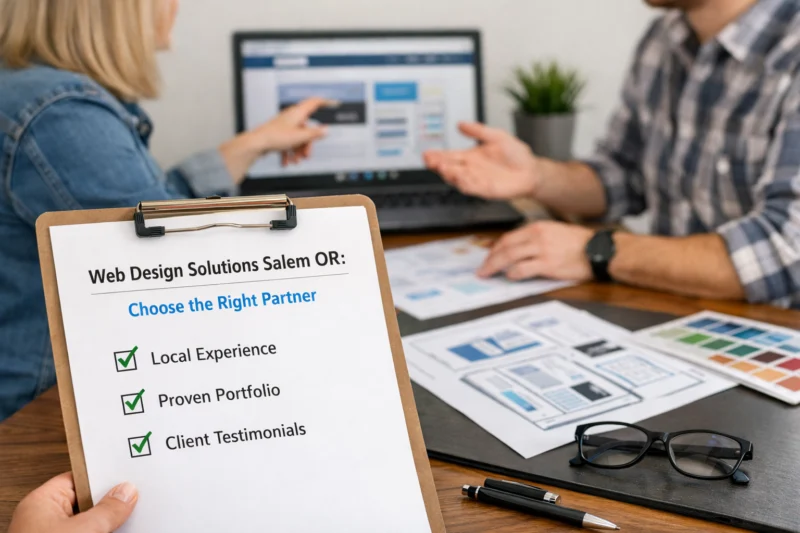
In practice, a law firm, home services company, medical practice, and e-commerce brand all need different page structures and different lead paths. A short sales cycle may benefit from direct calls and short forms, while a longer cycle may need comparison pages, trust assets, and stronger content depth. That is the deeper point many guides miss: the site should be shaped by the sale, not the other way around.
How to Choose the Right Web Design Partner in Salem, OR
Start by defining your business goals, audience, budget range, timeline, and required functionality before you compare vendors. A strong partner can only recommend the right approach when they understand whether you need lead generation, online booking, a better brand presence, or support for a more complex site.
Early conversations should clarify scope, process, deliverables, communication, and launch responsibilities. If a provider cannot explain how discovery works, how many revision rounds are included, who writes copy, or what happens at launch, you are likely looking at hidden delays or change-order surprises later.
The best partner is not simply the one with the nicest portfolio. You want a team that thinks about conversion paths, content structure, mobile behavior, and maintenance after the site goes live. A strong small business web partner will ask about your customer journey, your most profitable services, and the objections prospects raise before they contact you. That kind of thinking matters more than a trendy homepage animation.
Fit also depends on complexity. The best partner for a neighborhood service company may not be the right fit for an e-commerce catalog, a membership platform, or a multi-location brand with layered approvals. If your project needs a blend of strategy, build quality, and long-term support, compare providers by how they handle planning and execution, not just design taste.
| Decision Factor | What to Ask | What Good Looks Like |
|---|---|---|
| Business goals | What should this site accomplish first? | Clear lead, sales, or booking priorities |
| Process | How do discovery, revisions, and launch work? | Defined steps, timeline, and approvals |
| Support | Who handles updates after launch? | Training, maintenance, or retainer options |
| Fit | Have you handled similar business models? | Relevant examples and outcomes |
Web Design Service Options: Agency, Freelancer, or In-House Support
A full-service agency is usually strongest when you need strategy, design, content support, development, and coordinated launch management. It can reduce coordination burden because one team owns the bigger picture, which is helpful when a website must support more than a basic brochure presence.
An independent freelancer can be a smart choice when the scope is narrow, the budget is tighter, or you already have some internal support. Freelancers often work quickly and flexibly, but they may not cover every discipline in-house, which means you could still need help with copy, SEO, analytics, or advanced functionality. That tradeoff is why lower-cost options can work well for straightforward projects but may struggle when the site needs strategy, content planning, and ongoing optimization.
A web design + marketing team can be ideal if you want the site to connect directly to lead generation, local SEO, ads, or content updates. That model is especially useful when your website is part of a broader customer acquisition system rather than a standalone asset. In contrast, in-house or retainer-based support tends to fit organizations that need frequent updates, multiple stakeholders, or ongoing campaign coordination.
If you are evaluating Salem web design services, think in terms of operational fit, not just price. The wrong model often creates hidden costs through delay, rework, or weak handoff quality. The right model matches how often you need changes, how much content you need help producing, and whether the website must stay actively optimized after launch.
What to Look For in a Salem Web Design Provider
Review portfolios for clarity, mobile usability, conversion paths, and relevance to your market, not just visual style. A strong portfolio should show that the provider can structure information logically, guide users to action, and build sites that work on the phone as well as the desktop.
Process signals matter just as much. Look for discovery, planning, revision management, testing, launch coordination, and post-launch support. If a provider talks only about colors and layout but not content collection, page strategy, technical testing, or handoff, the project may look easy until deadlines start slipping.
Local-market understanding also matters in Salem because trust signals are often tied to service area clarity, proximity, and credibility. A provider who understands local search behavior can better position neighborhood intent, regional terms, and service-area pages without making the site feel generic. That same provider should also discuss SEO, page speed, analytics, and accessible web design practices as part of the build, not as an afterthought.
One deeper question reveals a lot: how do they handle content gaps, stakeholder approvals, and scope changes? Many projects stall because no one owns the copy, everyone wants edits, or the goal changes after design begins. If a provider has a clear method for managing those issues, the project is much more likely to finish on time and with less frustration.
Common Mistakes When Buying Website Design Services in Salem OR
The most common mistake is choosing based on price alone and ignoring strategy, ownership, and support after launch. A low initial quote can look attractive, but if it excludes revisions, content, SEO foundations, or training, the true cost can rise quickly through add-ons and delays.
Another frequent problem is focusing on visuals while neglecting speed, navigation, calls to action, and mobile experience. Visitors rarely judge a site by design alone; they judge whether it answers their questions and makes the next step obvious. If the homepage looks polished but the phone number is hard to find or the service pages are vague, the site will underperform.
Businesses also fail when they do not define the objective before the project starts. If the team is unclear whether the site should generate calls, book appointments, sell products, or support recruitment, the final result often looks finished but does not convert. That is where Salem website redesign goals should be documented early, because every page decision should serve a measurable business outcome.
Overlooking who provides copy, photography, and approvals is another classic mistake. Projects slow down when no one owns content or when too many people must approve every small change. Also, do not assume that “local” automatically means “good fit”; industry experience, communication quality, and process discipline usually matter more than geography alone.
Advanced Considerations Most Web Design Guides Miss
Conversion architecture often matters more than the homepage mockup. Page hierarchy, trust elements, microcopy, and form strategy can materially affect whether a visitor becomes a lead. A contact page that asks for too much information, or a service page that does not answer basic objections, can quietly suppress results even if the site looks excellent.
Technical edge cases also deserve attention. Multilingual needs, complex service catalogs, scheduling tools, e-commerce, and CRM integration all affect structure and build decisions. A provider who has experience with small business website development should be able to explain how those pieces connect before the design phase begins, because retrofitting them later often costs more and introduces avoidable friction.
Ongoing updates are part of the real ownership model. Security, plugin and theme upkeep, analytics review, and iterative improvements after launch help the site stay useful as customer behavior shifts. A website is not one-and-done; it is a business asset that should adapt as offers, teams, and buyer expectations change. That is also why a redesign alone is not always enough. Sometimes the better move is a coordinated cleanup of positioning, content, and site structure so the website finally matches how the business sells.

This is where practical support matters, including the kind of website maintenance support that keeps the site stable and measurable after launch. For businesses reviewing Salem SEO essentials and build quality together, the strongest solution is usually one that combines site structure, content clarity, and technical upkeep rather than treating them as separate projects. If you are planning future growth, this is also a good time to think about content strategy for service pages, location pages, and conversion-focused landing pages.
Questions to Ask Before Hiring a Salem Web Design Company
You should ask a provider how their process works from discovery to launch, because process clarity often predicts project quality. A good team can explain each phase, what they need from you, and where approvals happen, which reduces surprises later.
Ask how they define success for a website project. The best answer will usually involve lead quality, usability, speed, conversions, or another business outcome instead of vague statements about “looking modern.” You should also ask who owns the content, design files, and website after launch so there is no confusion about control and portability.
Scope change handling is another critical question. Projects change because businesses refine offers, stakeholders request edits, or new functionality appears midstream. You want to know how changes are documented, priced, and scheduled so the work stays predictable. It is also smart to ask how they approach conversion-focused page structure and how they resolve disagreements between aesthetics, strategy, and stakeholder preferences. The most useful answer will show that they are willing to advocate for what the site needs, not just what looks nice in a meeting.
Before you decide, ask what they need from you to keep the project on schedule and whether they provide training or support after the site goes live. A provider with strong communication and realistic expectations will usually make the process feel manageable, even if the build is complex. If you are comparing a Salem design company fit, these questions reveal far more than a polished proposal or a nice homepage screenshot.
Frequently Asked Questions About Web Design Solutions in Salem OR
How much do web design solutions in Salem OR usually cost?
Pricing depends on scope, content needs, functionality, and whether strategy, SEO, or copywriting are included. A simple brochure site typically costs less than a custom build with booking tools, e-commerce, or multiple page templates.
How long does a Salem website project take?
Timelines vary by complexity and how quickly content and approvals move. Simple sites can move faster, while projects requiring custom integrations, content migration, or multi-stakeholder review usually take longer.
What should be included in a business website design package?
A solid package usually includes discovery, page planning, design, development, testing, launch support, and basic training. Some providers also include copy help, analytics setup, and local SEO-ready structure, but those items are not always standard.
Is a local Salem web designer better than a remote team?
Local providers can bring regional familiarity and easier in-person communication, while remote teams may offer deeper specialization or a broader service mix. The better choice depends on whether you value local context more than niche expertise and process fit.
How do I know if a web design company is right for my business?
Look for relevant portfolio examples, a clear process, and communication that focuses on your goals. If they ask about leads, sales, mobile use, and support after launch, that is usually a stronger sign than a portfolio full of pretty visuals alone.
Do web design solutions in Salem OR include SEO?
Some packages include SEO-friendly structure, metadata guidance, and technical best practices, while others treat SEO as a separate service. It helps to ask whether the build includes on-page foundations or only the design and development work.
Can I update my website myself after launch?
Often yes, especially if the site is built on a user-friendly CMS and the team provides training. Even then, many businesses still prefer support for updates that affect layout, performance, or security.
What if my current website already ranks?
Preserving rankings during a redesign requires careful redirects, content mapping, and technical planning. If your current site has visibility worth keeping, a refresh or phased improvement may be safer than a full rebuild unless there is a clear business reason to start over.
What are the biggest red flags when hiring a web designer?
Warning signs include vague scope, unclear ownership, no post-launch support plan, and promises that sound too fast or too cheap. Another red flag is when a provider cannot explain how the site will support real business goals beyond appearance.
How do I choose between a redesign and a new website?
Decide based on site health, technical limitations, and business goals. If the current site is structurally sound, a redesign may be enough; if it is slow, hard to manage, or built on outdated architecture, a new site may deliver better long-term value.
Final Takeaways for Choosing the Right Salem Web Design Partner
The best choice in Salem is the partner who can turn your website into a practical business asset that supports leads, trust, clarity, and long-term maintainability. That means comparing providers by process, strategy, content support, technical quality, and post-launch help rather than by visuals alone.
For most businesses, the right partner is the one whose process matches the complexity of the project. A simple local service site, a growing e-commerce brand, and a multi-location company all need different levels of planning and support. Comparing options with criteria gives you a better result than relying on price or a vague recommendation.
If you are ready to move forward, request a few consultations, compare scopes carefully, and ask each provider to explain how the site will support growth. The strongest partner will be able to connect design decisions to business outcomes in a way that is clear, realistic, and tailored to your Salem market.
Updated April 2026