
If you want a professional, conversion-focused website in Salem, Oregon without overspending, yes—you can get quality web design that fits your budget. “Affordable” in 2026 usually means the right scope for your goals, clear deliverables, and fewer surprises during build and launch. If you are comparing options, start with your pricing range, page scope, proof of past work, and what support looks like after the site goes live. This guide explains how Affordable Web Design Salem Oregon projects are priced, what you should include for real ROI, and how to avoid cheap builds that cost more later.
You will also learn how Salem-specific search behavior affects site structure, why two “similar” quotes can lead to very different results, and how to prepare for a website audit or consultation call. By the end, you will have a simple checklist to compare proposals and choose the partner with a process that reduces rework risk.
Contents
- 1 What “affordable web design” means for Salem, Oregon businesses in 2026
- 2 How pricing for Salem websites is actually calculated
- 3 How to choose the right web design partner without overpaying
- 4 Deliverables you should expect from a quality affordable website
- 5 Common “cheap web design” pitfalls that harm results
- 6 Salem, Oregon factors that shape website structure and schedules
- 7 Choosing a website approach that stays budget-friendly
- 8 How to read proposals, confirm quality, and spot pricing risks
- 9 Frequently asked questions about affordable web design in Salem, Oregon
- 9.1 How much does a website project cost in Salem, OR for a small business?
- 9.2 How fast can I get web design in Salem, OR?
- 9.3 What’s included in an “affordable” website package for Salem businesses?
- 9.4 Can you design a website for my business if I already have a domain and hosting?
- 9.5 Will my new website help me rank in local search around Salem?
- 9.6 Do I need to write all the website copy myself?
- 9.7 What should I prepare for a website audit or consultation call?
- 9.8 How do I avoid getting a “cheap” website that still looks unprofessional?
- 9.9 Is it better to refresh an existing Salem website or start from scratch?
- 9.10 Can affordable web design still include lead capture forms and calls to action?
- 10 Getting value from affordable web design without sacrificing long-term results
What “affordable web design” means for Salem, Oregon businesses in 2026
Affordable web design is not about using the cheapest template or skipping key steps. It is about buying the features your business needs to generate leads, sell services, or build trust without paying for extras you will not use. In Salem, Oregon, that often means getting a site that looks professional in mobile view, communicates your services fast, and captures inquiries through forms and clear calls to action.
For comparison shopping, treat “affordable” as a budget range plus a quality standard. Two quotes can both fit your budget but still differ in outcomes because of copy quality, page intent, conversion paths, and how well the site supports tracking. A quality affordable plan will show what pages you get, how design supports clarity, and how measurement will work after launch.
In practice, affordability is calculated by scope and planning, not by shortcuts. For example, a site with a clear homepage message, focused service pages, and a working contact flow often converts better than a visually complex site with unclear navigation. That is why you should ask providers to explain their process, not only their price.
One common misconception is that “cheap” guarantees speed. In reality, missing assets or weak content planning can delay or break launch, then create costs for fixes. A good partner prevents those problems by defining deliverables, review rounds, and the handoff process early.
People in Salem also compare across nearby areas, including Downtown Salem, North Salem, East Salem, West Salem, and South Salem. If your site does not clearly explain what you do and where you help, visitors bounce before they ever contact you. That is the gap affordable projects should fill: the right structure, messaging, and lead capture for your market.
How pricing for Salem websites is actually calculated
Website pricing comes from the work involved in design, build, content, and launch. When you ask for quotes, you are really comparing how each provider defines scope and risk. Affordable Web Design Salem Oregon projects typically vary based on how many pages or sections you need, how custom the design is, and what integrations are required.
The main cost drivers include the number of unique page templates, custom design elements, and how much content support you want. If you need copywriting help, photo direction, or a brand refresh, the project expands beyond just web layout. Integrations also matter, such as contact forms, booking flows, call tracking options, or basic CRM-style lead routing.
Another factor is ongoing support and editing after launch. Some packages include a small set of post-launch updates, while others require separate work orders. If you plan to add services later, you should confirm how the site will be maintained so you do not pay again for basic changes.

Two websites can cost the same yet perform very differently. The hidden reason is often measurement and conversion path design. If the provider builds attractive pages but does not set up analytics properly, you cannot learn what visitors do, which pages convert, or where leads drop.
A common mistake is pricing based only on page count. A “five-page” site can still be complex if each page needs custom sections, service-specific landing structure, or detailed forms. Instead, scope should include your conversion goals, target customers, must-have pages like Services, About, and Contact, and the proof assets you can provide such as testimonials or case examples.
Edge case to watch: if you already have a domain and hosting, a provider may still charge for migration work or DNS setup if it is not included. Ask what ownership transfer looks like and who handles domain and email settings at launch.
How to choose the right web design partner without overpaying
You can hire the right web design partner by comparing process, deliverables, and support—not by only comparing line-item price. Start by gathering your requirements and then validate each provider’s ability to execute them with clear handoffs. For Salem, Oregon businesses, the goal is a site that communicates your services quickly and captures leads reliably.
Use a step-by-step approach. First, define what success means for your site, such as more calls, booked appointments, or quote requests. Then compile the assets you already have, including logos, brand colors, photos, and any existing copy. After that, review portfolios for businesses similar to yours and check whether the provider builds landing pages with strong calls to action.
Next, validate the process. Ask how discovery works, how they design the homepage message, and how revisions are handled. Confirm whether they build a responsive layout from the start and how they test mobile forms. Then request a clear deliverables list that includes what happens during QA and the launch checklist.
To avoid hidden costs, read proposals carefully for what is excluded. Some providers charge separately for content entry, extra page revisions, plugin upgrades, accessibility fixes, or training for your team. Others may not include domain and hosting setup, which means you may pay another party to finish launch steps.
Communication is also a quality signal. If a provider responds with clear questions about your goals, audience, and services, you reduce the risk of rework. If the proposal barely mentions forms, tracking, or content readiness, expect gaps later.
Fit matters across business types. A contractor may need strong service pages and a fast quote form, while a professional firm may need trust signals and clearer process messaging. A nonprofit often benefits from donation or action pathways that are simple and consistent across devices.
A Salem customer scenario helps explain it. A business owner in Salem wanted a new website before the rainy season slowed off-site inquiries. They chose a provider who clarified page structure, provided a checklist for photos and copy, and configured form tracking before launch. The site did not only look good; it made it easier to measure which pages led to inquiries.
Deliverables you should expect from a quality affordable website
A quality affordable website should include core features that protect ROI, not just a visually appealing layout. When you compare providers, confirm they deliver responsive design, clear navigation, conversion-focused page structure, and working lead capture. These items matter because they influence how visitors interpret your services and whether they contact you.
On-page structure should support your local service intent. That usually means dedicated Services pages with clear descriptions, an About page that builds credibility, and a Contact page that makes it easy to reach you. For many Salem businesses, visitors expect quick answers on mobile, so your site should keep calls to action visible and reduce the steps to reach a form.
Form optimization is a deliverable you should not skip. A good affordable plan includes form setup with spam protection, confirmation emails, and tracking so you can see which pages generate leads. If you rely on calls, discuss whether adding click-to-call behavior and call tracking options is included or will require an add-on.
SEO foundations should be built into the design and code structure. You should expect title and meta structure support, crawl-friendly page templates, and consistent internal linking patterns across your navigation. Basic schema elements may be included where they apply, but the bigger win comes from having pages that match search intent with clear headings and service-specific content.
It is also important to separate SEO “built in” from SEO “bolted on.” If the provider designs pages in a way that hides content behind weak structure, search engines and users struggle to understand the page purpose. A quality build keeps headings readable, pages indexable, and local landing pages structured for clarity.
Finally, content readiness should be addressed. The provider should specify what you need to provide, like logos, brand guidelines, photos, and draft copy, plus what they will help draft or edit. Tradeoff example: a lower-cost package might require you to supply most copy, while a higher-cost package may include writing support.
Common “cheap web design” pitfalls that harm results
Cheap web design deals often fail because they skip the planning and quality checks that make websites convert. You should watch for templates that look similar to many other sites, unclear messaging hierarchy, and launch processes that ignore tracking and QA. These issues can make your site feel unprofessional even if the visuals appear polished.
A frequent mistake is pricing based on page count alone, which hides complexity. Complex layouts, custom sections, or multiple service offerings can raise scope quickly. If a proposal does not explain page intent and conversion paths, it is likely focused on visual build steps, not business outcomes.
Another pitfall is launching without a QA and handoff plan. Broken forms, missing confirmation emails, and inaccurate analytics can happen when tracking setup is unclear. If ownership of the design assets is not addressed, you may also face migration costs later.
Lead generation expectations also need realistic framing. No website can promise specific lead volume, but the design must support measurement and conversion. That means building pages around what people search for, using calls to action that match visitor intent, and tracking form submissions so you learn what works.

When affordability is handled poorly, paying more later becomes common. For example, if your provider builds a site on a setup that is hard to update, you may pay again to add new services or landing pages. If a redesign is required because messaging did not convert, the cost includes rework plus lost time.
Edge case: some providers offer “low cost” while excluding content production. If you do not have photos, copy, or service descriptions ready, you might pay extra later or publish with thin pages that do not support local credibility. A better approach defines a content collection timeline before build begins.
Salem, Oregon factors that shape website structure and schedules
Salem, Oregon businesses need websites that support local discovery, fast mobile reading, and clear service descriptions. People often compare businesses across Downtown Salem, North Salem, East Salem, West Salem, and South Salem when they search for help. If your site does not make your services and next step obvious, visitors move on quickly.
Your service pages should reflect how local customers phrase needs, such as “services near me” style searches and direct requests for quotes. That means your navigation should lead visitors to the right service page, and each page should include clear calls to action. Because the Willamette River runs through the Salem area and the city sits along the main Willamette Valley corridor between Portland and Eugene, visitors may start their search while traveling or commuting, so mobile clarity is essential.
Scheduling also affects project flow. Salem’s cool, wet winters and warm, dry summers can affect how quickly you can collect photos and finalize copy. During fall and winter rainy periods, on-site photo planning may take more coordination, so it helps to request assets early in the project schedule.
Real-world logistics matter for approvals and feedback cycles. Some owners move slower when multiple departments need to review copy or service details. A good web design partner in Salem, Oregon will build review windows into the plan and keep a clear list of what is needed at each stage.
Transport corridor context can change how your “service areas” messaging should be structured. If you target customers coming from I-5, OR Route 22, OR Route 99E, or OR Route 99W, your website should avoid vague language and instead focus on clear service offerings plus accurate contact steps. The goal is to make it easy for a visitor coming from those corridors to see exactly what to do next.
Affordable Web Design Salem Oregon works best when the provider tailors the plan to Salem business needs. Edesignerz.com positions its web design and SEO services for Salem businesses that want a professional site and stronger local search presence. A practical first step is to request a website audit or consultation, then bring goals, existing branding, and examples of sites you like so the project scope matches your outcomes.
Choosing a website approach that stays budget-friendly
You can keep costs controlled by matching the right website approach to your business stage. Different approaches balance speed, uniqueness, and long-term flexibility. The key is to avoid a “cheap build that still costs you later” due to limited customization or content friction.
Template-based with customization is often the best fit for early-stage startups and simple local services. It can launch faster and stay affordable, especially if you already have strong branding and content. The tradeoff is limited uniqueness, so your messaging still must stand out through clear headings, service descriptions, and strong calls to action.
A semi-custom design system suits businesses that need more tailored structure without ballooning scope. You get a clearer fit between your brand and your page layout, plus more room for the service sections that matter. This approach works well for established Salem businesses that want conversion improvements, like better homepage messaging and more focused service pages.
Custom design plus content strategy usually fits professional firms or contractors with multiple services and clear differentiation. It costs more, but it also reduces future rework when your business adds new offerings or wants new landing pages. The practical change is that you typically get more custom sections, deeper messaging work, and a conversion plan aligned to your goals.
Website refresh or redesign is often the best ROI when the existing site has good content but outdated structure or performance issues. If your pages exist and your branding is solid, a redesign can improve clarity, forms, and navigation without rewriting everything from scratch. The limitation is that refresh projects still require a plan to migrate properly and avoid broken links or lost tracking.
Edge case: if you choose a low-cost template without a content plan, you may still end up paying to rebuild pages later. When your services expand or your messaging changes, a less flexible build can force extra redesign work or painful migrations.
Edesignerz.com engagements often start with an audit or consultation. Be ready with your goals, branding assets like logos, and a shortlist of websites you like. The sharper your examples and service list, the more accurate and affordable the final scope can be.
How to read proposals, confirm quality, and spot pricing risks
A good proposal makes scope clear and reduces surprises during build and launch. You should read it like a contract for outcomes, not like a marketing brochure. In 2026, the best pricing signals are deliverables tied to milestones, plus a clear plan for revisions, QA, and post-launch support.
Start by checking what is included and what is excluded. Confirm whether hosting and domain responsibilities are included or handled by you. Look for explicit revision rounds and what counts as a revision versus a paid change request. Also confirm whether content entry is part of the scope or if you will provide final copy and images.
Next, verify the timeline dependencies. If the schedule assumes you will provide photos, logos, and copy by specific review points, you should plan those tasks early. A delayed asset collection can push build steps, and that is one of the most common causes of frustration with budget projects.
For proof, do not only review design aesthetics. Look for before-and-after outcomes when available, plus examples of clear calls to action and lead capture flows. If you work in a service area business model, your portfolio should show service pages that explain what you do and how to contact you without confusion.
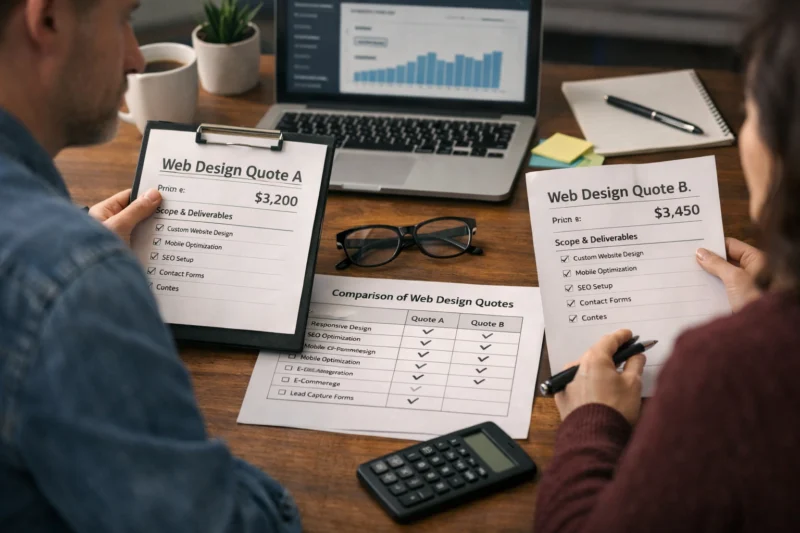
Support after launch is another quality measure. Ask how edits are requested, what maintenance options exist, and what happens if a form stops working or tracking breaks. Quality includes maintainability, which means clean structure and readable design so updates do not create technical issues.
Accessibility and maintainability also count as quality, not extras. A well-built site uses clean page structure, readable typography, and stable components, which makes it easier to update later. That reduces long-term costs more than many “optional upgrades” do.
| Evaluation point | What “good” looks like | What raises risk |
|---|---|---|
| Scope clarity | Clear page list and section types | Page count only, vague deliverables |
| Deliverables included | Forms, analytics setup, responsive build | No mention of QA, tracking, or support |
| Timeline dependencies | Asset review dates and revision windows | No plan for client copy or photos |
| Revisions | Defined number of rounds per stage | “Unlimited revisions” with no boundaries |
| Post-launch support | Defined edits and maintenance options | Support terms unclear or absent |
Frequently asked questions about affordable web design in Salem, Oregon
How much does a website project cost in Salem, OR for a small business?
Costs vary based on page scope, how custom the design needs to be, and whether you need help with copywriting, photos, or lead capture setup. Integrations like booking, CRM-style routing, or advanced form flows can also change pricing. Most “affordable” packages still include responsive design and a clear homepage-to-contact path, but the exact range depends on what your proposal includes.
The safest way to compare quotes is to request a detailed deliverables list and confirm what is excluded, such as content entry, domain migration, and post-launch edits. Ask for payment milestones tied to discovery, design, build, QA, and launch so you can measure progress against cost.
How fast can I get web design in Salem, OR?
Typical timelines for a small business website often run from a few weeks to a couple months, depending on scope and asset readiness. Discovery, design revisions, build, and QA all take time, and client feedback usually drives schedule movement.
If you have branding, photos, and copy ready, the project can move faster. If you need copy help or photo direction, plan extra time, especially during Salem’s cool, wet winter months when on-site planning may require more coordination.
What’s included in an “affordable” website package for Salem businesses?
An affordable package should at minimum include responsive design, a clear navigation structure, conversion-focused page layout, and lead capture configuration such as contact forms. It should also include analytics setup and basic SEO foundations like title and meta structure support so pages are measurable and crawl-friendly.
To confirm, ask for a list of pages, the number of design revision rounds, and what happens during QA and launch. Also confirm who owns the site files and how domains and hosting responsibilities are handled at go-live.
Can you design a website for my business if I already have a domain and hosting?
Yes, many projects can work with an existing domain and hosting, but migration details must be planned. You will typically need to provide access to DNS settings and any existing content or pages that should carry over.
A quality provider will clarify ownership and responsibilities, including whether redirects, tracking migration, and email deliverability steps are part of the scope. If migration steps are excluded, ask who will perform them and what you should expect at launch.
Will my new website help me rank in local search around Salem?
A well-built site can support local search by having clear service and location-adjacent page structure, readable headings, and pages designed to match visitor intent. It also helps if tracking is set up so you can learn which pages generate leads from Salem searches.
Still, SEO outcomes depend on competition and the quality of your on-page content over time. A provider should explain what you will publish, how often you can update pages, and how measurement informs improvements rather than promising fixed rankings.
Do I need to write all the website copy myself?
Not always. Many affordable projects ask you to provide draft copy or service descriptions, but some providers can assist with editing or writing support depending on the package.
If you do not have strong copy, your conversion rate can suffer even with great design. Ask how content responsibilities are split, and confirm what the provider will help with before you sign so expectations are clear.
What should I prepare for a website audit or consultation call?
Prepare your goals, a list of services, and examples of websites you like so the provider can understand your taste and audience. Also gather your existing branding assets like logos and brand colors, plus any photos you want to use.
If you already have a website, bring key performance notes such as what is not working today, where leads come from, and which pages get the most attention. The more specific you are about Salem customers and your desired next step, the more accurate the scope can be.
How do I avoid getting a “cheap” website that still looks unprofessional?
Look for red flags such as unclear homepage messaging, generic stock-only visuals, and a revision process that is vague. Also watch for missing mobile form testing, no mention of analytics setup, or a proposal that does not confirm who owns site assets after launch.
A professional affordable site should still guide visitors to a single next step. If it does not explain your services clearly on mobile, it will likely lose leads regardless of how low the price is.
Is it better to refresh an existing Salem website or start from scratch?
A refresh can be best when your content is solid, your core pages exist, and you mainly need updated design, clearer navigation, and improved lead capture. Starting from scratch can be worth it when the site structure is outdated, tracking is broken, or the current build is hard to expand.
The right choice depends on what is working today and what would need to change to improve conversions. A site audit should identify whether a rebuild is necessary or if you can get better ROI through targeted updates.
Can affordable web design still include lead capture forms and calls to action?
Yes, lead capture and calls to action should be part of a quality affordable website. You can usually include a contact form with spam protection, confirmation emails, and tracking so you can see which pages generate inquiries.
If you need booking, routing, or more advanced lead handling, ask whether that is included or offered as an add-on. The key is to confirm the exact lead flow and tracking setup before you pay so it works at launch.
Getting value from affordable web design without sacrificing long-term results
Affordable web design works best when you define scope, compare deliverables, and validate process and proof. The promise behind “quality without the price tag” is not minimal work. It is right-sized work that matches your business stage and gives you a site you can measure, update, and improve after launch.
Start by comparing at least two or three proposals using a checklist for page scope, design approach, revision rounds, QA steps, and post-launch support. Confirm ownership details, domain and hosting responsibilities, and form plus analytics setup. When these areas are clear, budgets stretch farther because you avoid rework later.
For Salem, Oregon businesses, also plan your content and assets around local reality. If you can provide logos, photos, and service descriptions early, the project stays on track. If you need help improving messaging, choose a partner whose process includes content readiness so the site sells your services clearly.
The next step is simple. Request a Salem, Oregon website audit or consultation, then bring your goals and examples of websites you like. After the consult, ask for a clear deliverables list and timeline details, including revision and support terms, before you hire.
Choose the partner whose process reduces rework risk and gives you a clear path from launch to learning and improvement. If you are ready, prepare for the audit by gathering your brand assets, service list, and lead goals, then compare proposals based on what is included and what your business will actually be able to do after launch.
Buying step-by-step
Request an audit/consultation, confirm deliverables and revisions, and compare at least two proposals using the same scope checklist.
Updated August 2026